
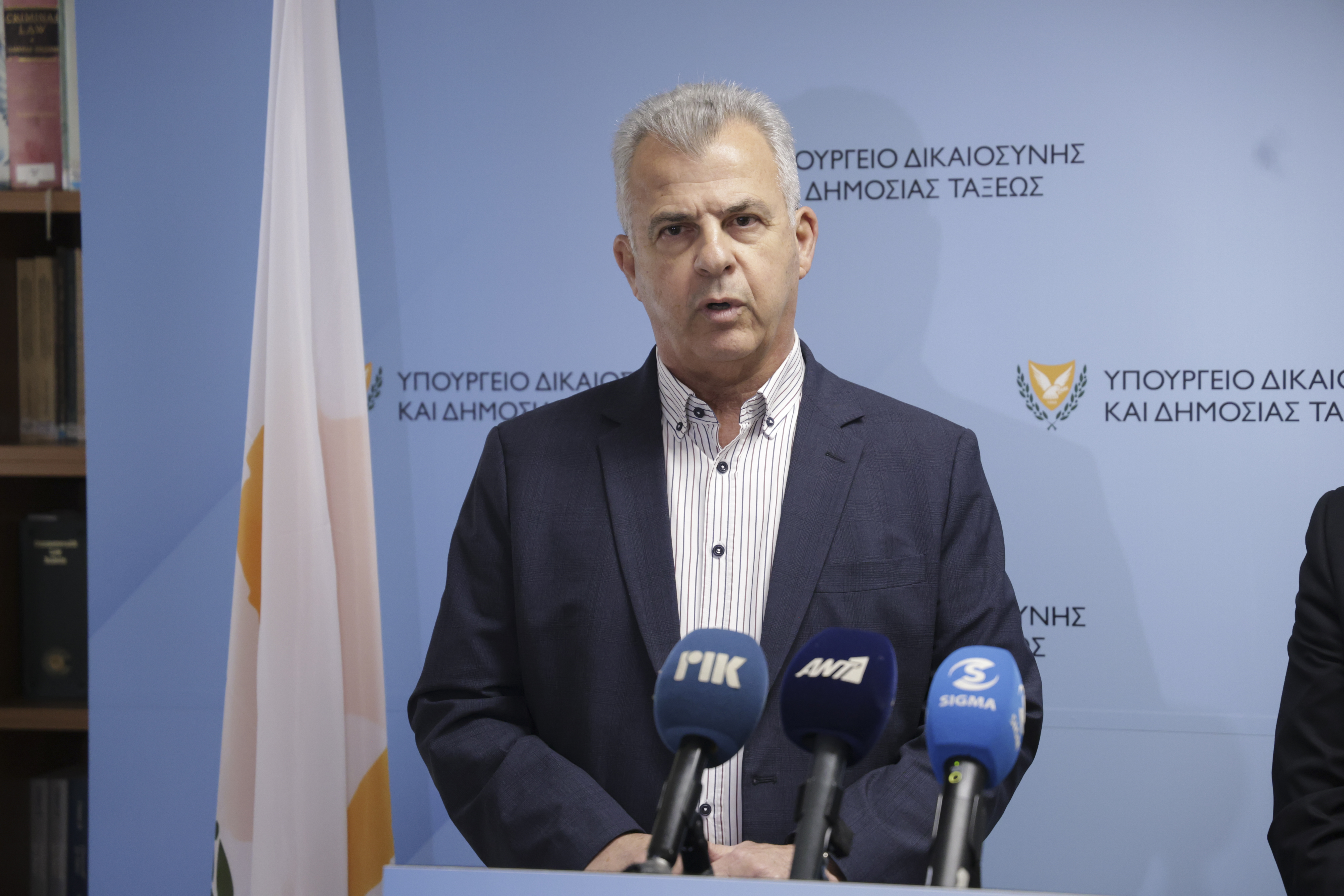
The government aims to publish draft legislation granting criminal investigative powers to the independent Anti-Corruption Authority by the end of November, Justice Minister Costas Fitiris confirmed, although no date has been set for the bill’s submission to parliament.
In a written reply dated November 6 to a parliamentary question by MP Irene Charalambides, Fytiris said the justice ministry was finalising proposed amendments to the 2022 law establishing the authority, following consultations with the Legal Service and the Commissioner for Transparency.
The proposed legislation is intended to address a longstanding weakness in the authority’s operations, namely its inability to conduct criminal investigations independently, despite being responsible for examining allegations of corruption involving public officials.
Fitiris said the ministry had prepared a working document containing proposed amendments, which was forwarded to the assistant attorney-general and the Commissioner for Transparency on September 4 as a basis for consultation.
Representatives of the ministry, the Legal Service and the Commissioner for Transparency met on October 12 to discuss the proposed provisions and exchange views.
“The ministry is at the stage of further processing the bill, taking into account what was discussed during that meeting,” Fitiris said.
He said the ministry’s objective was to finalise the draft and publish it for a four-week public consultation before the end of November.
Adding that “once the consultation has concluded and the comments received have been assessed, the legislation will be forwarded to the Legal Service for legal vetting, before being submitted to the Council of Ministers for approval and subsequently to parliament”.
Commitment made in July
The minister’s response follows a commitment made in July by justice ministry permanent secretary Giorgos Panteli during a meeting of the House legal affairs committee.
At the time, MPs were examining competing legislative proposals submitted by Disy and Alma, both seeking to strengthen the authority’s ability to investigate corruption.
The Legal Service expressed support for discussing the reform, with assistant attorney-general Savvas Angelides suggesting that a comprehensive government bill would be preferable to piecemeal amendments.
However, the discussions also exposed disagreements over the degree of independence the authority should enjoy when conducting criminal investigations.
The authority’s chairman, Harris Poyiadjis, objected to a proposal under which investigators would be selected from a list prepared by the Bar Association and approved by the attorney-general, arguing that this would undermine the body’s independence.
“If we are to conduct criminal investigations, we want to control them ourselves,” he told the committee.
Existing legal framework
Under the existing legal framework, the authority can receive complaints, summon witnesses and conduct preliminary examinations into suspected corruption, but it cannot independently undertake criminal investigations with the powers available to the police.
Instead, its findings are forwarded to the attorney-general, who decides whether a criminal investigation should follow and whether prosecution is warranted.
The proposed reform would allow the authority to appoint criminal investigators to pursue cases under its own responsibility, while decisions on prosecution would remain with the attorney-general.
According to figures in October, the authority had received 943 complaints since its establishment. Of these, 673 had undergone preliminary screening, 19 had resulted in decisions to launch full investigations and 11 investigations had been completed, with reports issued.
The authority was established in 2022 as part of efforts to strengthen the country’s response to corruption, but its limited powers have repeatedly prompted questions about its effectiveness.





Click here to change your cookie preferences