
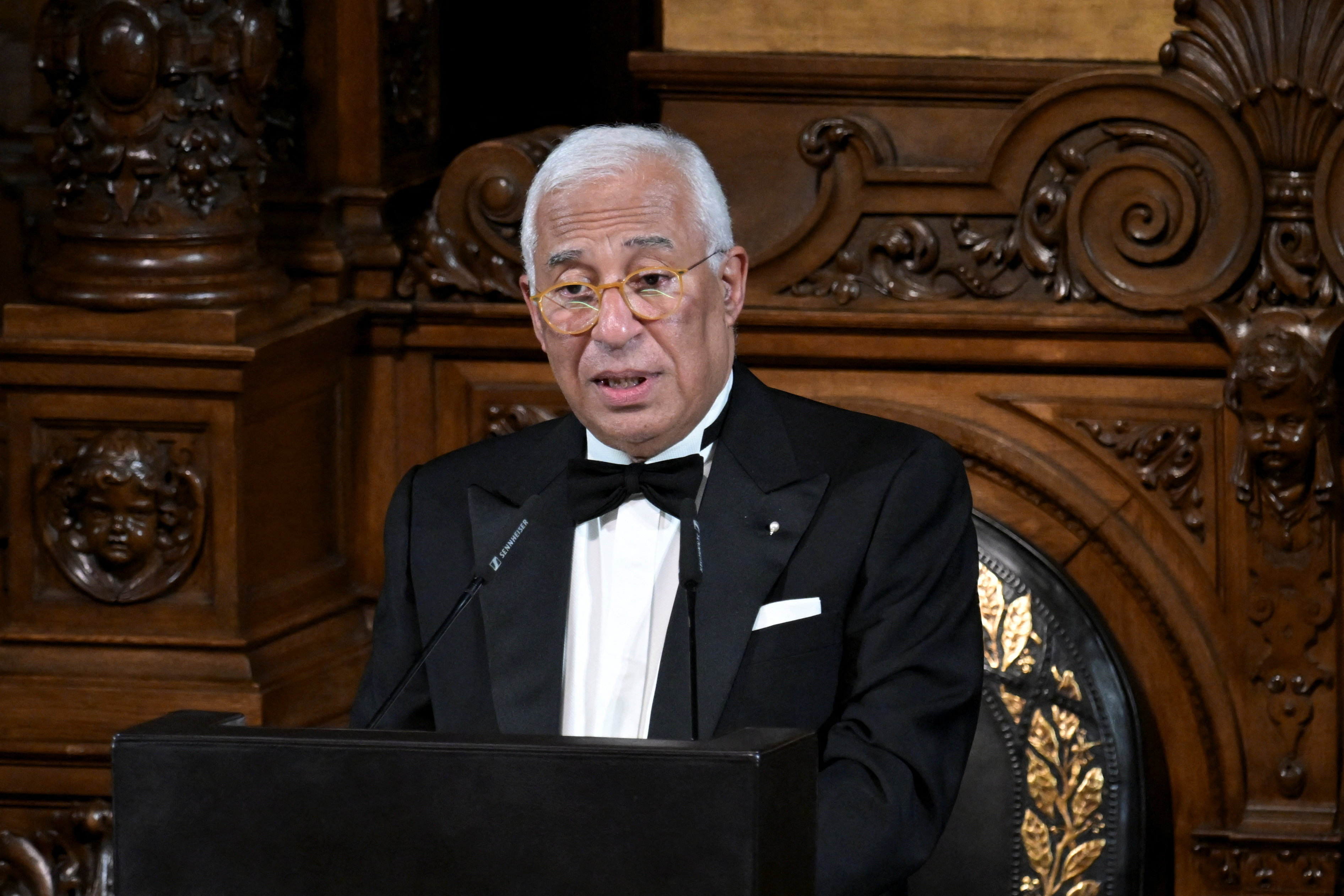
The rapid response by Greece, France, Italy and Spain in sending military forces to protect Cyprus is a powerful example of European autonomy and steadfast solidarity, President of the European Council Antonio Costa said on Friday evening in Hamburg.
Speaking at the Matthiae Mahl ceremony in the presence of former German Chancellor Angela Merkel, Costa referred to developments in the Middle East and the broader geopolitical challenges facing the European Union, warning that retaliatory actions by Iran and its proxies undermine international security.
“The war in the Middle East is of the utmost concern. Iran is responsible for the root causes of this situation. But unilateralism can never be the path forward. And the retaliation by Iran and its proxies across the region, with attacks against many of its neighbours, including Cyprus, a member state of the European Union, undermines international peace and security.
“The rapid response from Greece, France, Italy and Spain, sending military forces to protect Cyprus, is a powerful example of European autonomy and steadfast solidarity,” he stressed.
He also called on all parties to exercise maximum restraint, warning of the risks of further escalation.
“We must avoid further escalation. Such a path threatens the Middle East, Europe and beyond,” he added.
Costa further stressed that the EU stands with the Iranian people and supports respect for their rights.
In the early hours of Monday a Shahed-type drone struck military facilities in the British Base of Akrotiri, causing minor damage.
The attack by the Iranian-made unmanned aerial vehicle, believed to be linked to Hezbollah operating in Lebanon, prompted heightened security measures, while several countries, including Greece and France deployed warships, aircraft and other air defence assets to shield Cyprus.
The UK also announced the dispatch of a warship.
Nicosia reiterates that it has no involvement in the wider Middle East conflict.




Click here to change your cookie preferences