
Early-stage research on Cyprus’ trusty Xynisteri is encouraging
A Cypriot vine is taking root in Australia as growers look for grape varieties that can cope with hotter weather and tighter water supplies.
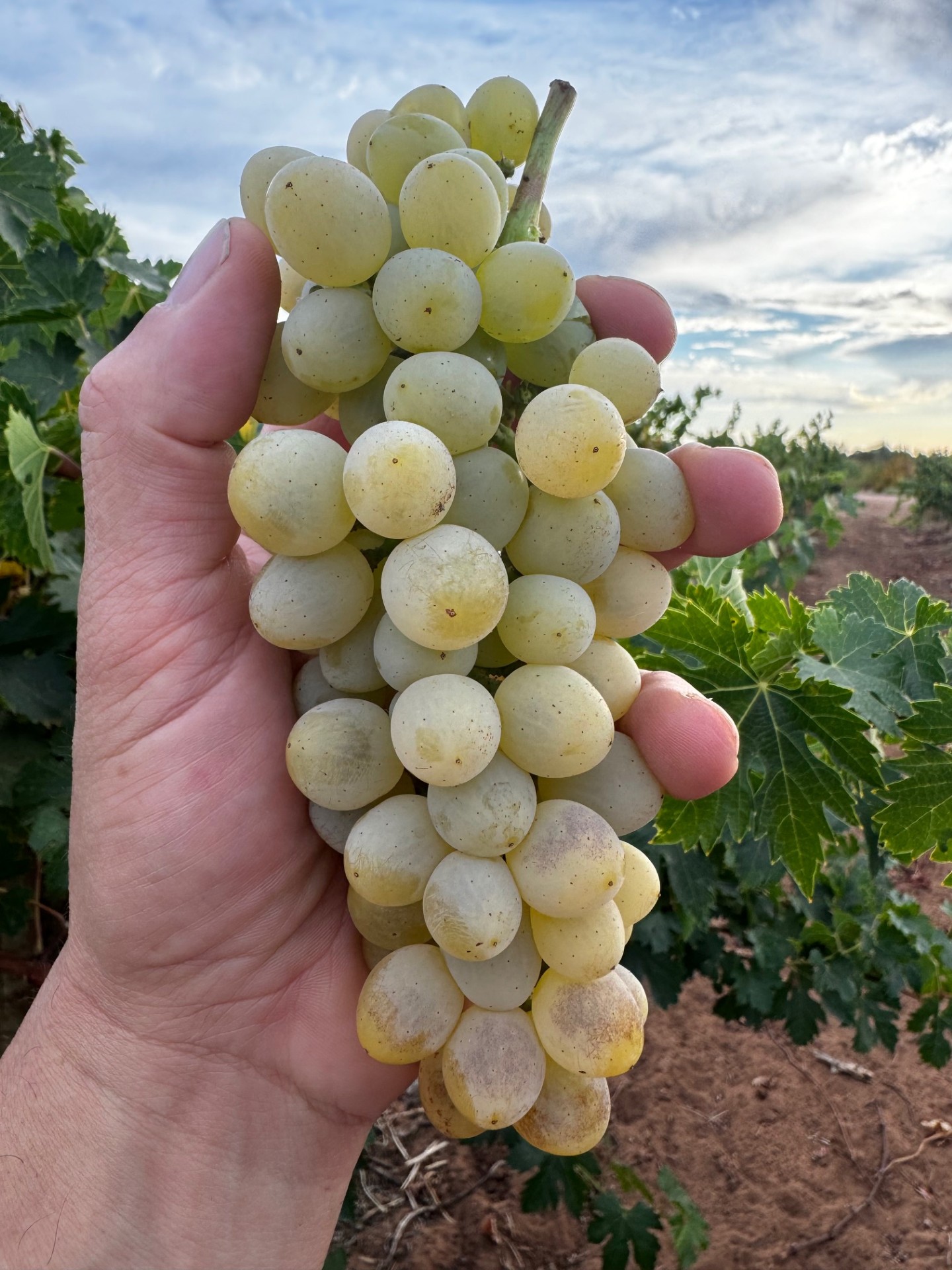
Xynisteri, one of Cyprus’ best-known indigenous white grape varieties, is being grown on a small scale in Australia after research found it performed well under heat and limited irrigation.
But while early results are promising, researchers and the country’s wine authority, Wine Australia, say more long-term field trials are needed before the variety’s potential can be properly assessed.
The story began with Australian researcher Alexander Copper who first encountered Xynisteri while working a harvest at the Zambartas winery in Cyprus in 2010.
Copper worked nine harvest seasons in Cyprus between 2010 and 2019 and began researching Xynisteri and another Cypriot variety, Maratheftiko, in 2016.
He was struck by Xynisteri’s ability to remain healthy through the Cypriot summer.
“By the third harvest season, I began to think about, how is this variety so good?” he said.
“It’s the last harvested variety and it has survived beautifully through the heat of the Cypriot summer.”
That prompted him to investigate whether the vines could have a role in Australia, where wine growers face increasingly difficult conditions in some regions.
Copper said the project was carried out through the University of Adelaide and his own funding. Wine Australia supported part of his PhD research through a top-up scholarship, but he said it had not provided ongoing funding for the project since 2021.
A bigger root system
The strongest evidence so far comes from controlled pot trials carried out in Cyprus and Australia.
The 2022 study compared Xynisteri and Maratheftiko with Shiraz and Sauvignon Blanc under three irrigation regimes.
Both the Cyprus and Australian trials found that Maratheftiko, and particularly Xynisteri, performed better under hot and water-limited conditions than Shiraz and Sauvignon Blanc.
The researchers measured growth rather than grape yields.
One of the most striking findings involved the roots.
After the irrigation trials, the vines were removed and their roots, shoots and leaf masses were measured. In the Australian minimal-irrigation group, Xynisteri had a mean root mass three times larger than Shiraz.
The roots of fully irrigated Xynisteri were four times larger than those of minimally irrigated Shiraz.
Copper said a more extensive root system could help explain the vine’s performance when water is limited.
More recent research by Cypriot scientists has also found that Xynisteri developed a more extensive, deeper and denser root system than Chardonnay, improving its ability to take up water from deeper layers of soil.
Copper said that finding was consistent with what his team had suspected from the pot trials.
But there is an important qualification.
His research did not assess Chardonnay, and the pot trials did not measure fruit yields. More research is needed to establish how the variety performs in commercial vineyards over several seasons.
From Cyprus to the Barossa
Among the Australian growers testing Xynisteri are Paul and Mara Georgiadis, whose Paulmara Estate vineyards are in South Australia’s Barossa Valley.
The couple received vines from Copper and have planted Xynisteri alongside varieties including Sangiovese, Nero d’Avola and Xinomavro.
Their Georgiadis Estate vineyard in Marananga was planted in 1995 and was originally established to supply premium grapes to Penfolds, one of the oldest and most famous Australian wine makers.
Today, the vineyard includes emerging varieties as the estate explores alternatives to some traditional plantings.
The vineyard has a mix of red-brown loams, clay, limestone, ironstone and other soil types. It sits between 250 and 290 metres above sea level.
Paul Georgiadis said irrigation was used only at critical stages of vine development, with soil moisture monitored at different depths.
Georgiadis began his career in the Riverland, a wine-producing area in south Australia, before spending 18 years as Penfolds’ grower relations manager for premium regions.
For growers such as Georgiadis, the attraction of Xynisteri is not simply that it comes from a hot country.
It is whether the vine can produce commercially useful grapes while requiring less water and coping with extreme heat.
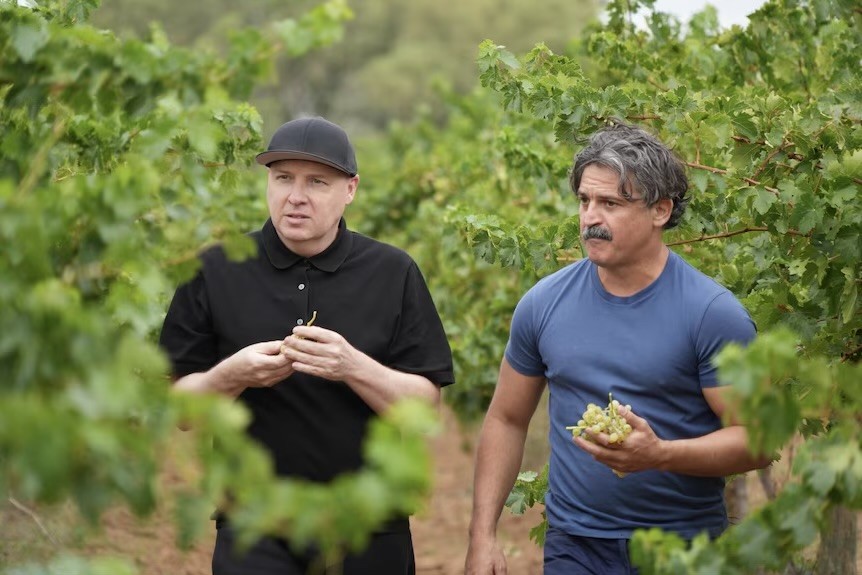
One Australian grower, Riverland producer Yianni Koutouzis, has reported using about 75 per cent less water on Xynisteri than on Shiraz and Chardonnay.
Copper said the figure was based on the irrigation rates used for the different varieties in Koutouzis’ vineyard.
“More scientific data has not been available due to a lack of funding,” Copper said.
The pot trials provide evidence that Xynisteri can maintain growth under restricted irrigation. A commercial vineyard can show how a grower manages the variety in real conditions.
Copper said the two small commercial vineyards currently provide useful evidence, but more research is needed.
Wine Australia cautious
Wine Australia is aware that Xynisteri is now being grown on a small scale by several Australian producers.
But it does not hold detailed data on the variety’s plantings, production or performance.
The organisation said it supported Copper’s PhD research into indigenous Cypriot grape varieties and their suitability for Australia’s changing climate.
However, it stressed that it did not have variety-specific evidence to verify some of the claims being made about Xynisteri.
Wine Australia said alternative varieties were one of several possible ways for the industry to adapt to climate change, alongside rootstocks, vineyard design, technology and improved management.
It also said planting decisions remained commercial decisions for individual growers, based on factors including site suitability, production goals, customer demand and the cost of changing a vineyard.
On the broader question of whether Australia could move towards more Mediterranean varieties, Wine Australia said this was “highly likely”, given similarities between the climates of some Australian regions and Mediterranean wine regions.
But it said there were many factors involved in renewing a vineyard.
Asked whether there was enough evidence to regard Xynisteri as an important part of Australia’s response to a hotter and drier climate, Wine Australia’s answer was cautious: it was still too early to know.
A lesson from Cyprus
Copper believes Xynisteri’s origins matter.
The variety evolved in Cyprus, where vines have historically had to cope with high temperatures and limited water.
He said the Australian results showed a clear advantage over Shiraz and Sauvignon Blanc in the controlled trials.
But he does not see Xynisteri or Maratheftiko as a single solution for Australia’s wine industry.
Instead, he believes growers should investigate a wider range of varieties from across the Mediterranean.
He also sees an opportunity for closer cooperation between Cyprus and Australia.
Cypriot growers and researchers have generations of experience with indigenous varieties suited to hot and dry conditions, while Australian growers have expertise in large-scale commercial production.
The two countries, he believes, can learn from each other.
The next test is in the bottle
There is another question that could determine whether Xynisteri spreads beyond a handful of vineyards: whether Australian consumers like the wine.
Copper’s earlier research found a positive response from Australian consumers, including some who preferred Xynisteri to Pinot Gris.
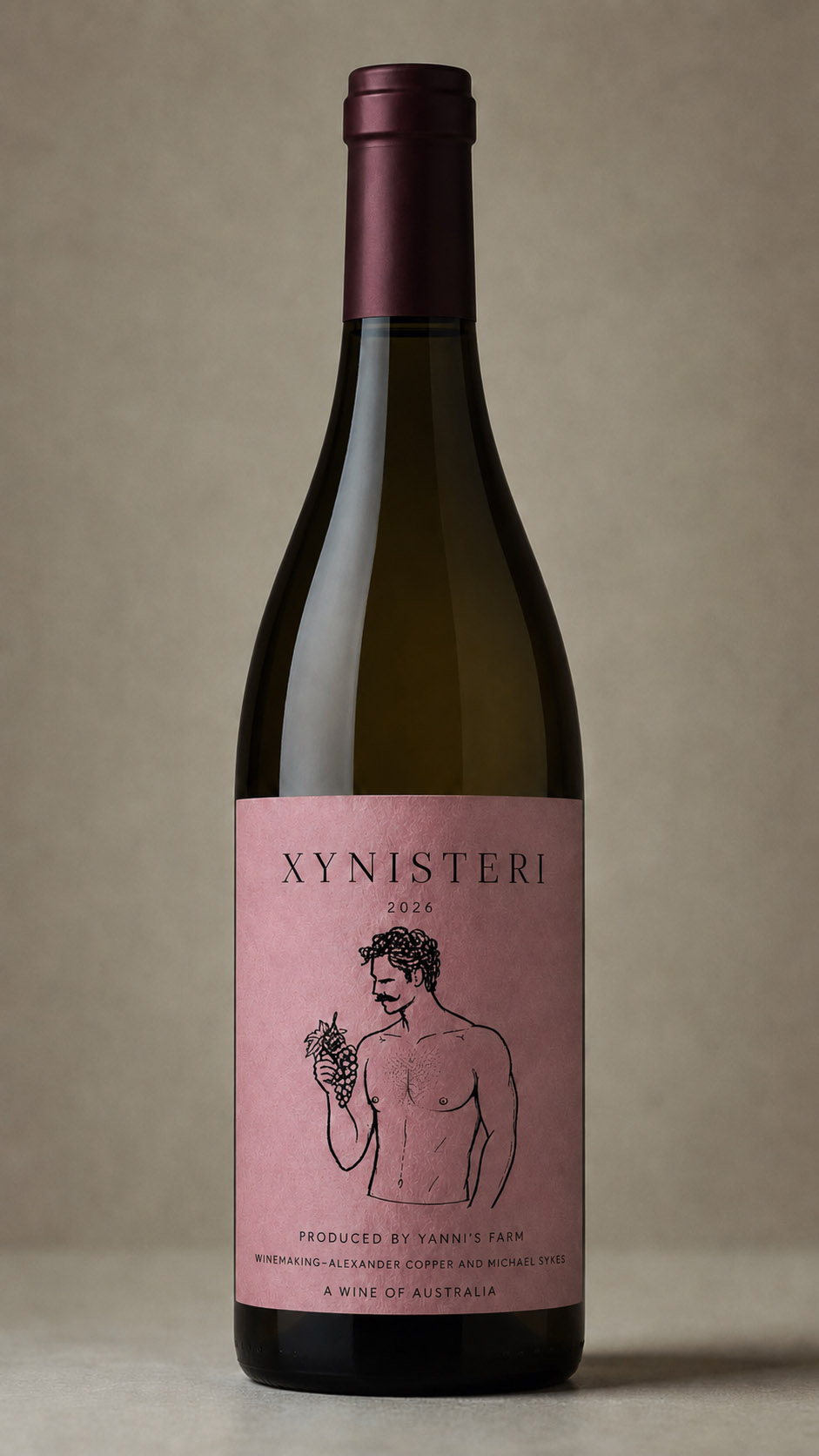
The first commercial release of the wine produced by Copper and Koutouzis is due shortly to boost what has so far been a limited release.
Copper said he was pleased with the wine and believed it was similar to the Xynisteri wines he had tasted in Cyprus, particularly those from the Paphos region.
That could prove as important as the vine’s roots.
A grape variety can survive heat and drought, but growers will only plant it on a larger scale if the resulting wine has a market.
For now, Xynisteri remains a small experiment rather than an established answer to Australia’s climate challenges.





Click here to change your cookie preferences