
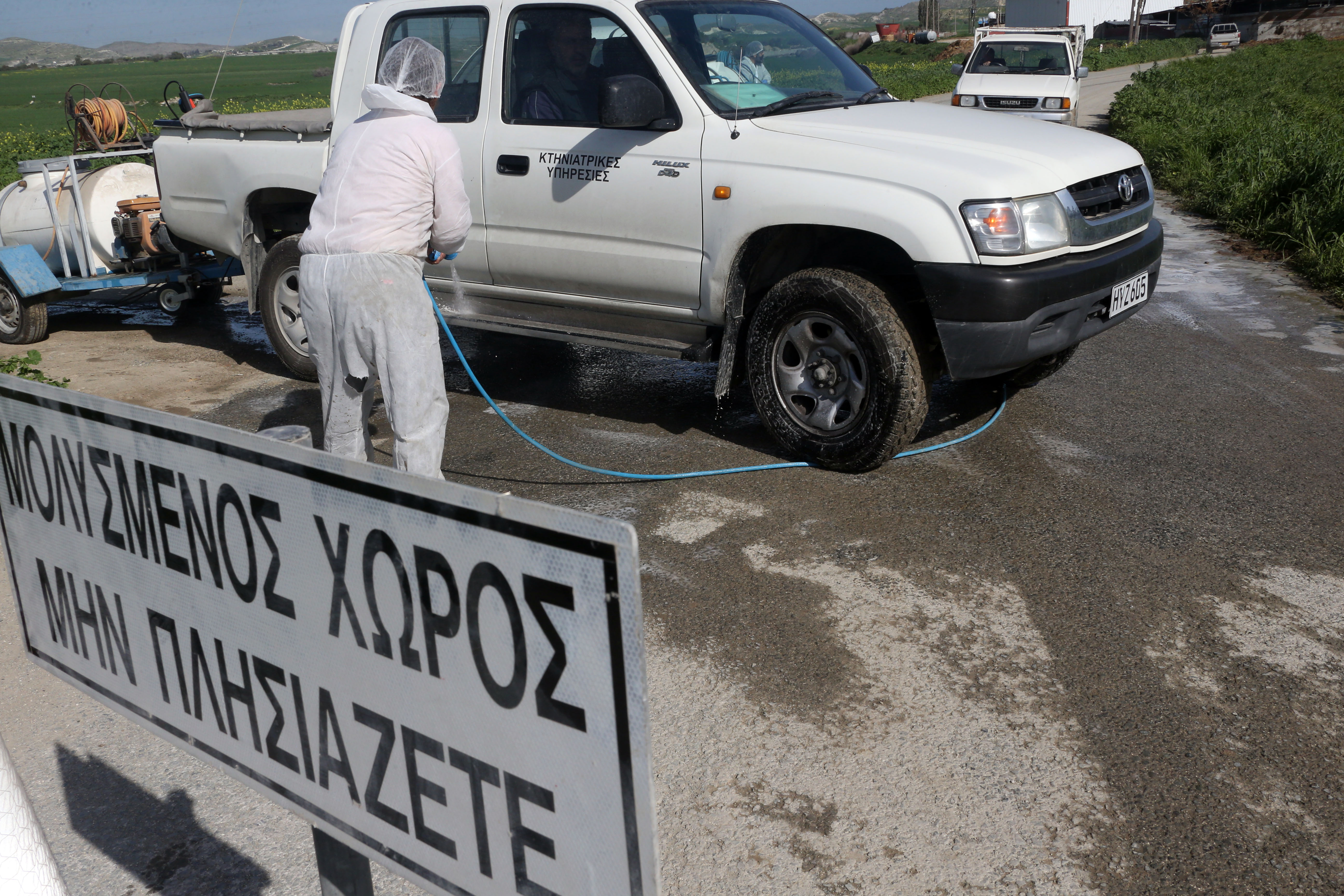
All confirmed cases of Foot-and-mouth disease so far have been identified in the Larnaca district, though the disease has spread to 34 farms within the containment zone, the Veterinary Services of Cyprus said on Monday.
Spokeswoman Soteria Georgiades said inspections, testing and vaccinations were continuing across the island. So far, 159,100 vaccine doses for sheep and goats and 79,100 doses for cattle have been allocated.
Arrangements are also under way to receive vaccines for swine from Germany later this month.
“Not even a mosquito is allowed in or out of the pens. Only the personnel assigned to handle each unit are permitted access,” Georgiades said, referring to the strict biosecurity measures in place.
She added that culling operations were continuing on Monday at farms in Dromolaxia. So far, nine farms have been affected, with 269 cows and 13,890 sheep and goats culled.
The culling methods used are those approved by legislation for emergency situations, including the use of captive-bolt devices and euthanasia.
Regarding euthanasia drugs, Georgiades said the Veterinary Services had secured all available quantities in Cyprus, including supplies from state reserves and private veterinarians, while additional quantities had been ordered from abroad.
She said EU protocols were being followed and efforts were under way to ensure the European Union takes Cyprus’ particular circumstances into account.
Earlier on Monday, President Nikos Christodoulides said he would speak later in the day with Ursula von der Leyen, president of the European Commission, to discuss possible solutions.
On Sunday, Christodoulides had promised to “stand by” farmers impacted by the ongoing outbreak in the Larnaca district, following a meeting with stakeholders at the presidential palace.
The spokeswoman said the government was not requesting direct assistance from the European Commission, but was exploring alternative ways to manage the situation.
“We are a very small island where farms are located close to each other. The virus spreads very easily. The legislation provides for strict instructions, namely the culling of the whole herd even if just one animal is found positive. So, the president is trying to see what else he can do,” she explained.
Georgiades acknowledged that culling operations were difficult and expressed concern about how the process had been portrayed publicly.
“It is not pleasant to euthanise an animal,” she said.
She added that farmers had tried to prevent the culling and “for a moment there was tension”.
“We tried to regroup with our crew, complaints were made to the police and we continue are work,” Georgiades said.
Complaints were also submitted regarding a video of the culling that went viral online.
“I think it is unacceptable for the people to see what has to be done in such a situation. We are at war with the virus, we are not at a calm phase. The virus is very infectious, very contagious and we must contain it. Culling is a containment measure along with all other restrictive measures imposed and I hope and wish they are being implemented – movements, disinfections, biosafety – things we have been saying from the outstart,” she said.
She added that no cases had so far been reported in other districts.
Regarding compensation, Georgiades said a committee to handle the issue was in the process of being established.
So far, representatives from state departments have been appointed, including from the Veterinary Services and the Environment Department.
“Letters have been sent to the agricultural organisations to name representatives,” she added.
In February, the Veterinary Services confirmed that the virus strain detected in livestock units was the same serotype as that circulating in the north of the island.
The finding followed specialised laboratory tests, confirming concerns that the outbreak is epidemiologically linked to cases reported there since December.




Click here to change your cookie preferences