
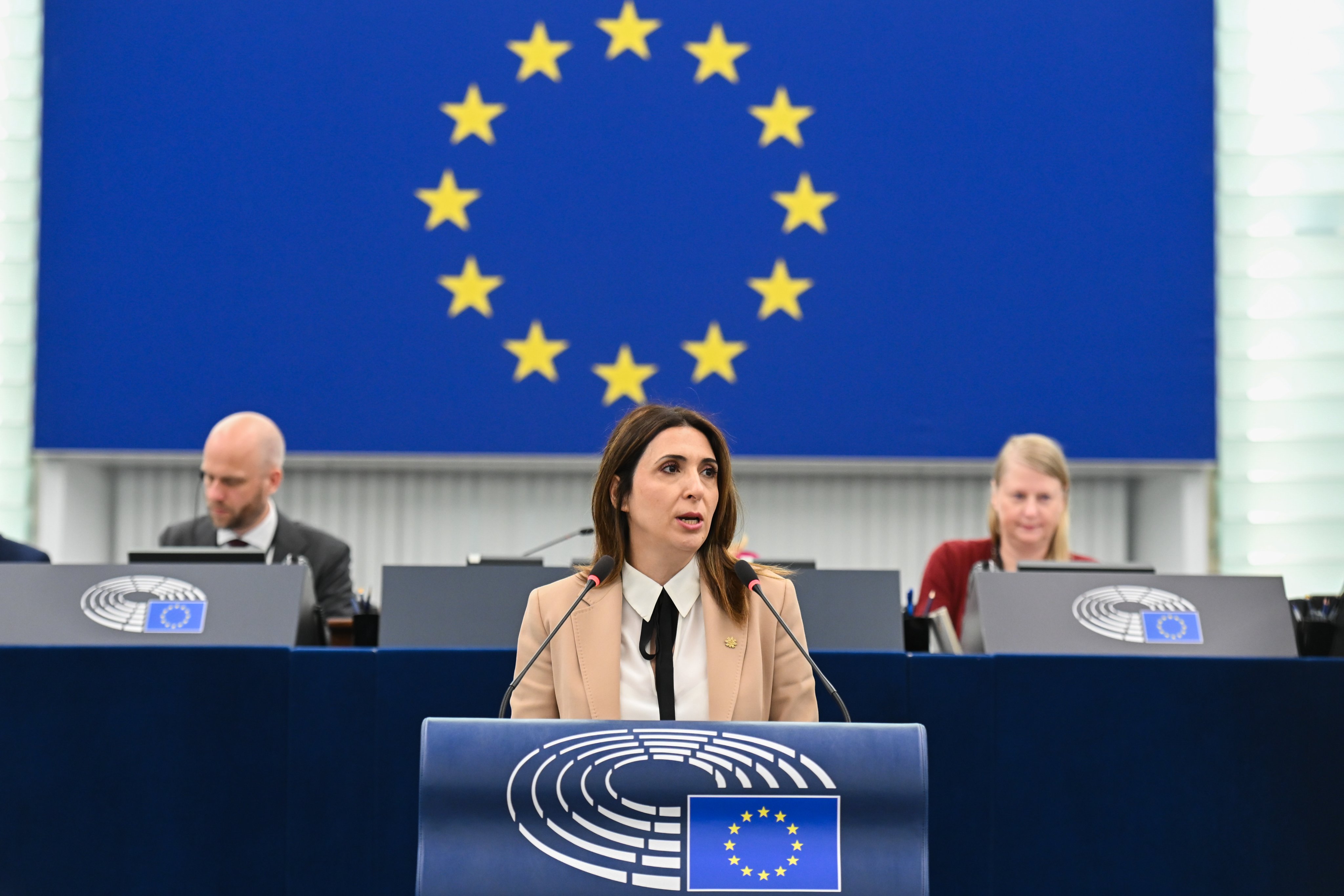
European Affairs Deputy Minister Marilena Raouna on Tuesday said that “we must cut red tape” in her address to the European Parliament as it debated plans to reform the single market to ensure that it become more competitive.
“The administrative burden on our businesses remains too high. We must cut red tape,” she said, before pointing out that the EU has “successfully concluded the first three simplification omnibuses” – packages of legislative changes aimed at simplifying and reducing the volume of European legislation.
“All together, these ten legislative packages … are expected to save approximately €15 billion for our businesses and our economy. That is not red tape reduction on paper; it is real money back in the pockets of European companies,” she said.
However, she was also keen to stress that “simplification does not mean deregulation”, and that additionally, barriers restricting trade between EU member states must be tackled if simplification measures are to take any effect.
“Reducing administrative burdens is impossible if barriers prevent the free movement of goods among member states. These barriers cost us growth, jobs, and competitiveness for every single day that they remain in place. Progress has already been made, but work must continue at full speed,” she said.
The European Commission has referred to these “barriers” between member states as “outdated product rules, slow standard-setting, and inconsistent national regulations” between member states.
“This makes it harder to sell, scale, or move goods and services across borders,” it said.
The simplification omnibuses which have been completed so far are related to regulations concerning sustainability, EU investments, and the bloc’s common agricultural policy.
The fourth omnibus, presented by the European Commission last September, concerns regulations related to small- and medium-sized businesses and digitalisation, while the fifth, presented in November, concerns defence readiness, and the sixth, which was also presented in November, concerns regulations related to chemicals.
November also saw the commission present the seventh omnibus, which concerns the digital sector, while the final three omnibuses were presented in December. They concern the environment, the automotive industry, and food safety.




Click here to change your cookie preferences