
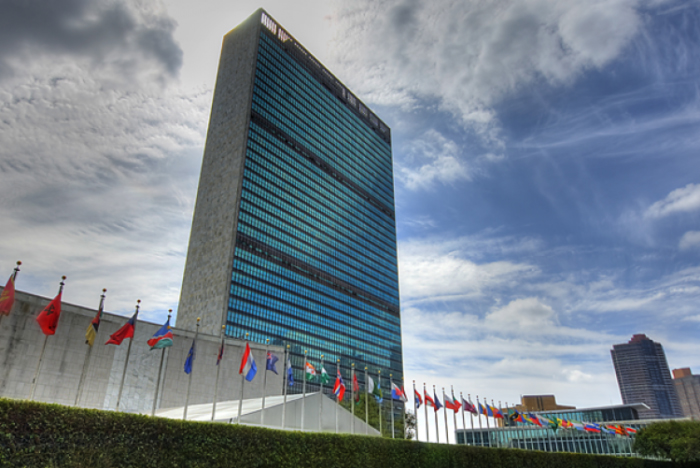
Gender equality commissioner Josie Christodolou called on the community of nations to commit to providing women unhindered access to a legal system safeguarding their rights in view of what she described as a serious global backsliding of gender equality.
“Justice is the foundation that allows women and girls to fully exercise their rights,” she said.
Representing the EU Council at the 70th session of the UN’s commission on the status of women in New York, Christodoulou said that millions of girls and women still faced social and structural barriers to the protection of their rights.
She described barriers such as costly legal procedures, discriminative laws and prevailing stereotypes that continue to exist “even within the judiciary.”
“A gender-sensitive justice system is fundamental to achieving gender equality and realising the rights of all women and girls,” Christodoulou added.
She said that gender equality has been established as a “cross-cutting policy priority” within the framework of Cyprus’ ongoing EU Presidency, underlining that particular emphasis was placed on the prevention of cyberbullying of females.
“Digital violence is not virtual; its consequences are real and lasting,” the commissioner said, stressing that digital spaces must become “safe and empowering environments” for women and girls.
Highlighting the potential of digital tools, Christodoulou said that these allowed for increased accessibility to justice mechanisms by providing information, access to relevant services and support structures.
Christodoulou said that measures to improve cooperation with civil society, gender budgeting, launch targeted actions and the strengthening of institutions have been brought forward as part of the national strategy for gender mainstreaming.
Additionally, she said, a national action plan to combat and prevent violence against women has been established, which provides for the creation of a national database on violence against women, training opportunities for professionals, improved support mechanisms for women and adjusted protocols on the handling of incidents of sexual violence.
“The [national] bill on gender mainstreaming, [aims to] institutionalise the gender perspective throughout public administration, [by] integrating it into every stage of planning, implementation, evaluation of policies and budget processes,” Christodoulou said.
She added that the EU, on its part, has proceeded with its implementation roadmap for women’s rights, and the EU Commission’s new strategy on gender equality as well as the directive on combating violence against women and domestic violence aimed at creating “accessible, affordable, safe and gender-sensitive justice systems.”
Further measures, the commissioner added, included the EU’s financial contribution of €500 million to the UN Spotlight initiative, which she said has contributed to the prevention of violence against over 21 million women and girls.
The commissioner reiterated that 676 million women still live in areas affected by deadly conflicts, while conflict-related sexual violence has increased by 87 per cent and is likely to continue with impunity and the undermining of peace, security, and the rule of law, unless there is “access to justice and accountability.”
The 70th session of the Commission on the Status of Women is taking place from March 9 to 19, 2026, at UN headquarters in New York. The meetings are attended by representatives of member states, UN entities and international NGOs.




Click here to change your cookie preferences