
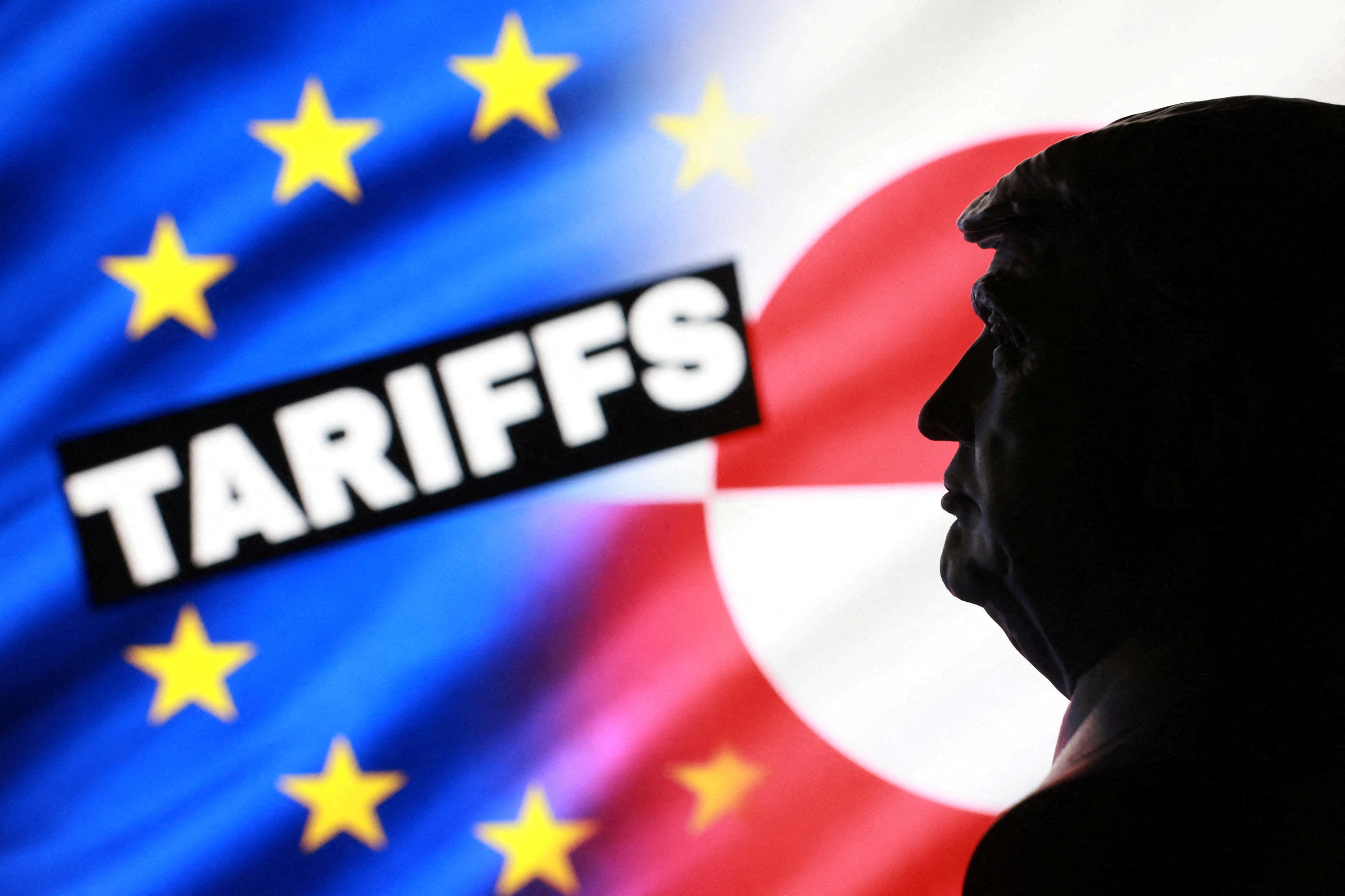
The administration of Donald Trump has launched a sweeping set of trade investigations targeting dozens of countries over excess industrial capacity and alleged failures to curb forced labour, as it seeks to rebuild tariff pressure after the Supreme Court of the United States struck down much of Trump’s global tariff program earlier this year.
The Office of the United States Trade Representative said it had begun two separate probes under Section 301 of the Trade Act of 1974. One investigation will examine excess industrial capacity among 16 major trading partners, while another will look into forced labour practices across about 60 economies.
U.S. Trade Representative Jamieson Greer said the probes could lead to new tariffs by the summer, depending on their findings.
“These investigations will determine whether foreign governments have taken sufficient steps to prohibit the importation of goods produced with forced labour and how the failure to eradicate these abhorrent practices impacts U.S. workers and businesses,” Greer said in a statement.
Excess capacity probe
The excess-capacity investigation targets several major U.S. trading partners, including China, the European Union, India, Japan, South Korea and Mexico.
Other economies subject to the probe include Taiwan, Vietnam, Thailand, Malaysia, Cambodia, Singapore, Indonesia, Bangladesh, Switzerland and Norway.
Notably absent from the list is Canada, the second-largest U.S. trading partner.
Greer said the probe would focus on economies showing signs of “structural excess capacity,” including persistent trade surpluses with the United States and underutilized manufacturing capacity.
The USTR’s official notice cited the automotive sector in China and Japan as examples, noting that a growing number of companies are unprofitable or struggling to meet interest payments.
The office also highlighted China’s electric-vehicle industry, saying domestic EV capacity exceeds national demand while leading automaker BYD continues to expand overseas manufacturing, including factories in Uzbekistan, Thailand, Brazil, Hungary and Turkey.
Existing automotive plants in Europe are operating at about 55% capacity, according to the notice.
International reaction
China rejected the allegations of overcapacity.
A spokesperson for China’s foreign ministry called the U.S. claim a “false proposition” and said Beijing opposed “political manipulation under this pretext” as well as unilateral tariff measures.
The European Union said it intends to stick to the terms of a trade deal reached last July at Trump’s Turnberry golf course in Scotland, which included a broad 15% U.S. tariff ceiling.
However, uncertainty remains. European Parliament trade committee chair Bernd Lange said lawmakers need clarity on whether the probe could lead to higher tariffs.
Japan said it was reviewing details of the investigation but would continue implementing its existing trade agreement with the United States.
Taiwan’s government said a reciprocal trade agreement signed with Washington last month had already addressed several issues that could arise in the probe, while Indonesia said its existing bilateral trade framework with the United States would remain the main guide for economic ties.
Forced labour investigation
In parallel, the USTR has opened a separate Section 301 investigation into whether foreign governments are failing to prevent the import and export of goods produced with forced labour.
The probe covers around 60 countries and economies, including key U.S. partners such as Australia, Canada, United Kingdom, Israel, India, Qatar and Saudi Arabia, along with China and Russia.
Taiwan said it would cooperate with the United States on labour rights and efforts to prevent forced labour.
Washington has already restricted imports linked to China’s Xinjiang region under the Uyghur Forced Labour Prevention Act, signed by former President Joe Biden.
The United States has accused Chinese authorities of operating labour camps for ethnic Uyghurs and other Muslim minorities. Beijing denies the allegations.
Greer said the goal of the investigation was to push other countries to enforce import bans similar to those found in U.S. trade law.
Tariff pressure rebuild
The investigations come after the Supreme Court ruled on February 20 that Trump’s global tariffs imposed under a national emergency law were illegal.
Following the decision, Trump imposed a temporary 10% tariff for 150 days under Section 122 of the Trade Act of 1974 while his administration pursued alternative legal tools.
Greer said he hopes the Section 301 investigations — including potential remedies such as tariffs — will be completed before the temporary tariffs expire in July.
The probes also come ahead of talks between U.S. and Chinese officials aimed at easing tensions.
U.S. Treasury Secretary Scott Bessent is scheduled to meet Chinese counterparts in Paris this week, paving the way for a potential meeting between Trump and Chinese President Xi Jinping in Beijing later this month.




Click here to change your cookie preferences