
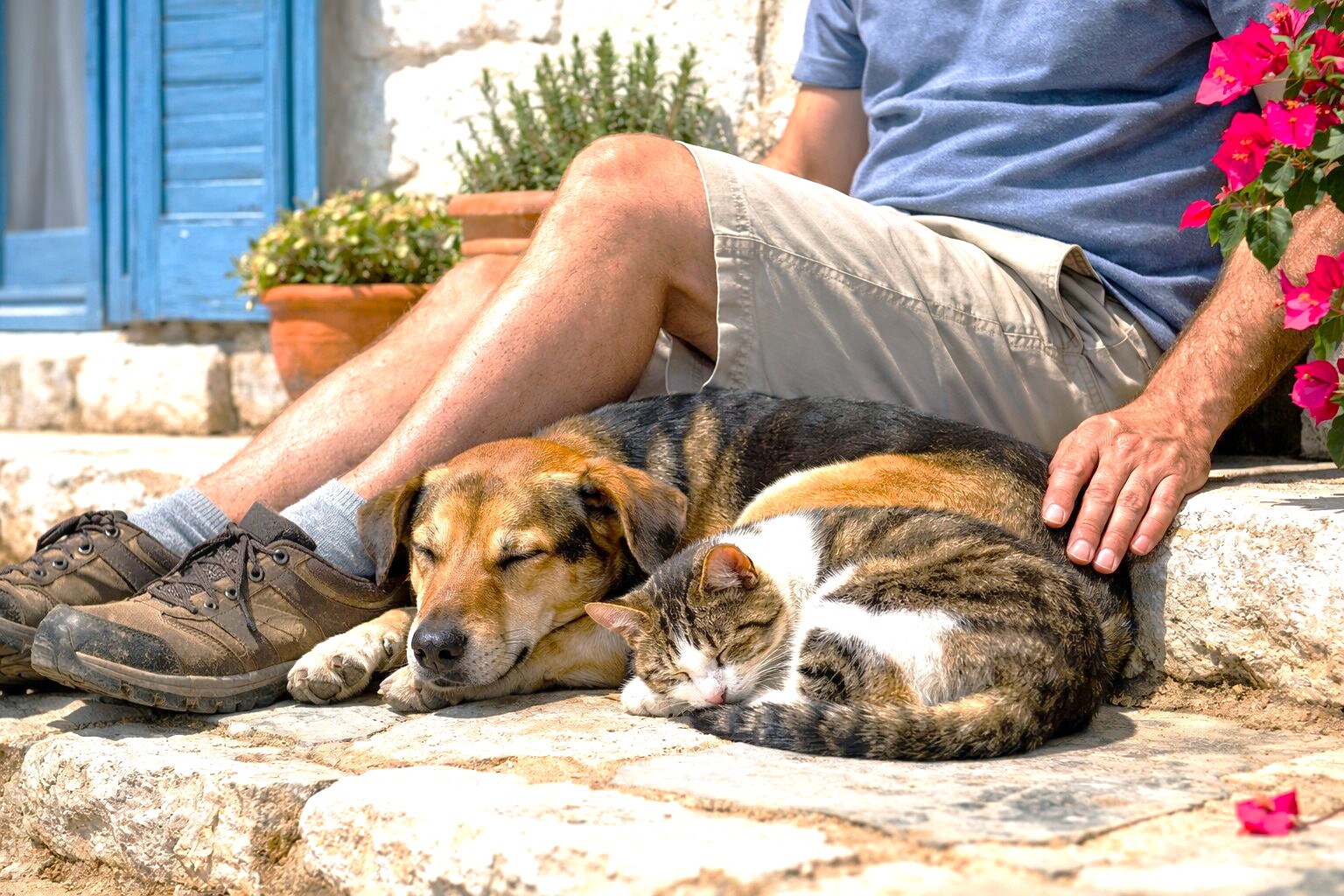
The cat settles on your lap. The dog leans in, warm and solid.
There’s no advice. No judgement. Just contact.
Your shoulders drop. Your breathing slows. Whatever was looping in your head a moment ago loses its grip.
In homes across Cyprus, animals do this quiet work every day. Not as therapy. Just as themselves.
It’s a shame, because while many of us feel comforted by companion animals, the island’s animal welfare tells a more complicated story…
Our shelters are overwhelmed with abandoned dogs, stray cats. In 2024 alone, authorities reported about 150 incidents of animal abuse on the island – an increase of more than 60 per cent on the previous year.
Yet, as our volunteers struggle to care for the growing number of strays, they’ll also tell you something crucial: spending time with animals is never a one-way exchange…
Studies have proven that people with pets have lower blood pressure and heart rate; that the presence of a familiar animal helps blunt the body’s stress response.
Other research finds that petting a dog or cat can decrease cortisol – the hormone released in stress – and boost oxytocin, a chemical linked to bonding and calm. And another study discovered that simply working with a therapy dog could reduce self-reported anxiety, pulse rate and salivary cortisol!
In short, pets don’t just give you ‘the feels’. They actually create physiological shifts that help the nervous system move out of constant alert and into rest.
That matters in a place like Cyprus, where stress often sits quietly in the background. Long commutes. Close quarters. Heat that wears you down by degrees. Family responsibility that doesn’t clock off.
In this context, the presence of an animal isn’t a luxury. It’s a counterweight. Something warm and responsive in a day that asks a lot.
It also helps explain why so many people on the island form deep, unplanned attachments to animals. The cat that chooses your doorstep. The dog taken in ‘just temporarily’, who soon becomes part of the family.
These relationships aren’t sentimental indulgences. They’re regulating. The body responds to them whether you believe in it or not.
It makes the contrast harder to ignore. An island where animals offer some of our most reliable, non-verbal comfort is also one where they’re frequently neglected, abandoned or mistreated. We benefit from their presence, even as many of them bear the cost of our busyness, our pressure, our lack of pause.
And perhaps that’s the quiet takeaway here. Animals don’t soothe us because they fix anything. They soothe us because they don’t ask us to perform. They sit. They lean. They breathe.
In a noisy, demanding environment, that kind of uncomplicated presence does something powerful. It reminds the nervous system exactly what safety is.





Click here to change your cookie preferences