
'We can confiscate whatever we must, now we do not want livestock farming to be lost, nor do we want to harm anyone, but they must cooperate'
Two cases of foot and mouth disease have been reported outside the Larnaca containment zone, this time in Dhali and Yeri in the Nicosia district, bringing the total number to 41 livestock farming units now affected.
The veterinary services said two new zones have been created, specifically 3km in Yeri and 10km in Dhali.
Dhali and Yeri are surrounded by hoofed animal farms.
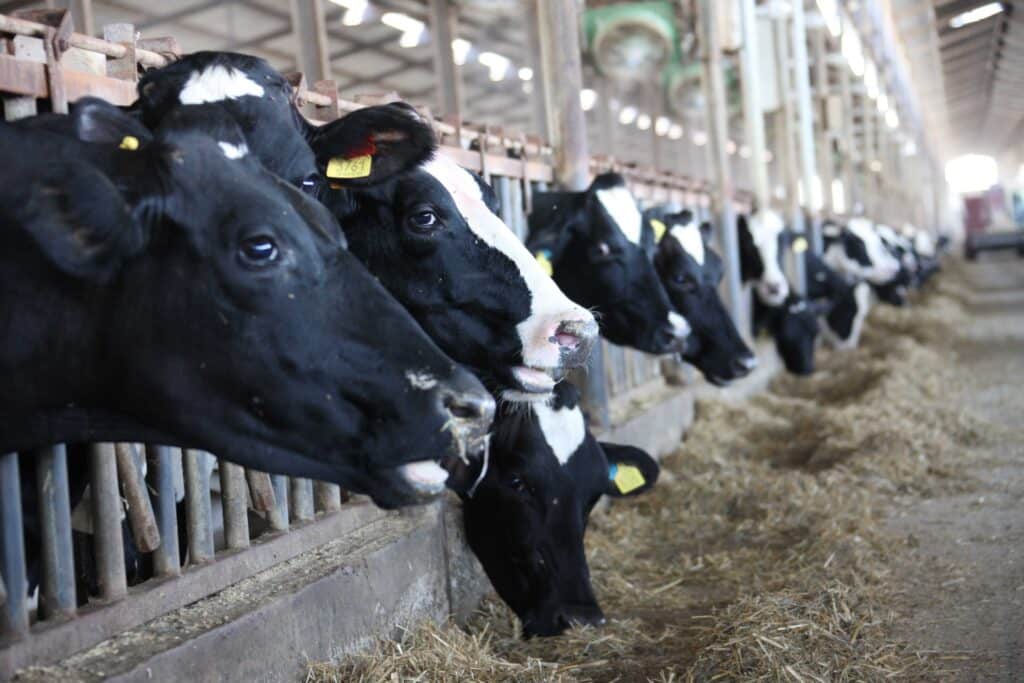
Veterinary services spokeswoman Soteria Georgiades told a press conference that the case in Yeri was at a cattle farm with 70 cows, and the one in Dhali at a sheep and goat farm with about 1,700 animals.
She explained that the animals were infected due to previous transferring of livestock from neighbouring farms.
Georgiades said all animals from 16 infected units have been culled, while island-wide over 76 per cent of cattle and over 42 per cent of sheep and goats have been vaccinated.
A vaccine for swine has already been ordered and is expected to arrive the latest by early April.
Veterinary authorities also confirmed an additional case in Oroklini, bringing the nationwide total to 41 infected livestock units.
The new cases were detected in the Idalion livestock area, one of the most important centres of the island’s dairy industry, raising concern among producers about the potential impact on milk production and halloumi supply.
At the same time, the European commission has decreed that restrictions on the export and movement of live animals and fresh animal products will apply across Cyprus until at least May.
Processed dairy products such as halloumi are exempt from the ban and can continue to be produced and traded under strict health conditions.
The exemption is based on scientific evidence that the foot and mouth virus is sensitive to heat, meaning products that undergo sufficient heating during production, including halloumi, are considered safe under international regulations.
The outbreak in Dhali occurred at a large sheep and goat farm belonging to a livestock trader operating across Cyprus, while the infection in Yeri was detected at a cattle farm located close to other livestock installations in the area.
Officials said the spread beyond the initial containment area required the immediate creation of new surveillance zones around the Idalion livestock region and the activation of European disease protocols.
Under those measures, the culling of animals in infected units would commence while strict restrictions remain in place on the movement of live animals and animal products.
Veterinary services have declared the affected areas in a state of emergency and are establishing control and disinfection checkpoints within the zones in an effort to limit further transmission.
Around 15,000 animals have already been killed as part of containment efforts and another 15,000 are expected to be culled as procedures continue at infected farms.
The government is also preparing financial support for affected producers.
Agriculture minister Maria Panayiotou said the first advance compensation payments of €50,000 will begin next week for livestock farmers whose animals have been culled.
Panayiotou said compensation would be calculated according to current market prices so farmers can meet their financial obligations while their herds are replenished.
She added that the aim is to complete vaccination coverage of livestock units across the island by the end of March.
Veterinary authorities are receiving additional assistance from abroad, with four veterinarians from Slovakia having arrived on Sunday to assist and exchange technical information on how the disease was handled during an outbreak in their country in 2025.
Livestock farmers in the Idalion area have expressed strong concern about the spread of the virus outside the Larnaca district and the implications for farms concentrated in the region.
Speaking on Sigma TV, epidemiologist Michalis Voniatis said that “the biggest question in this epidemiological situation is what happens in the occupied territories. That is the key.”
He said foot and mouth disease does not currently affect humans, but the strict containment measures are essential for public health and to maintain Cyprus within the European single market.
Voniatis further warned that viruses can mutate under certain conditions.
“If it infects pigs there could be a mutation because the biological profile of pigs is very close to that of humans.”
Cattle farmers association president, Nikos Papakyriakou, said European protocols clearly require the culling of infected animals but warned that the continued presence of the disease in the north could undermine recovery efforts.
“Even if we replace the animal populations and constantly bring in animals from Europe, in the end we will lose them again because the disease is on the other side,” Papakyriakou said.
Veterinary Services spokesperson Sotiria Georgiades responding to recent livestock farmers’ protest rallies, warned that failure to cooperate could lead to “more drastic” measures.
“We have every right, as a competent authority based on the law, to enter the farms, to do what we must, without any compensation. We can confiscate whatever we must, now we do not want livestock farming to be lost, nor do we want to harm anyone, but they must cooperate,”she insisted.
Georgiades stressed that gatherings outside containment zones risk spreading the virus.
“It is as if we are spreading the virus ourselves. Livestock farmers should not gather. It is in the decree that all biosecurity measures must be observed. When they gather, we are not observing them, no matter how clean and disinfected we are.”
She explained delays in culling arose from blockages by farmers obstructing veterinary services operations, requiring police intervention to proceed.
In regard to concern raised over the potential fallout to halloumi exports, Georgiades cautioned that registration may be affected if the situation continues to evolve.
“We hope that we do not reach such levels. Everything is reviewed and revised regularly. In May, when the EU comes to review, if we are in the same situation, I do not know what other sanctions may be imposed. We fought to succeed but other countries may have second thoughts.”
Georgiades explained that epidemiological investigations track animal movements weeks prior to infection.
Investigations in Yeri will cover surrounding units within the new zones.
She said negative results in other provinces give reason for cautious optimism but stressed the importance for cooperation.






Click here to change your cookie preferences