
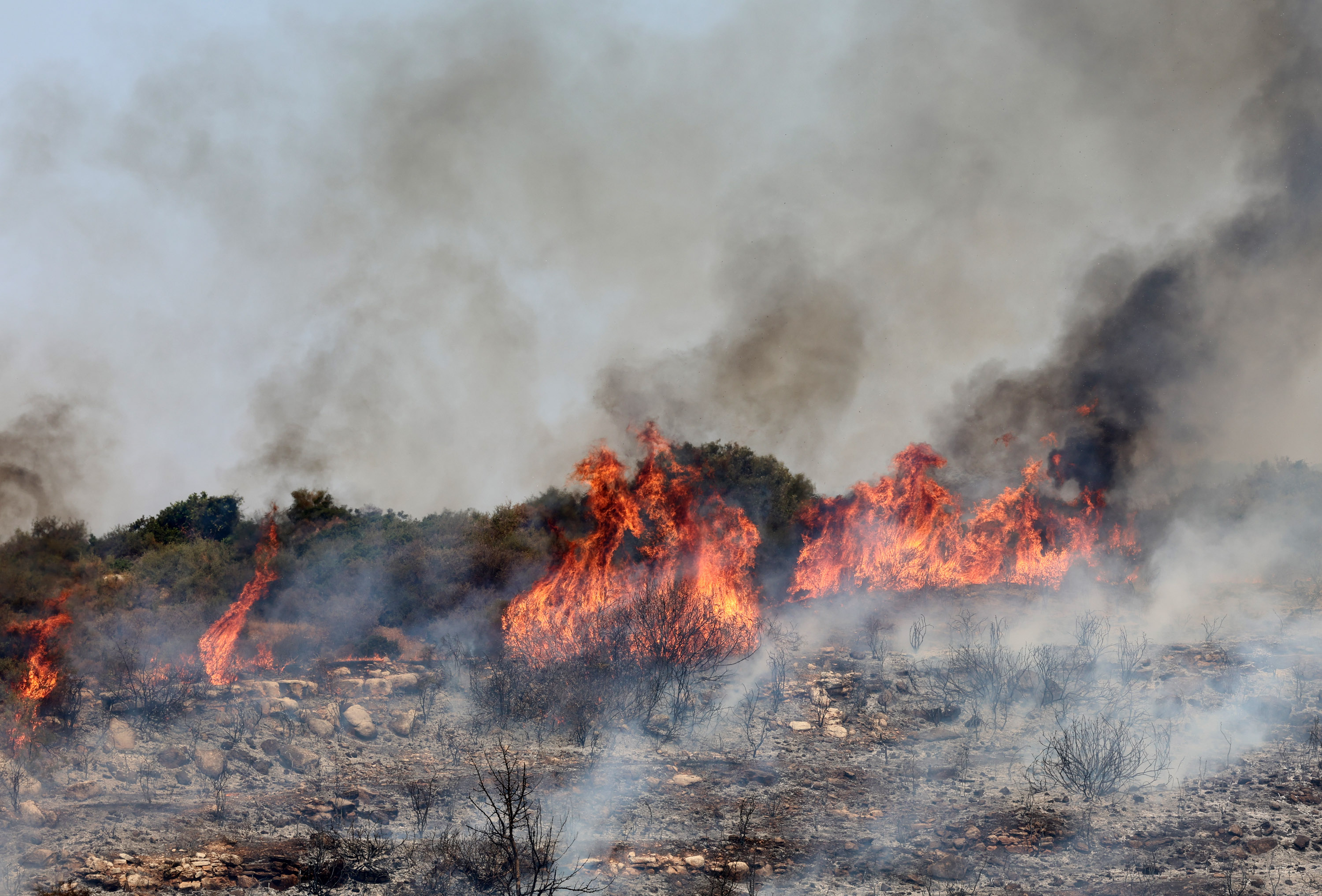
Some work has been done by the authorities in preparation for the fire season, the House environment committee heard on Wednesday, said the fire chief Nikos Longinos, who was recently appointed acting national coordinator for fires.
There would be adequate aircraft for firefighting by May 1, by which time the authorities will have 11arcraft at their disposal. Four leased planes (Air Tractor) would arrive at the end of this month and another three by the end of April, when four helicopters would also be added to the fleet. In addition to these, there are also the helicopters of the police and national guard as well as two of the British bases, said Longinos.
Civil defence had been reviewing evacuation plans and these had been completed by 80 per cent of the communities in three districts and by 50 per cent in the other two. In the absence of a warning system – a pilot system is scheduled to be in place in June – community leaders in high-risk areas have been given special training and a radio so they could communicate with civil defence in the event of a fire. Community groups were also set up on Viber and WhatsApp so that civil defence messages could be delivered to residents.
The only weakness that had not been addressed, in Longinos’ view, was the inadequate number of fire stations in the countryside. He had proposed that the 14 existing fire stations should have enough personnel to be operational 24 hours a day. At present they close at 7pm. He also said that another 14 fire stations should be set up to cover remote areas which are not catered for. Arguably the biggest weakness was understaffing. It made no sense that the fire service had 233 firefighters whereas the Forestry Department had at its disposal 606 fire-fighting workers.
He may have a point about understaffing, but is it realistic to think we can double the number of fire stations and employ enough staff to keep them open 24/7? This is the ideal solution, but we have to be pragmatic and consider what the state can afford. Perhaps the affordable solution is better organization, more coordination of services, an effective surveillance system and a communication network that is always manned. Modern technology, when used effectively, will ensure faster response time, which is key, than having a fully-staffed fire station in every village.
We need to make the most of technology, instead of always thinking that hiring more staff is the solution to every problem. This has been the government thinking, ever since independence, but this is the era of hi tech, AI and digatalisation. We would still need people to put out a forest fire, but there could be individuals hired if and when their help is needed. We cannot have fire stations in the countryside in which full-time employees are playing tavli all day long, waiting for a fire to start.





Click here to change your cookie preferences