
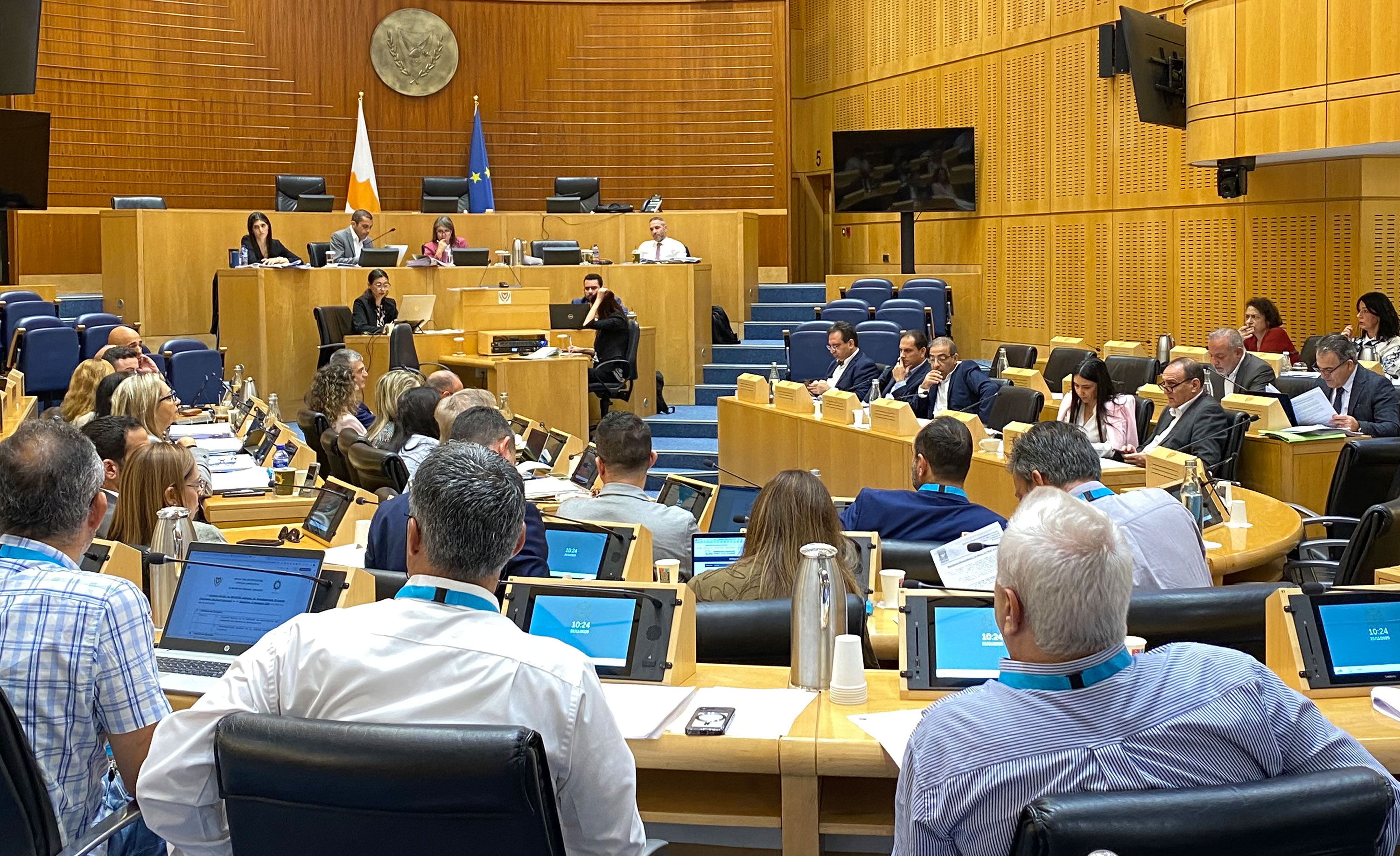
The House Finance Committee on Monday will examine two government bills aimed at upgrading the current debt confirmation mechanism of the Financial Ombudsman, including provisions for debt restructuring and enforcement of his decisions.
The bills aim to strengthen the role of the Financial Ombudsman by making his decisions binding, allowing faster and more effective protection for debtors while relieving court workloads. The legislation also seeks to enhance the insolvency framework by linking the ombudsman’s authority to confirm debt with the process for personal insolvency plans.
In total, political parties submitted 26 proposals, and the committee will decide which will be forwarded to the House Plenary alongside the two government bills.
Finance Minister Makis Keravnos said that, following cabinet approval on March 16, the strengthened role allows borrowers to approach the Financial Ombudsman earlier, at the issuance of a Type I Letter rather than the current Type IA Letter. This gives both the borrower and the Ombudsman more time to explore potential arrangements.
If no agreement is reached on the first proposed method of debt restructuring or repayment, the borrower can then approach an Insolvency Advisor to prepare a personal repayment plan. The bills also introduce binding decisions by the Ombudsman for amounts up to €20,000.
Keravnos added that the legislation represents a final measure to protect primary residences, preventing foreclosures and enabling debt restructuring.
The Committee will also consider bills on the regulation and supervision of data exchange mechanisms in Cyprus, including frameworks to assess clients’ creditworthiness and manage associated financial risks, aiming to ensure financial stability.
Additionally, a bill will introduce regulations allowing the Council of Ministers, through publication in the Official Gazette, to designate the competent authority for the operation of an Emergency Incident Management Centre.
The Committee will discuss a proposal submitted by Democratic Rally MPs Haris Georgiades, Onoufrios Koullas and Savia Orfanidou, along with Democratic Party MPs Christiana Erotokritou and Chrysis Pantelides, granting the Tax Commissioner authority to approve incentive plans that were in effect under the special taxation regime, provided they include a minimum three-year retention period expiring in the second half of 2026.





Click here to change your cookie preferences