
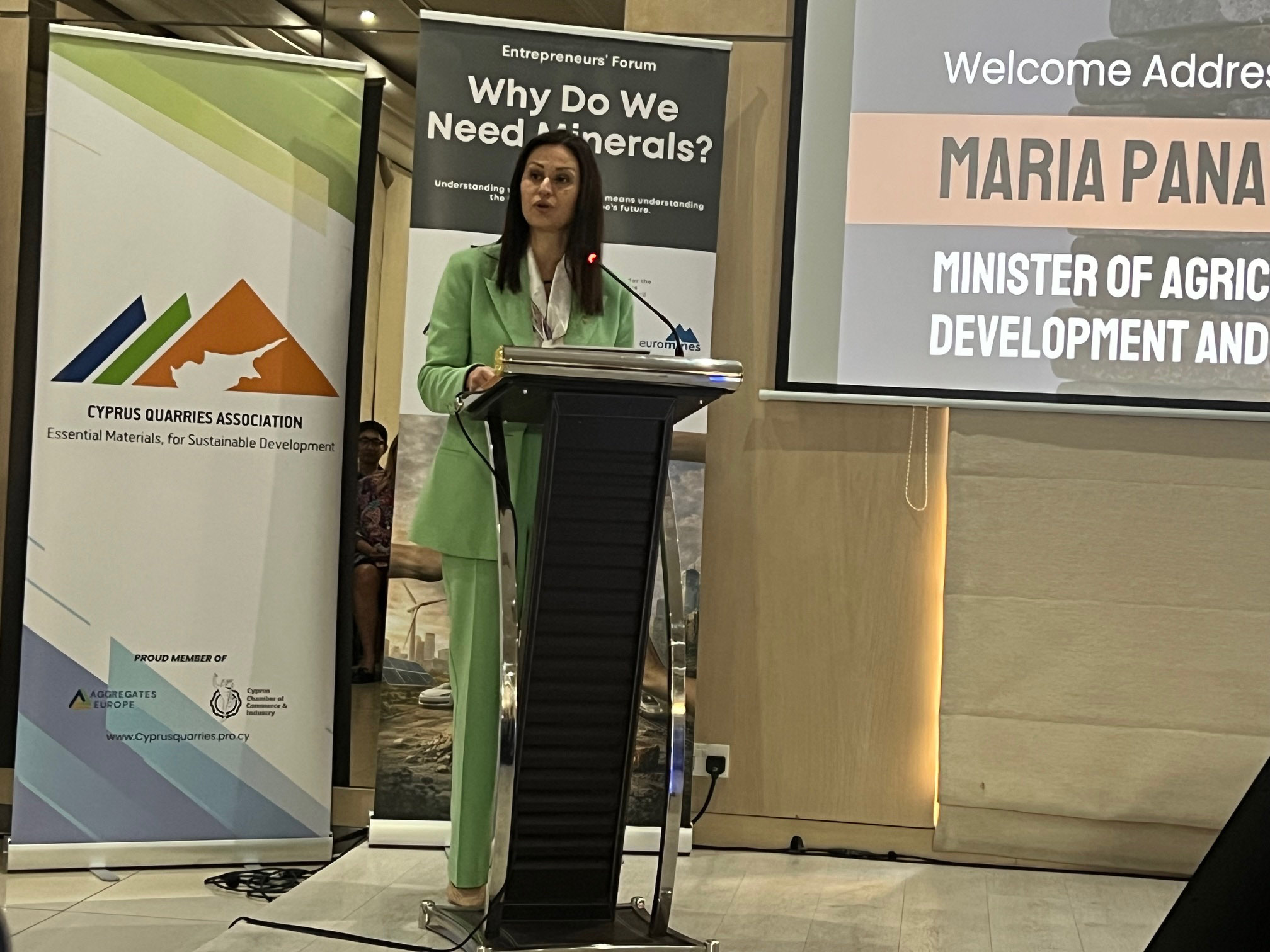
Reducing environmental impacts while improving supply security is creating new opportunities for Cyprus, particularly in areas such as waste management, material recovery and the sustainable use of resources, Agriculture Minister Maria Panayiotou said on Thursday.
Speaking at a business forum in Larnaca titled “Why we need minerals”, organised by the Cyprus Quarries Association and the Greek Mining Enterprises Association under the auspices of the Cyprus presidency of the Council of the European Union, Panayiotou said raw materials and minerals were now central to Europe’s green transition and digital transformation.
“Raw materials and minerals are no longer simply essential industrial inputs,” she said. “They are at the core of our green transition, our digital transformation, as well as the overall strength and resilience of our economies.”
The minister said minerals play a critical role across almost every aspect of modern life, from renewable energy and electric vehicles to construction, telecommunications and advanced manufacturing.
“They are essential if we want to achieve the European Union’s climate goals and remain competitive in an increasingly complex global environment,” she added.
Panayiotou also warned that growing dependence on minerals creates new challenges linked to geopolitical tensions, supply chain disruptions, environmental concerns and rising global demand.
“This new reality requires a coordinated and forward-looking approach, both at European and national level,” she said.
According to the minister, Europe is now being called upon to strengthen secure, sustainable and diversified supply chains for critical raw materials, noting that access to and management of these resources would directly affect the bloc’s ability to innovate and lead in clean technologies.
Referring to Cyprus, Panayiotou highlighted the island’s long mining history dating back thousands of years and its internationally known copper deposits linked to the Troodos ophiolite.
“The abundance and high quality of these deposits made Cyprus an important copper production centre in the ancient world,” she said, adding that the island’s geology played a major role in shaping both its history and international significance.
She stressed that the government remained committed to ensuring that any development in the sector respects environmental obligations, protects biodiversity and aligns with the principles of sustainability and the circular economy.
Panayiotou also referred to the recently adopted EU Critical Raw Materials Act, describing it as a significant step towards strengthening Europe’s ability to secure essential raw materials in a sustainable and responsible manner.
She said the legislation sets clear targets for extraction, processing and recycling within the EU, while also encouraging partnerships with reliable international partners and faster licensing procedures for strategic projects without compromising environmental standards or public participation.
Particular emphasis, she added, is being placed on recycling, urban mining and the recovery of materials from waste.
“Recycling, urban mining and material recovery from waste are no longer optional choices, but necessities,” she said.
By investing in innovation and new technologies, Europe could reduce environmental impacts while improving supply security, she added, noting that this creates new opportunities for Cyprus to contribute actively to the wider European effort.
“Minerals are not simply resources beneath our feet,” Panayiotou concluded. “They are the foundation of our future. The way we manage them today will shape the Europe we leave behind – resilient, sustainable and competitive.”


Click here to change your cookie preferences