
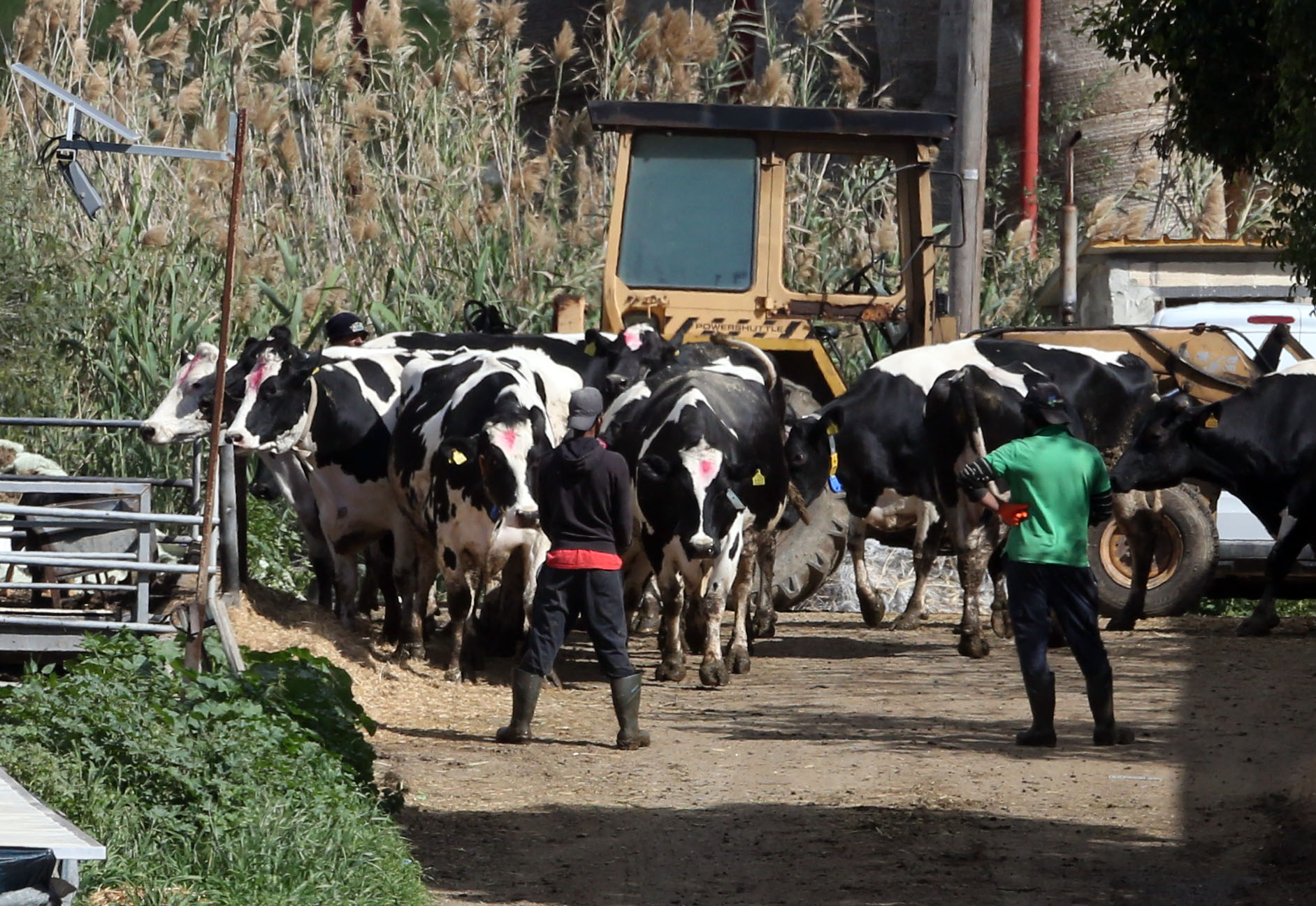
A new case of foot and mouth disease has been identified in a sheep and goat unit within the infected zone in Geri, authorities said on Monday.
According to the agriculture ministry, a total of 725 animals have been infected so far, while the number of affected units has reached 45.
Senior veterinary officer Sotiria Georgiadou said that all reports concerning the movement of animals are being investigated.
She confirmed that culling operations continued on Monday in Livadia. To date, approximately 22,600 sheep and goats and 1,500 cattle have been put down as part of efforts to contain the outbreak.
Vaccination coverage has reached 98 per cent of the cattle population and 72 per cent of sheep and goats, she added.
At the same time, the administration of booster doses began last week and is progressing in line with the initial vaccination programme.
Georgiadou also expressed appreciation for the support provided by EU experts, who visited Cyprus in December and February, offering on-site scientific, technical and operational guidance on the most appropriate measures to combat and eradicate the disease.
She said that during their February visit, the experts confirmed that the Veterinary Services are implementing all required procedures for managing cases, with all measures stipulated by legislation already in place.
“However, they observed that Veterinary Services are facing significant external pressure from groups of farmers, political groups and others, which negatively impacts their work and contributes to the spread of the virus,” she said.
Despite these challenges and what she described as a tense environment, Georgiadou stressed that both the Veterinary Services and the agriculture ministry have fully complied with the experts’ recommendations and implemented all expected actions outlined in their report.
Within this framework, epidemiological investigations, contact tracing and sampling continue both in infected zones and across the island, while efforts to inform livestock farmers have been ongoing since the beginning of the outbreak.
She added that the process of disbursing the first round of financial support has also begun.
Regarding compensation, Georgiadou explained that initial payments concern a first relief instalment for loss of income to farmers whose animals have been culled.
This will be followed by payments under a comprehensive support package, calculated on the basis of an individual assessment of each livestock unit.
The compensation will also cover fixed expenses such as labour costs and social insurance contributions, while income loss support will continue for as long as farmers remain without revenue.
So far, laboratory results from non-infected areas across all districts have returned negative, she said.
Turning to reports of illegal animal movements, Georgiadou confirmed that all information received is being examined. Some cases have led to offences being identified, others have proven unfounded, while in certain instances investigations have yielded results.
Among the cases under scrutiny is a herd of 130 cows found in an illegal facility in Livadia, as well as the previously reported case in Geri, where the animals have since been culled. Additional cases involve around 100 animals in Tseri and Lakatamia, and another in Potamia, where samples have been taken and results are pending.
She confirmed that in some instances animals without ear tags were identified, while investigations are ongoing to determine whether they were illegally moved or had been present beforehand.
On compensation options, Georgiadou said farmers who choose to resume operations will receive both income loss support and replacement animals, while those who opt not to continue will be compensated for the value of their livestock. In both cases, support will include provisions such as feed and milk.
Finally she added that efforts are also underway to source animals from abroad, including contacts with France and Spain, while farmers may also choose to restart using healthy, vaccinated animals from the local market.



Click here to change your cookie preferences