
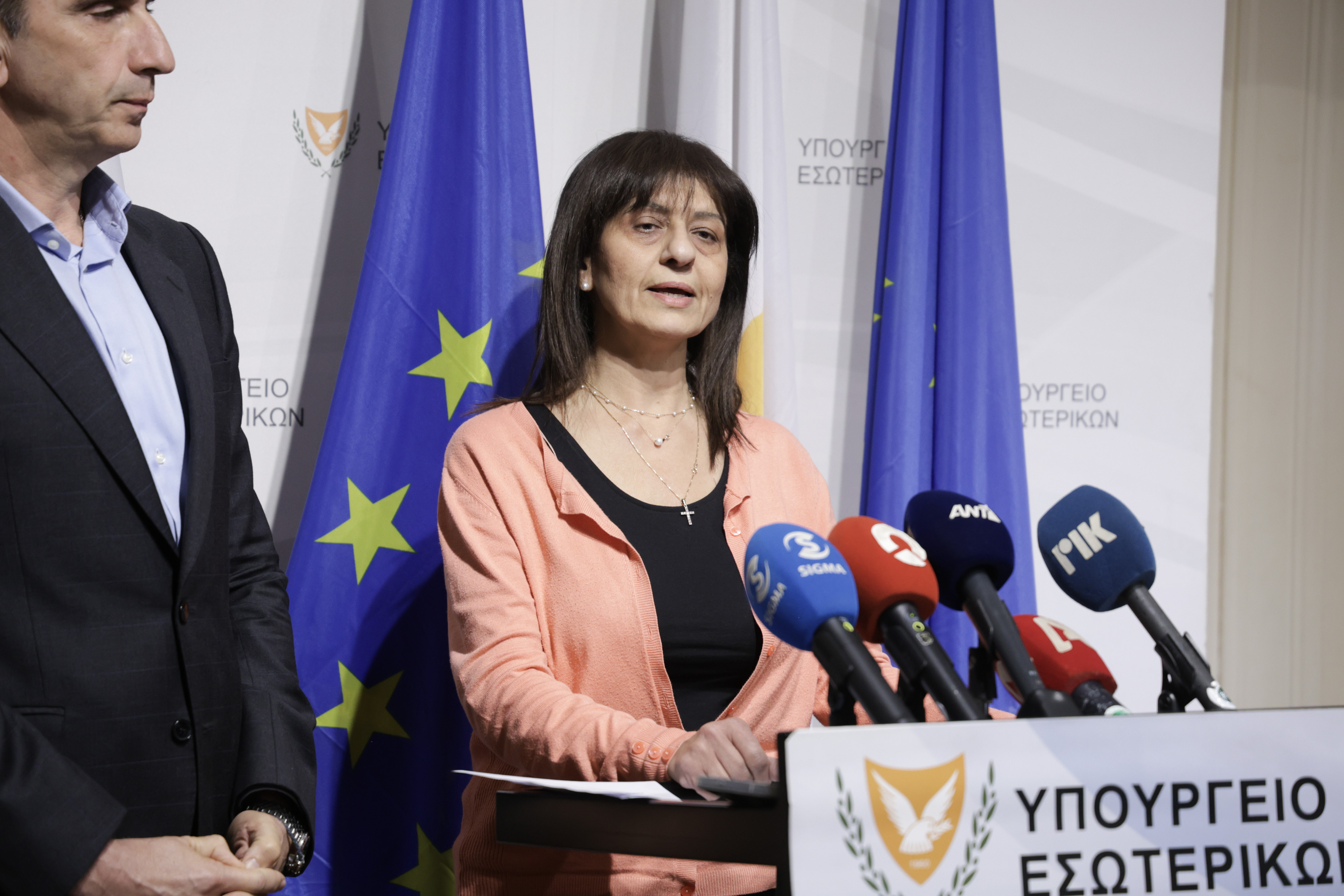
Former civil defence director Maria Papa publicly challenged the handling of Cyprus’ shelter programme on Monday, insisting her repeated warnings to the interior ministry were ignored.
In a detailed statement issued on X after her transfer to the audit office, Papa said she encountered “substantial weaknesses” upon taking office in April 2021, attributing them primarily to understaffing and the absence of a structured, specialised framework.
The gradual weakening of the programme over previous years, she said, had “reduced its operational effectiveness”, creating the need for urgent reform and strategic direction.
“I categorically reject any claim that these issues were not raised or raised at the relevant levels,” Papa insisted, describing her interventions as “continuous and recorded over time” and stressing that “these suggestions, despite their importance, were not promoted”.
She said she had made repeated and documented interventions to the political leadership, outlining systemic deficiencies and calling for “the need to immediately strengthen and reorganise the shelter sector”, alongside a broader policy reset.
Among the proposals submitted was the establishment of a specialised unit staffed with scientific personnel to ensure systematic inspection, supervision and development of the shelter network.
“These interventions were not fragmentary,” she said, adding that her responsibility to the public required “transparency and timely information to the political leadership”.
The dispute emerged in the wake of her departure from civil defence, with official sources assuring her move to the audit office was driven by administrative considerations rather than the controversy surrounding shelters.
However, recent reports had suggested Papa had previously provided assurances that inspections were ongoing and that maintenance was being carried out.
Pressure intensified after Ioannou disclosed the results of recent inspections, revealing that 194 out of 2,480 listed shelters were either unsuitable or no longer existed, while a further 288 were inaccessible to the public and reserved for private use.
The findings followed checks carried out in the aftermath of a drone strike near the British base at Akrotiri, prompting a wider reassessment of civil defence preparedness.
Ioannou acknowledged “significant weaknesses” in earlier policies, particularly those between 1999 and 2013 which relied heavily on private spaces.
He recently outlined a strategic shift towards identifying and utilising larger public facilities, including underground car parks and commercial spaces, with the aim of increasing effective coverage despite a likely reduction in the overall number of designated shelters.
Papa, however, maintained that civil defence had continued to operate and improve the system despite constraints.
“Despite limited human and organisational resources,” she said, the department had carried out extensive inspections since 2021.
The government is advancing plans to expand shelter capacity to cover up to 45 per cent of the population, including proposals requiring new developments to incorporate designated shelter spaces equipped with essential facilities.
President Nikos Christodoulides has acknowledged shortcomings in the current system, stating “we are not at the level we would like to be”, and signalling further decisions aimed at strengthening infrastructure and response capabilities.




Click here to change your cookie preferences