
The agency said the ratings are supported by the continued strengthening of public finances, reflected in sustained budget surpluses, declining public debt and low fiscal risks in the short to medium term.
“This is reflected in sustained budget surpluses, declining public debt and low fiscal risks in the short to medium term,” the agency said.
It added that active public debt management has reduced refinancing pressures, while significant state cash reserves provide a strong buffer against short-term shocks.
The ratings also reflect the ongoing reduction of contingent liabilities linked to the banking sector, supported by declining macroeconomic imbalances and improved financial system resilience.
The proposed legislative package forms part of a broader reform to create a digital system for data exchange and creditworthiness assessment, which is a prerequisite for the disbursement of the seventh tranche under the Recovery and Resilience Plan.
The bills cover amendments to key laws governing the financial system. These include the law on the operations of credit institutions, legislation on the sale of credit facilities, the framework for consumer credit agreements, housing loan legislation, as well as laws regulating credit purchasers and servicers, securitisation and financial leasing.
According to a Finance Ministry representative who addressed the committee, the objective is to streamline and harmonise existing provisions, while eliminating overlaps between different legislative frameworks.
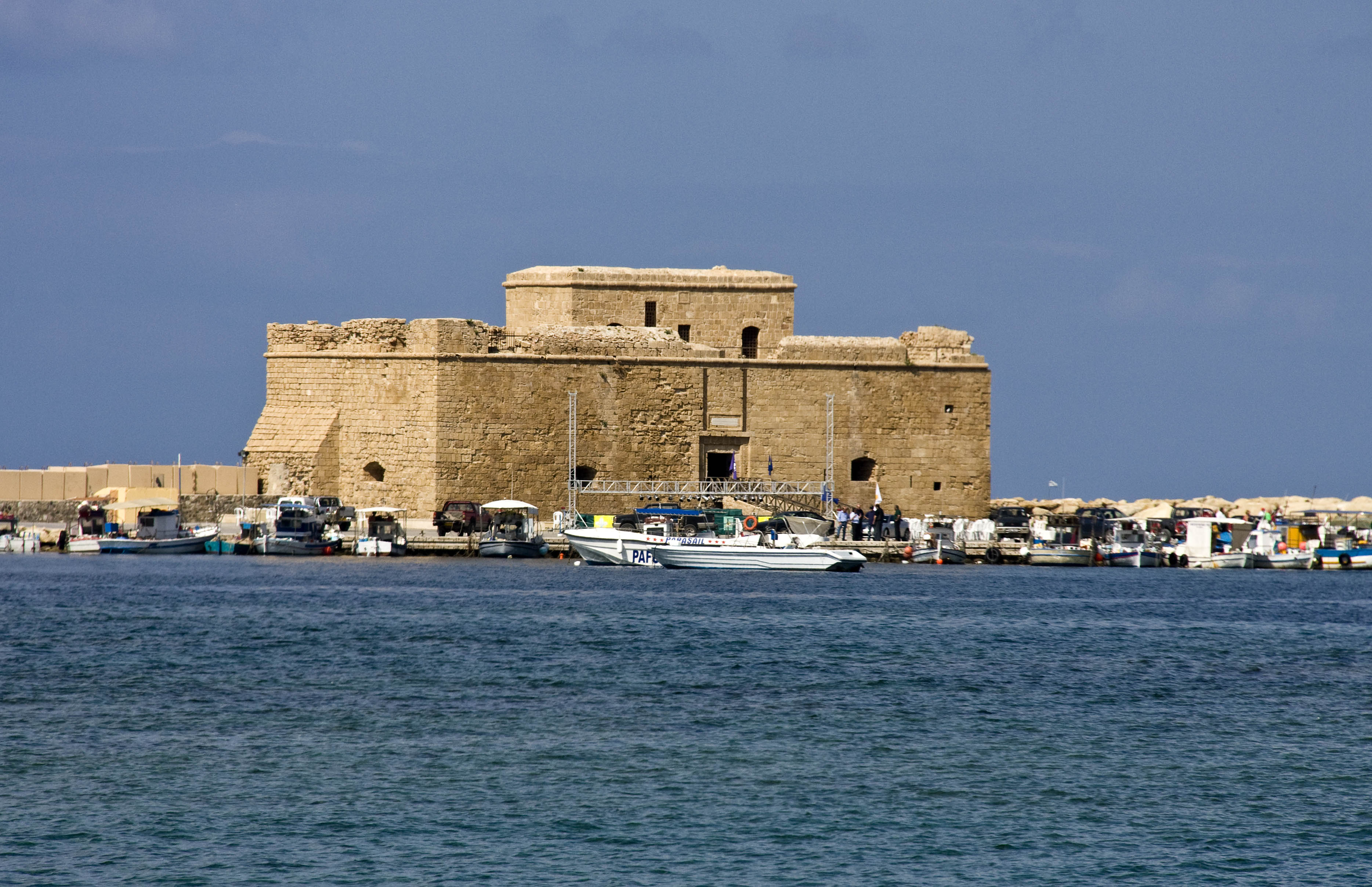
The scale of the planned spending broadly echoed what President Nikos Christodoulides had announced at the end of 2025 during the pan-district conference in Paphos, with officials describing it as a record package of projects and funding for the province.
At the top of the agenda once again is the Paphos-Polis Chrysochous motorway, following the government’s position that it should be built as a four-lane road with additional access through Mesogi.
Vafeades also said priority this year is being given to improving the existing Paphos-Polis road until the new motorway is completed, advancing the western bypass of Paphos, and unblocking the new road to Paphos airport by resolving pending environmental issues.
The transaction, agreed between Bank of Cyprus Holdings Public Limited Company and the Cyprus Development Bank, involves the acquisition of a portfolio of performing loans with a gross book value of approximately €150 million.
It also includes deposits totalling around €500 million, strengthening the bank’s funding base.
The bill, submitted to the House last week and referred to the commerce committee, would extend a transitional regime for businesses that have yet to secure an operating permit, while requiring them to meet specific safety and health conditions in the meantime.
According to the deputy ministry, the measure is intended to allow hotels and tourist accommodation providers to remain open within a defined timeframe while they regularise urban planning violations and comply with requirements related to safety.
Nana Asmeni Pavlou, director of the Larnaca tourism board (Etap), said the organisation’s strategy had been designed to remain adaptable as conditions continue to shift.
“Our programme remains flexible and dynamic, in order to adapt to current developments and the needs of the tourism sector,” she told to Philenews.
“We must shape it according to developments with a multidimensional range of actions, concerning electronic marketing, the expansion of digital promotion tools, but also the creation of synergies with individuals who have an international presence and appeal,” Asmeni explained.
Specifically, the statistical service on Monday reported that 17.1 per cent of the population in Cyprus was at risk of poverty or social exclusion in 2025, corresponding to the figure mentioned above.
The figure reflects the ‘At Risk of Poverty or Social Exclusion‘ (AROPE) indicator, which serves as the European Union’s main benchmark for monitoring progress towards its 2030 poverty reduction targets.
According to the survey, which uses 2024 as the income reference period, individuals were considered at risk if they lived in households with income below the poverty threshold, experienced severe material and social deprivation, or had very low work intensity.
The union, which represents thousands of public and semi-government employees regardless of contract type, said it had been left out of discussions within the Labour Advisory Body as well as other institutional consultation forums.
These include the Joint Staff Committees, from which Isotita said it had also been excluded despite its broad representation.
In the memorandum, the union referred to “major issues of legal, actuarial and social justice” that directly affect the “fundamental, constitutionally guaranteed rights of tens of thousands of employees“.
The event, held on March 21 at Inset, brought together investors and representatives of the business community, offering them the opportunity to engage directly with participants and their innovative ideas.
The participating teams stood out for their strong creative spirit and entrepreneurial ambition, presenting concepts developed throughout the programme.
During the event, participants also received direct guidance from key players in the local investment ecosystem, including Kinisis Ventures, the Cyprus Business Angels Network and representatives of 33EAST, which manages the Cyprus Equity Fund.
The programme, which commenced following an announcement on December 12, 2025, was approved by the Extraordinary General Meeting of shareholders held on October 22, 2025, in line with Article 49 of Law 4548/2018 and as a continuation of a previous programme by Eurobank Ergasias Services and Holdings S.A.
According to the bank, the shares were acquired on the Athens Stock Exchange (ATHEX) at an average purchase price of €3.4331 per share, with a total cost of €6,546,941.38.
The transactions were executed through Eurobank Equities Single Member Investment Firm S.A., which acted as the bank’s trading intermediary.
According to the announcement, seven Cypriot wineries took part in the exhibition, showcasing the uniqueness of indigenous grape varieties and presenting a wide range of wines.
“For the first time this year, wine tastings took place at the Cyprus pavilion, offering visitors a more interactive experience during the event,” the announcement said.
In particular, three presentations with tastings were held, focusing on Commandaria and the native Cypriot grape varieties Xynisteri, Maratheftiko and Yiannoudi.
“The presentations attracted a satisfactory number of visitors, who were informed by the winemakers about the special characteristics and history of the varieties,” the announcement said.
The company said AI is built on historical data that may already reflect discrimination against women, making it imperative for businesses to integrate it thoughtfully so that shipping becomes more appealing to future generations of female talent.
Newly appointed group head of AI Christina Orfanidou said artificial intelligence is often presented as though it were neutral, when in reality it depends entirely on the data it is trained on.
“Artificial intelligence is often spoken about as if it were a perfectly neutral system, yet it remains entirely dependent on the information we choose to feed it,” she said.
The new body aims to promote the professional, business, scientific and social interests of Greeks active in Cyprus.
The announcement stated that the founding general assembly took place in Nicosia, marking the formal launch of the organisation.
The initiative also seeks to systematically develop synergies among its members while strengthening institutional links with organisations in Cyprus, Greece and the European Union.
According to an official announcement, the initiative was carried out with the support of Junior Achievement Cyprus and the Education Ministry, reflecting closer collaboration between the private sector and public institutions.
This year’s Global Money Week theme, “Smart Money Talks”, underscored the importance of encouraging young people to openly discuss financial matters and seek guidance from trusted and knowledgeable sources.
Through education and dialogue, the initiative aimed at strengthening young people’s confidence in managing their finances responsibly and making informed decisions in an increasingly complex financial environment.
The party issued a statement emphasising that the government should provide specific aid to essential areas of the economy, such as households, the tourism industry, investment projects, farming, and those at risk.
“Measures that support consumers, vulnerable groups, tourism, investment and the primary sector,” the party said.
“The short-term effects may have long-term consequences,” it added.
Moreover, Disy stressed that immediate and coordinated action is required to mitigate the risks stemming from the evolving regional situation.
This was the key takeaway from a high-level roundtable discussion in Nicosia, where senior executives from the island’s leading corporations met with emerging entrepreneurs to discuss the future of the local economy.
According to a report by InBusiness, the event was part of IMH’s year-long Gen Z & Millennial Project, an initiative designed to bridge the gap between established institutional knowledge and the fresh perspectives of young business owners.
The discussion brought together senior executives from PwC Cyprus, Bank of Cyprus (BoC), European University Cyprus, Cablenet and Lexus Cyprus (Toyota), who exchanged views with young entrepreneurs and spoke of the pressures facing a generation expected to steer family firms through transition.
The euro area deficit widened from the €1.40 billion recorded in January 2025, reflecting changing trade dynamics across key sectors.
Euro area exports fell to €215.30 billion in January 2026, marking a decline of 7.6 per cent compared with €232.90 billion a year earlier.




Click here to change your cookie preferences