
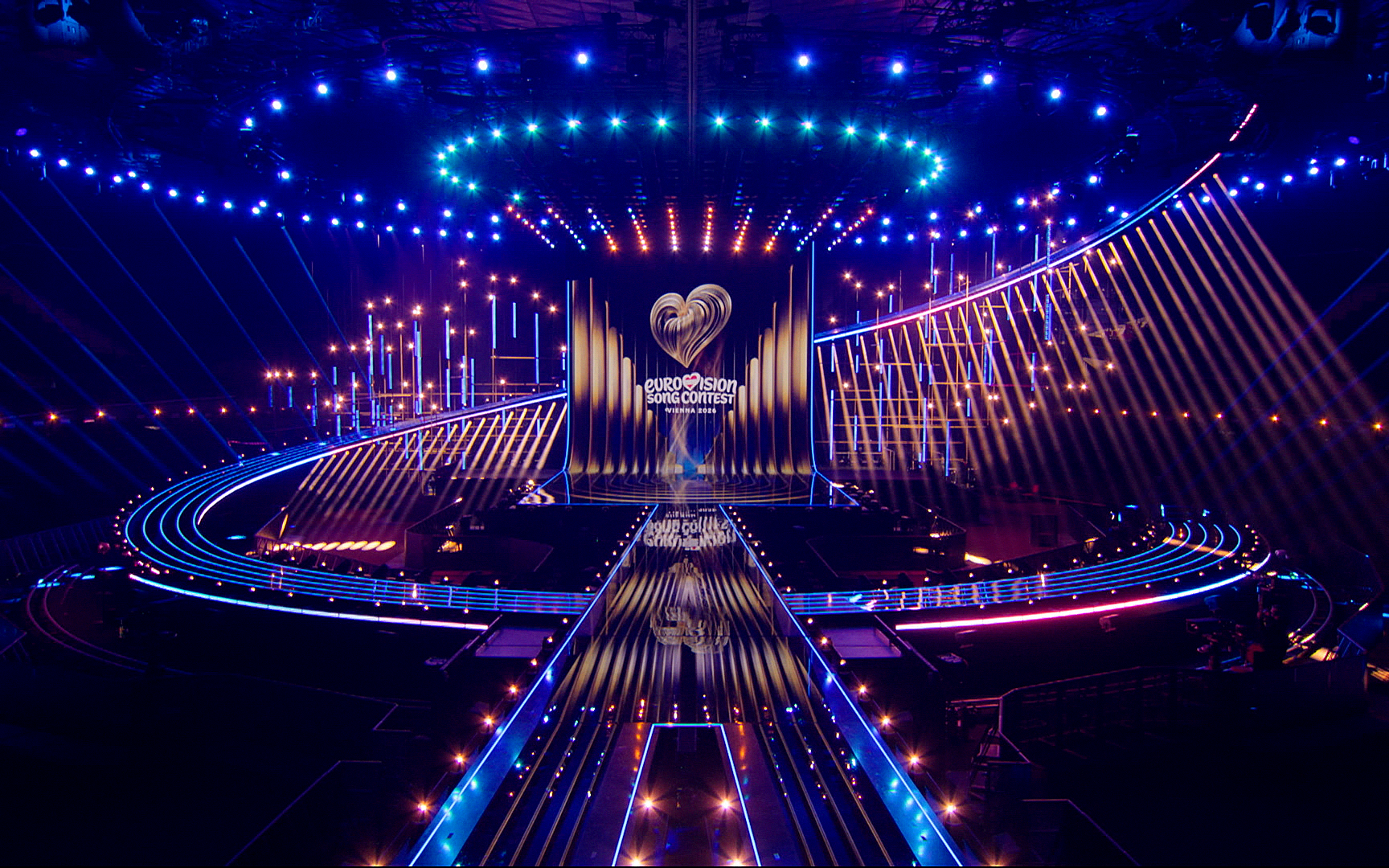
The Eurovision Song Contest began under heightened political tension in Vienna on Tuesday as the first semi-final took place amid controversy over Israel’s participation and broadcaster boycotts linked to the war in Gaza.
Five countries including Spain, the Netherlands, Ireland, Iceland and Slovenia withdrew from this year’s competition in protest at Israel’s involvement, reducing the contest to 35 entries, its smallest field since 2003.
The annual event, traditionally known for its light-hearted celebration of pop music and theatrical performances, has become increasingly politicised since the outbreak of the Gaza war following the Hamas-led attack on Israel on October 7, 2023.
Despite expectations of larger demonstrations, a pro-Palestinian protest held in Vienna ahead of Tuesday evening’s semi-final drew only around 30 participants, far below earlier estimates of 500.
Vienna Mayor Michael Ludwig criticised protesters during remarks made last week after a separate demonstration disrupted a public concert at which he was speaking.
“We won’t let ourselves be terrorised into silence,” Ludwig said. “We will nevertheless hold a festival of togetherness.”
The comments drew criticism from rights groups. Amnesty International Austria co-head Shoura Hashemi described the remarks as “unbearable, false, divisive” and called on the mayor to apologise.
Austria’s government has maintained strong support for Israel throughout the conflict, while pro-Palestinian demonstrations in the country have generally remained small. Police said several protests are planned during Eurovision week, with attendance at some events expected to reach up to 3,000 people.
Authorities also warned of possible spontaneous protests during Saturday’s final. Security measures have been significantly increased around the event.
Irish broadcaster RTE reaffirmed its earlier decision to boycott the contest, referring back to a December statement describing participation as “unconscionable”.
Israel has repeatedly argued that criticism surrounding its participation forms part of a broader international campaign against the country.
The war began after Hamas-led militants killed around 1,200 people in southern Israel during the October 2023 attacks. Israel’s subsequent military campaign in Gaza has killed more than 72,000 Palestinians, according to local health authorities, and caused widespread destruction across the territory.
Israel’s representative last year, Yuval Raphael, who survived the October 7 attacks, finished second after receiving strong public support in the televote.
This year’s Israeli contestant, Noam Bettan, has avoided overt political messaging during the competition. However, organisers issued him with a formal warning on Saturday after he posted videos encouraging viewers to vote for him the maximum number of times permitted.
Eurovision contest director Martin Green said organisers hoped broadcasters that withdrew would eventually return.
“They are members of our family,” Green said. “We remain in dialogue to see if we can find pathways for them back.”





Click here to change your cookie preferences