
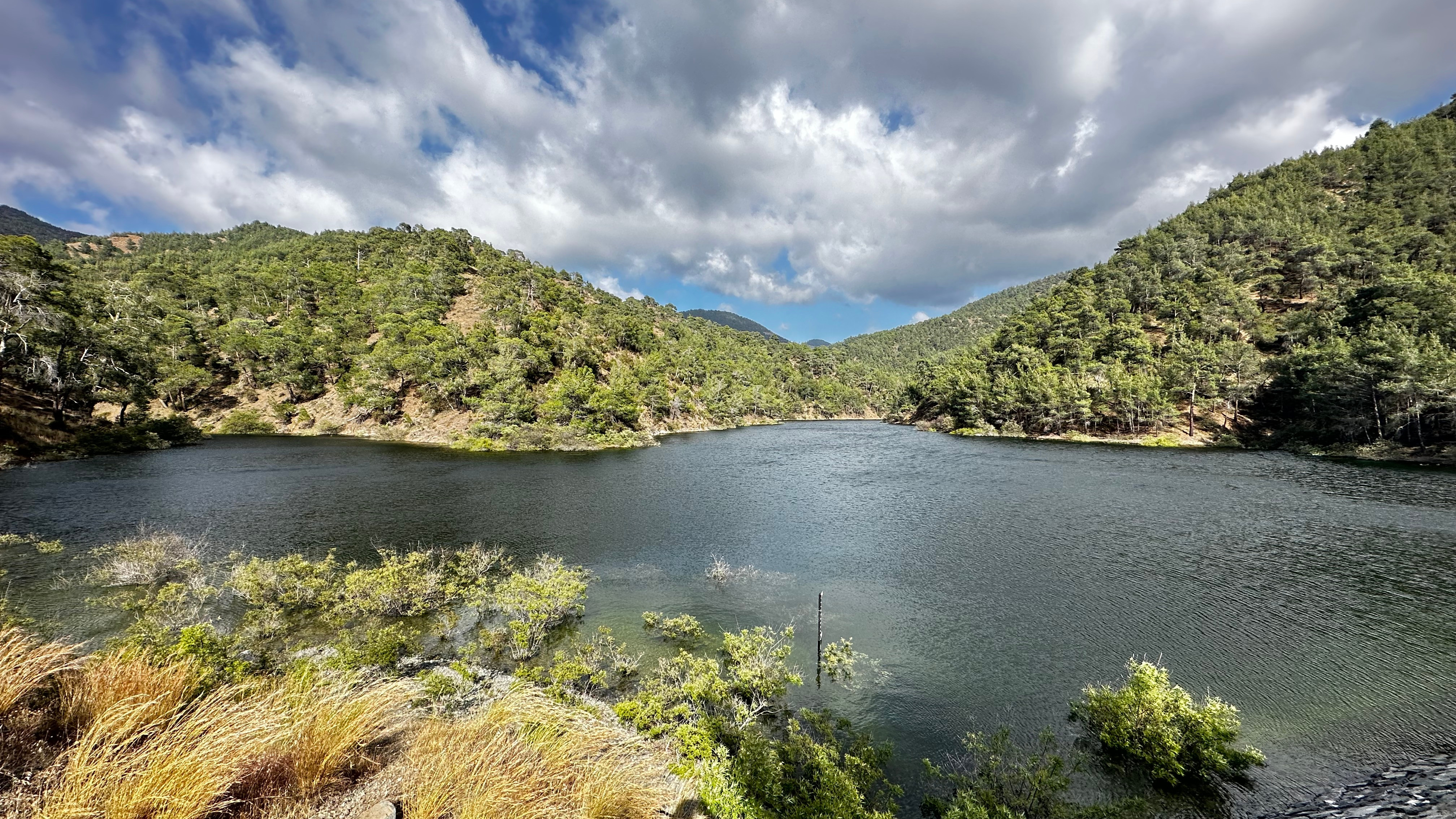
Recent rainfall and increased inflows into dams in Paphos district have improved the outlook for water supply, offering authorities valuable time to implement long-term measures, the head of the Paphos district government, Charalambos Pittokopitis, said.
Pittokopitis stated that the improved situation has created a sense of optimism, as well as confidence that both the organisation and the agriculture ministry can move ahead with plans for a holistic approach to tackling the water problem.
He added that this positive climate is further reinforced by a series of measures already being implemented, including the expansion of desalination capacity in the district.
Pittokopitis said the Kouklia desalination plant has increased its daily output from 15,000 to 20,000 cubic metres of water, while the Potima units have boosted production from 5,000 to 12,000 cubic metres per day. In addition, infrastructure upgrades at the Asprokremmos dam refinery have raised its daily capacity from 32,000 to 42,000 cubic metres.
Plans are also progressing for the installation of a desalination unit in the Polis Chrysochous area, where communities rely heavily on boreholes, a system he said does not guarantee long-term reliability.
In the same area, works are underway to equip a borehole in Ayia Marina Chrysochous so it can be used if needed during the summer, while the water development department is fast-tracking procedures for the operation of a mobile treatment unit.
Pittokopitis also said the district government has contracted a company to ensure immediate repair of faults and water losses, either on the same day they are identified or within 24 hours at the latest. Efforts are also ongoing to replace ageing pipelines and install pressure control valves to reduce leaks. He added that an agreement has been signed with the University of Cyprus to provide technical support, including modern software to help prioritise pipeline replacement.
At the same time, in collaboration with the agriculture ministry, authorities are preparing a public awareness campaign to promote more responsible water use. Meetings have also been held with municipalities in Paphos to explore alternative water sources for irrigating parks and green spaces, reducing reliance on drinking water.
Discussions have also taken place with hoteliers on the possible use of desalination schemes promoted by the agriculture ministry.
Despite the improved outlook, Pittokopitis warned against complacency, stressing that water remains scarce and valuable. He called on authorities, businesses and the public alike to adopt careful and sustainable water management practices today so that we can have water tomorrow.




Click here to change your cookie preferences