
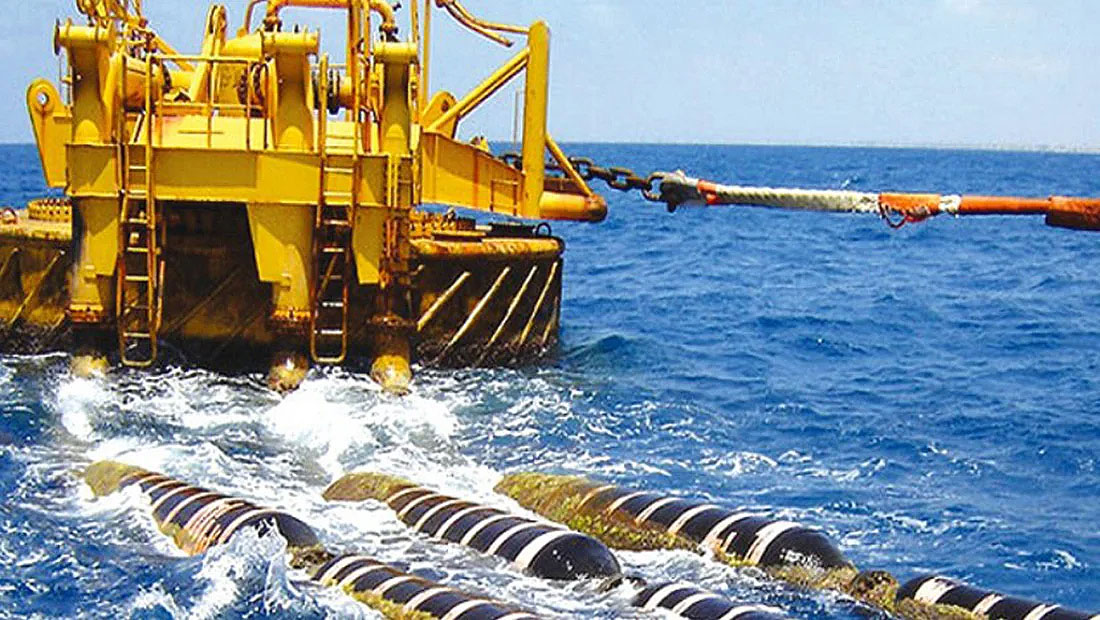
The possibility that the Great Sea Interconnector project might not materialise if the cost is too high on Cypriot electricity consumers was left open on Monday by the energy minister.
Speaking to the state broadcaster, Michael Damianos said the interconnector is “correct” as it would provide energy security to Cyprus.
But, he said the government needs to know the real cost, based on updated data, to make sure that in the end the price of electricity will go down rather than up.
“Cypriot consumers will bear 63 per cent of the cost of the GSI on the price of electricity. So if the cost of the GSI is considerably greater, we as the state need to know that, because at the end of the day consumers may get higher electricity invoices if the wrong decisions are made.”
He recalled that the price tag for the GSI – a subsea electricity cable linking the grids of Cyprus and Greece – has been estimated at €1.9 billion. The European Union has pledged €658 million in grants toward the project.
Damianos also revealed that on Monday the governments of Cyprus and Greece would formally request the European Investment Bank (EIB) carry out a new “techno-economic study” on the interconnector.
“The aim is to update the data so that we can decide how we will proceed with the project.”
According to the minister, the timeline for completing the project – assuming it gets the green light – would be around six years.
In early November 2025 in Athens, the leaderships of the two countries had jointly decided to “update the economic and technical parameters” for the GSI.
The project promoter is Admie, Greece’s independent transmission operator.
After the Athens meeting, Greek Energy Minister Stavros Papastavrou insisted that investment interest from “the Americans” was very real.
“Interest has been exhibited from the Americans, from American companies,” he told media at the time.
“We are in an exploratory phase. The Americans, as well as anyone else desiring to invest in a long-term project, they want the numbers, they want the data to understand the what, the how, and the where.”
In other words, seeking updated data on the technical and financial aspects of the GSI was being done to firm up the numbers so that investors know what they’re getting into.
Admie itself has capital estimated at between €250 and €300 million. Then there are the €650 million in grants pledged by the European Commission.
That adds up to €950 million. But if the project does in fact carry a price tag of €1.9 billion, that still leaves a funding gap of about €1 billion.
Cyprus has yet to decide whether it will directly invest, as a state, in the project.




Click here to change your cookie preferences