
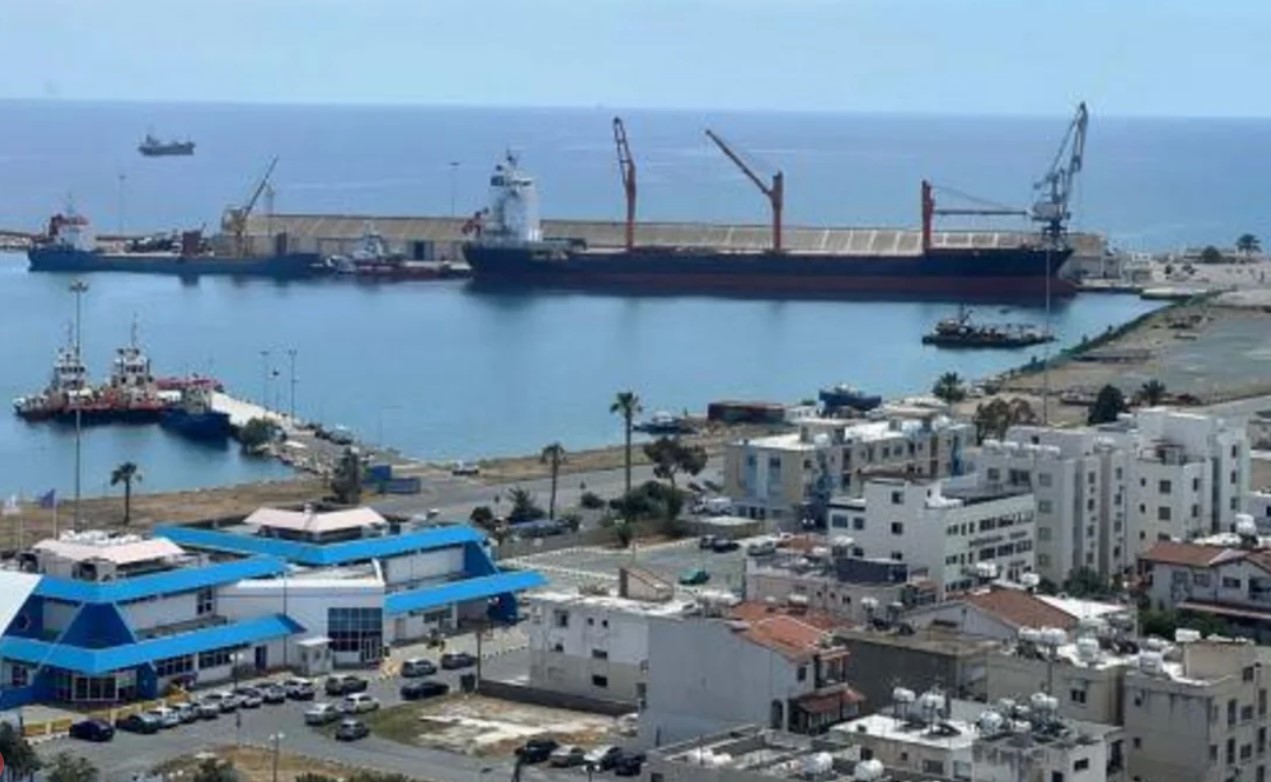
The deepening rift over the future of the Larnaca port and marina project intensified on Wednesday after transport minister Alexis Vafeades blocked the ports authority (CPA) from presenting development proposals.
Larnaca mayor, Andreas Vyras, said he was informed directly by Vafeades that the ports authority is “not authorised” to submit any proposals to local stakeholders before political decisions are finalised, contradicting expectations formed after earlier contacts with the authority.
Vyras expressed frustration at the shift, saying local authorities believed there had been coordination between state bodies.
“I cannot understand why the CPA cannot make us a proposal. I think we are losing time,” he said.
“The CPA is an arm of the state, and we believed there was coordination. I must say we were surprised by this development.”
An emergency meeting of the Larnaca development committee has been scheduled for April 17, where local stakeholders are expected to consolidate their position amid growing concern that decisions are being centralised without sufficient consultation.
Vyras said the minister had also indicated that a previous meeting between the municipality and the ports authority “should not have happened”, reinforcing that engagement should be conducted directly with the transport ministry.
Speaking to Phileleftheros, Vafeades defended the government’s approach, insisting that no formal position had been submitted by Larnaca authorities following the presentation of proposals by Greece’s Growthfund and Dutch experts in February.
“The mayor had expressed that they wanted development of the land areas, but nothing was formally communicated to us,” he insisted.
He dismissed media reports as insufficient, adding that “the correct approach would have been a formal letter”.
The minister was clear that the ports authority would remain sidelined until political direction is set.
“The CPA will not proceed with further planning or consultations until political decisions are taken. After that we will proceed as decided,” he said.
He questioned the basis for any premature planning, asking, “What is the CPA studying, given that no political decisions have been taken yet?”
At the centre of the dispute is the role of surrounding land development, which local authorities argue is essential for economic growth.
Vyras has repeatedly insisted that any plan excluding commercial or urban use of adjacent areas would fall short of the city’s needs, citing expectations for job creation and broader regeneration.
Vafeades said the forthcoming Growthfund study, expected by the end of April, will determine which land areas can be released and outline costings for multiple development scenarios for both the port and marina.
“I gave the instructions myself to have these studies done. I was waiting for Larnaca, saw nothing, and did it myself so we could have answers as soon as possible,” he said.
The dispute follows the collapse of the €1.2 billion concession agreement with Kition in 2024, after the government accused the consortium of failing to meet key financial obligations.
Since then, the port has been managed by the CPA and the marina by the transport ministry, with no long-term solution in place.
Previous studies have proposed a range of options, from maintaining current infrastructure with minor upgrades to more extensive expansions, though these have focused primarily on maritime functions rather than integrated development.
This has fuelled dissatisfaction in Larnaca, where officials argue that separating port operations from land use planning undermines the city’s economic prospects.
Vafeades has emphasised risk management as a guiding principle, stating that “Larnaca cannot afford another failure” after multiple stalled projects over the past two decades.





Click here to change your cookie preferences