
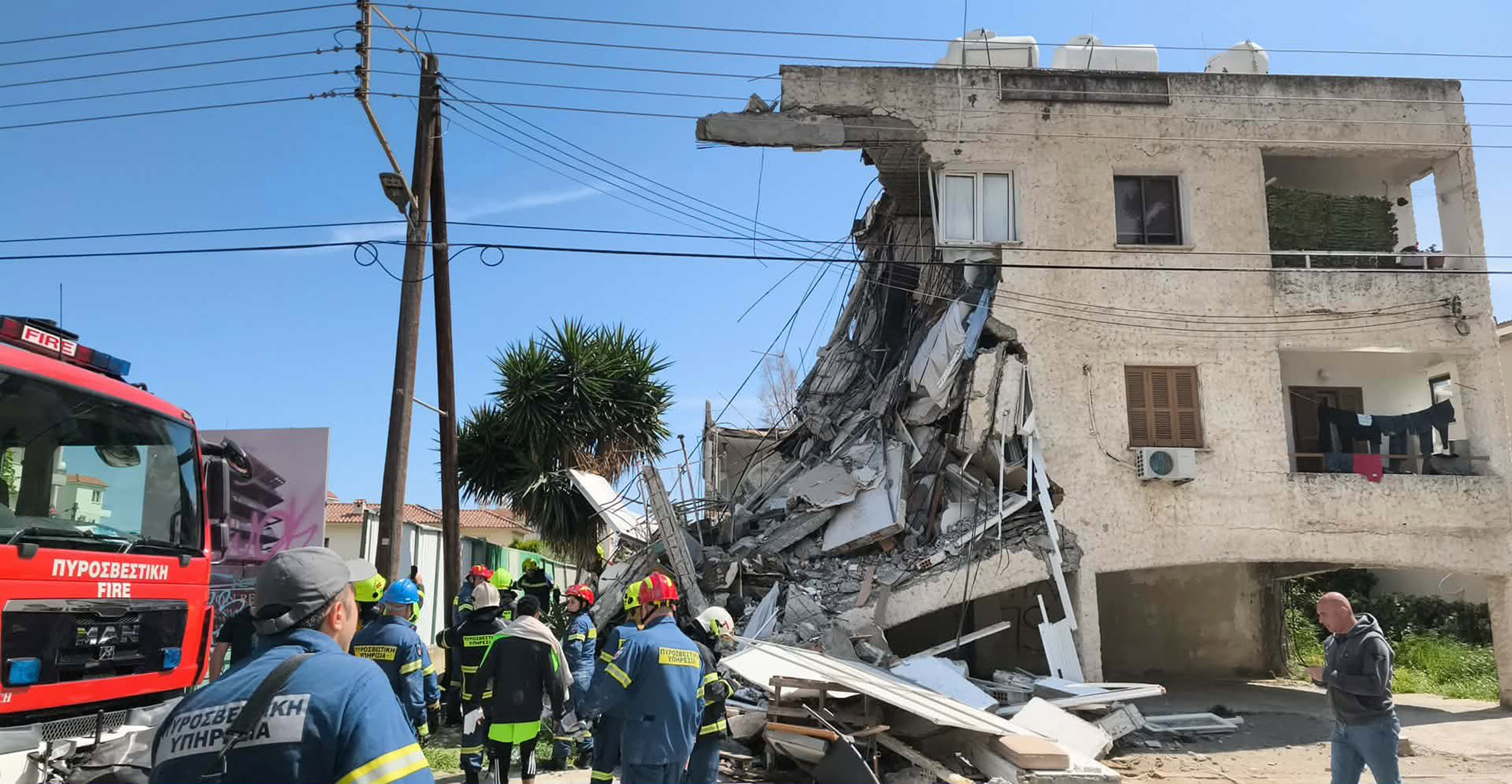
The building that partially collapsed in Yermasoyia had already been declared dangerous in March, with owners warned to evacuate and carry out repairs, according to the president of the Limassol district government (EOA), Yiannis Tsouloftas.
Speaking to CNA on Monday, Tsouloftas said the property had been inspected on February 19, 2026, and was officially classified as dangerous on March 10.
Registered letters were sent on March 26 to all owners and the building’s management committee, he said.
“We informed them that the building had to be evacuated and repaired, and that the owners should assign civil engineers to take the necessary actions and precautions,” he said, adding that a three-month deadline had been given for compliance.
However, no required works were carried out before the collapse on Saturday.
Tsouloftas said that following the incident, members of EMAK rushed to the scene, and after completing rescue operations handed it over to the Limassol EOA to address the building’s hazardous condition.
Police investigations are ongoing, and procedures are expected to follow to determine any potential criminal liability.
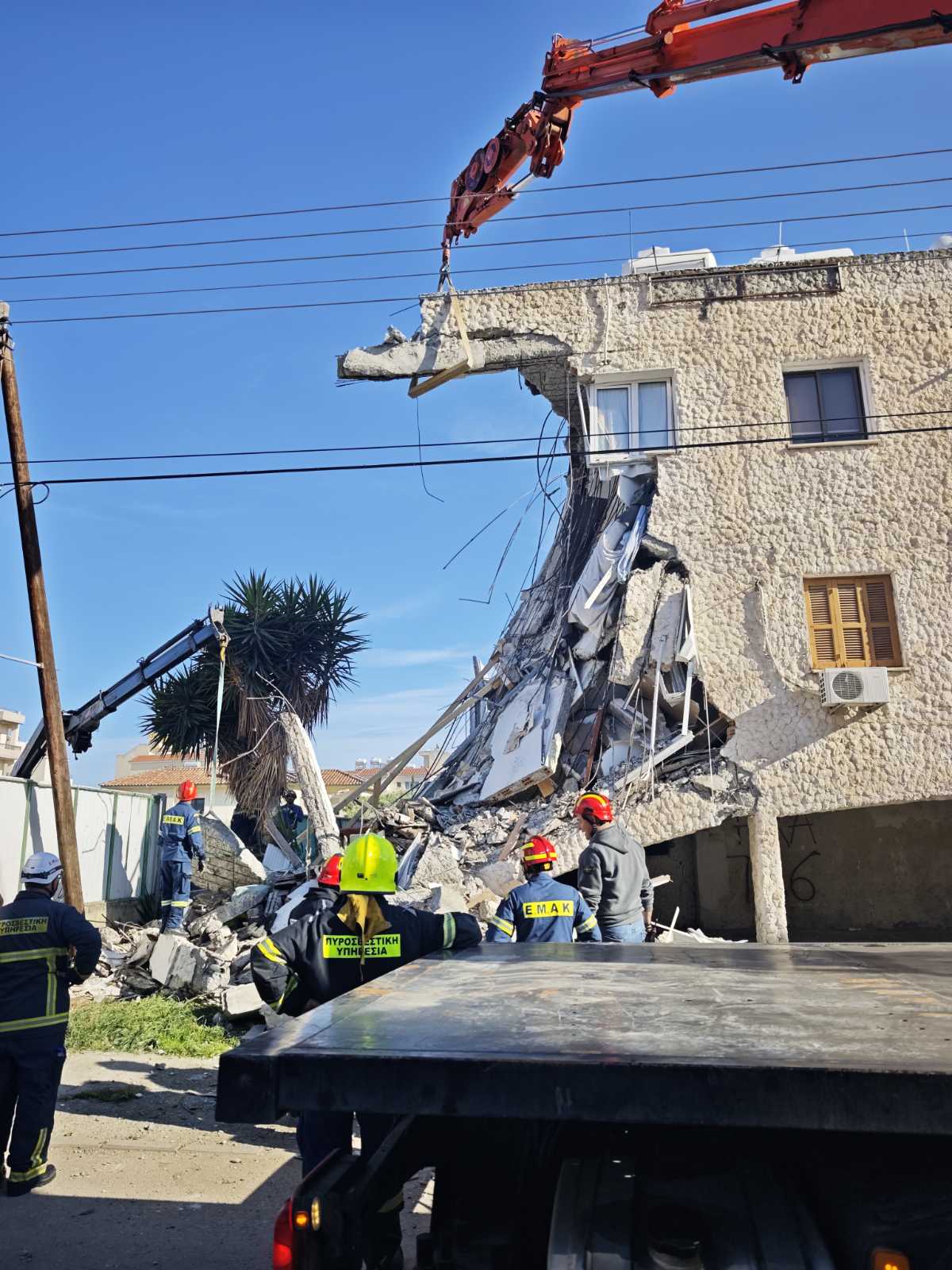
Earlier, police said statements were being taken from tenants, property owners and representatives of local authorities as part of the investigation.
According to the head of the Limassol CID, the inquiry remains at an early stage, with all possibilities being examined regarding responsibility and those potentially at fault.
“It will be investigated whether there are responsibilities and by whom. It is too early to reach final conclusions. If responsibilities exist, they will be assigned,” he said, adding that evidence collection is still ongoing.
Tsouloftas noted that hundreds of dangerous buildings have been recorded across Limassol, stressing the need to accelerate inspection procedures since responsibility was transferred to district organisations in April 2025.
“We have already inspected many more buildings compared to previous years, when the responsibility was not ours, but many still remain and the process must be sped up,” he said.
He added that district organisations had requested legislative changes before assuming responsibility, in order to be equipped with the necessary legal and financial tools to manage dangerous buildings effectively.
These include the power to immediately evict occupants, seal unsafe properties, cut off electricity and water supply, impose charges on property owners to cover repair costs, and criminalise the rental of unsafe buildings.
Tsouloftas also highlighted that funding remains an unresolved issue, as such interventions do not generate revenue and district organisations do not receive state grants, meaning a government decision is needed on how to cover the associated costs.




Click here to change your cookie preferences