
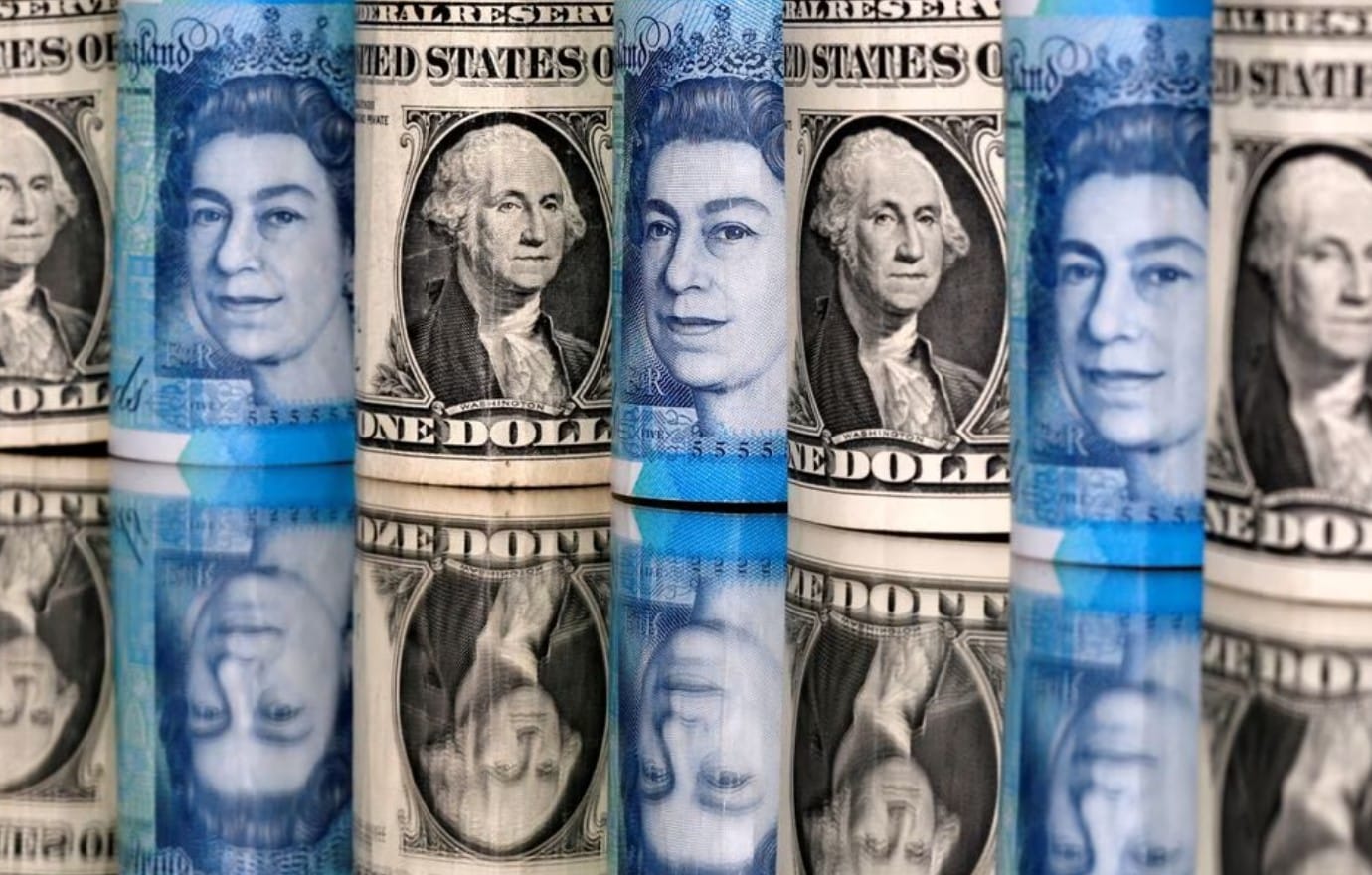
The British pound rose against a slightly weaker US dollar on Tuesday, trading at levels last seen before the Iran war as markets hoped for a resolution to the conflict.
Negotiating teams from the US and Iran could return to Islamabad later this week, five sources said, days after the highest-level talks between the two countries in decades ended without a breakthrough.
Meanwhile, the US blockade of Iran’s ports got underway, angering Tehran and adding uncertainty around the crucial Strait of Hormuz shipping route.
Sterling was last 0.33 per cent higher against the dollar at $1.3548. The pound last traded at this level just before the Iran war broke out in late February.
Against the euro, the pound was last little changed at 87 pence.
Britain’s dependence on energy imports has kept the pound under pressure for much of the conflict, during which oil and gas prices have risen sharply. The dollar, meanwhile, had been broadly strengthening, although hopes the conflict will be resolved have sent the safe-haven currency lower again.
“In our view, this environment is actually quite constructive for the pound, not because anything’s actually improved. We’re just seeing traders distracted away from some really quite nasty fundamentals, political fundamentals in the UK,” Nick Rees, head of macro research at Monex Europe, said.
But sterling is still expected to underperform in the coming months, he said, as attention is set to return to domestic political issues.
“We do have those local elections coming up at the beginning of May and we don’t think markets or indeed a lot of politicians have grasped quite how bad these could be for the Labour Party,” Rees said, noting that there could be further speculation over a possible challenge to Prime Minister Keir Starmer’s leadership.
Elsewhere, several Bank of England officials are due to speak on Tuesday, including Governor Andrew Bailey.
Investors will be following the comments closely as higher energy prices have shifted market expectations away from possible rate cuts to potential rate hikes. Money markets were last pricing in at least one 25-basis-point BoE hike in 2026, with a strong chance of a second, even as most expect the central bank to keep policy steady.
Bailey said earlier this month that markets were getting ahead of themselves by pricing in rate hikes.





Click here to change your cookie preferences