
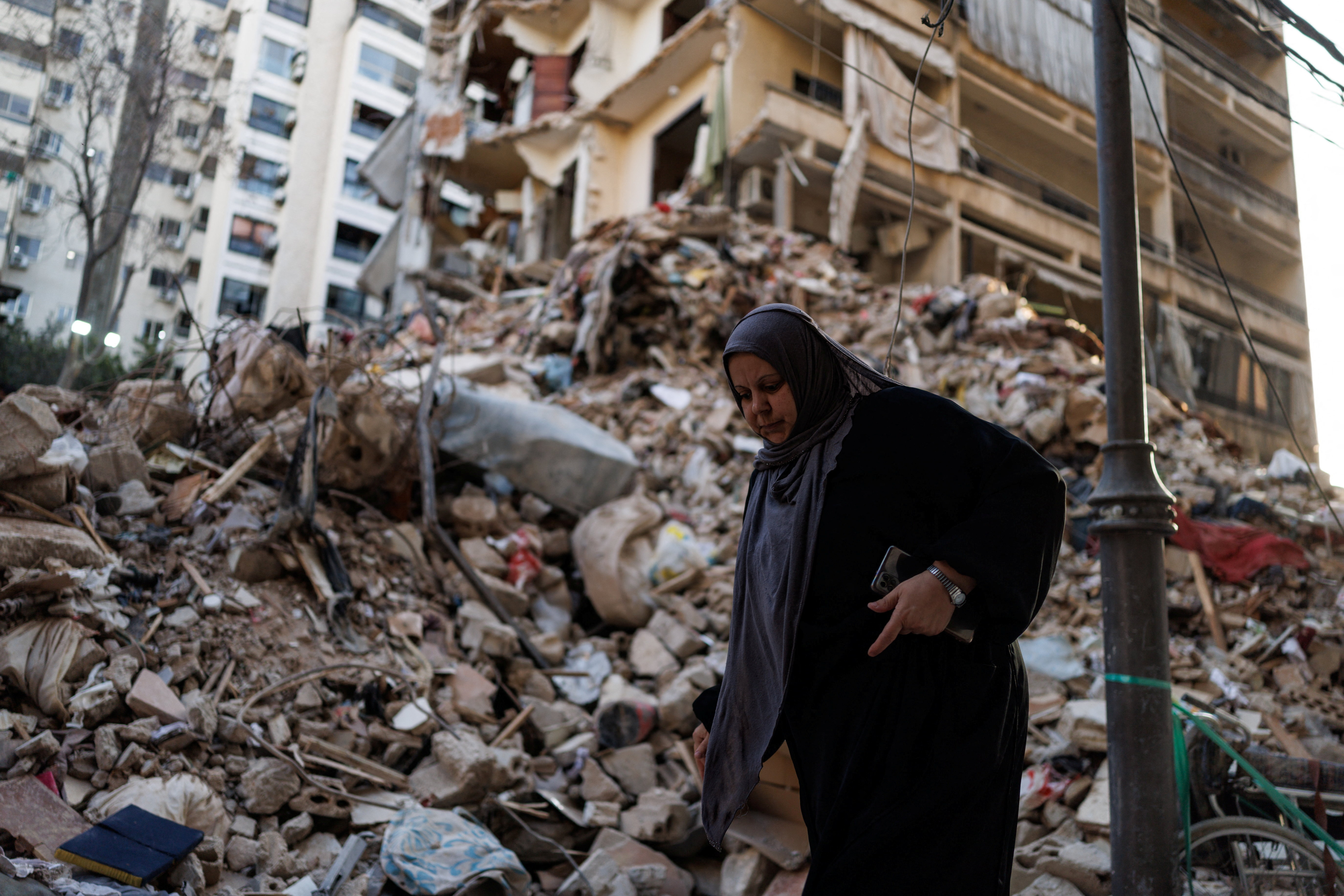
Foreign Minister Constantinos Kombos was one of 18 signatories to a joint statement issued on Tuesday evening which called for de-escalation in the Lebanon, with negotiations between Lebanon and Israel set to begin amid an ongoing Israeli invasion and in light of a ceasefire called between the United States, Israel, and Iran.
Alongside Kombos, the statement was signed by the foreign ministers of Australia, Belgium, Croatia, Denmark, Finland, France, Greece, Iceland, Luxembourg, Malta, Netherlands, Norway, Portugal, Slovenia, Spain, Sweden, and the United Kingdom.
It called for “the inclusion of Lebanon in the regional de-escalation efforts” and urged “all parties” to “work toward a lasting political solution”.
“The continuation of the war in Lebanon puts at risks the current regional deescalation, which we have welcomed and must be fully respected by all parties,” it said.
It also said it welcomed Lebanese President Joseph Aoun’s initiative to open direct negotiations with the Israeli government for the first time since 1982, when Israel invaded southern Lebanon, and the Israeli side’s decision to accept his offer for talks.
“We call on both parties to seize this opportunity. Direct negotiations can pave the way to bring lasting security for Lebanon and Israel as well as the region. We stand ready to support them,” it said.
As such, it called on all parties to “urgently deescalate and seize the opportunity offered by the ceasefire between the United States and Iran”.
On this front, while the first round of negotiations were held in Washington DC on Tuesday, it had been reported in Lebanon that Cyprus may be the location of future negotiations, but government spokesman Konstantinos Letymbiotis told the Cyprus Mail that he has received no such information thus far.
The statement added that the signatories “condemn in the strongest terms the attacks of Hezbollah against Israel which must cease immediately”, and that they “condemn in the strongest terms the massive Israeli strikes on Lebanon conducted on 8 April”.
They noted that “according to the latest information shared by the Lebanese authorities”, the strikes “resulted in the death of more than 350 persons and wounded more than 1,000”, and said that “civilians and civilian infrastructure must be protected in accordance with international humanitarian law”.
“We also condemn in the strongest terms the attacks against [the United Nations interim force in Lebanon] Unifil and we reiterate that the safety and security of UN peacekeepers must be ensured at all times,” they said.
They added that they stand in “full solidarity” with and have “steadfast support” for the Lebanese people and authorities.
“We stand ready to provide emergency assistance to the more than one million displaced persons in Lebanon, in coordination with the Lebanese government,” they said.
They also said that they “reaffirm the importance of respecting for Lebanon’s territorial integrity and sovereignty and for the full implementation of United Nations security council resolution 1701”.
Resolution 1701, adopted in 2006, stipulates that there be no armed forces in southern Lebanon south of the Litani river other than Unifil and the Lebanese military. It calls for the withdrawal of all Israeli forces from Lebanon and the withdrawal of Hezbollah from all areas south of the Litani.
“We will continue to support the Lebanese state to exercise its full sovereignty over the whole Lebanese territory. In this context, we commend the decision of the Lebanese government to ban Hezbollah’s military activities, as well as its decision to reinforce the full imposition of state authority over Beirut and to have the sole monopoly on weapons, and we encourage full and swift implementation,” they said.



Click here to change your cookie preferences