
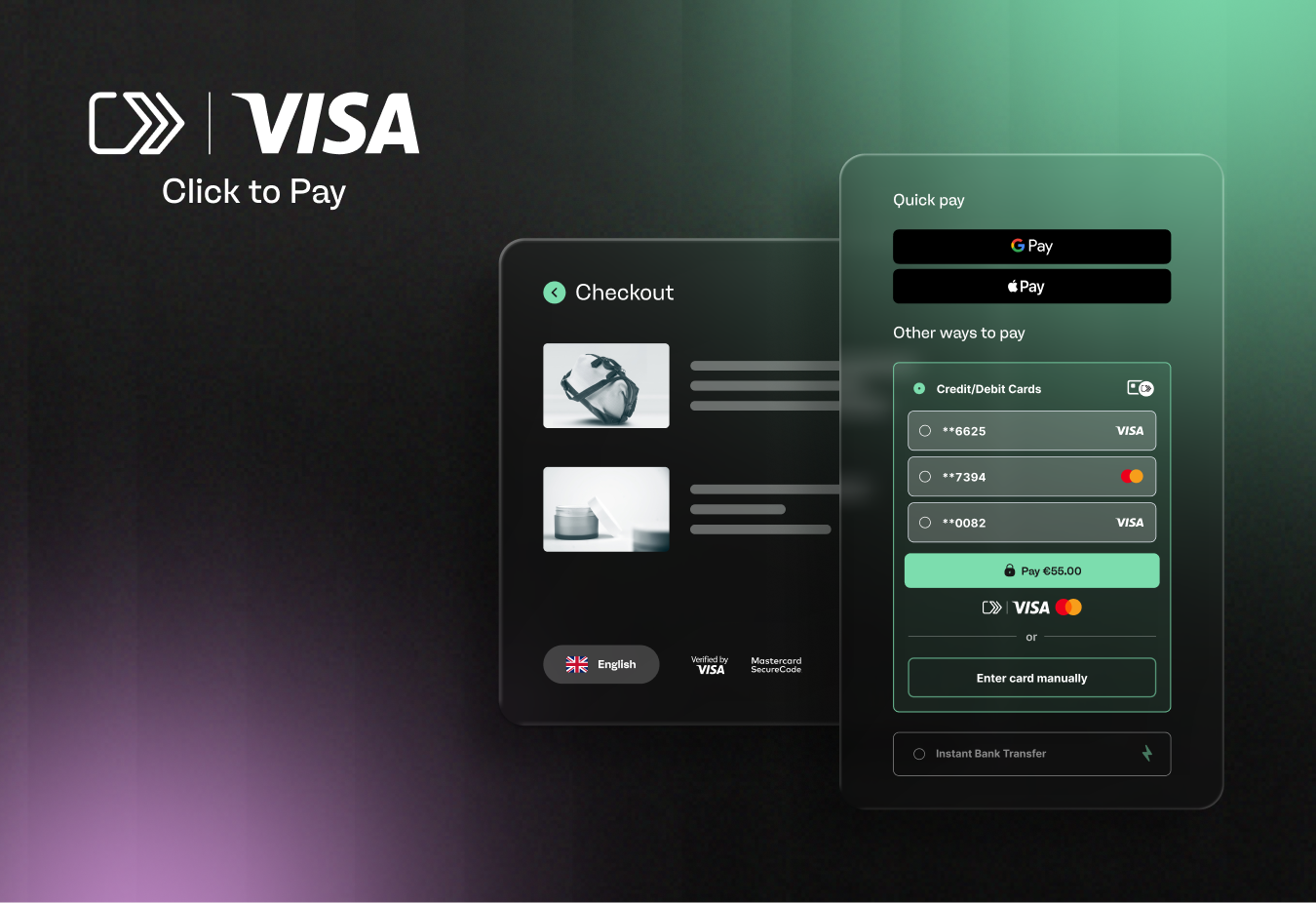
European financial technology provider payabl. on Thursday announced the launch of Click to Pay with Visa, a new online card payment experience aimed at helping merchants improve checkout performance and reduce fraud.
The solution is designed to reduce checkout friction and improve authorisation rates, while delivering a faster and more secure payment journey for customers.
The technology replaces manual card number entry with a token-based checkout system, allowing users to complete transactions without repeatedly entering their card details.
Once a card is enrolled, customers can complete purchases in just a few clicks, mirroring the ease of contactless payments used in physical stores.
This approach maintains strong security standards through network tokenisation, while simplifying the overall checkout process.
According to Visa, the solution can deliver up to an 11 per cent increase in authorisation rates compared with traditional manual entry methods.
It also contributes to significant fraud reduction, enhancing protection for both merchants and customers.
Faster checkout speeds are expected to reduce cart abandonment rates, particularly on mobile devices where typing card details remains a key barrier.
“With online checkout, every extra step costs conversion,” said payabl. Chief Product Officer Breno Oliveira.
“Visa Click to Pay removes one of the biggest points of friction at the moment of purchase,” he said.
“It helps merchants approve more legitimate transactions, reduce fraud exposure, and give customers the experience they already expect,” Oliveira added.
The service is available through payabl. checkout without requiring additional integration complexity, making it accessible for merchants across different platforms.
It works across multiple devices and supports existing security protocols such as 3D Secure where required.
“Consumers have come to expect a highly personalised, intuitive, and seamless payment experience, whether they’re buying a coffee, shopping online, or applying for a loan,” said Visa Cyprus country manager Michael Ioannides.
“Visa Click to Pay aims to meet these expectations by removing the need to manually enter card details, thus enhancing both security and the consumer experience in online card payments,” he said.
“With the support of network tokens, Visa Click to Pay enables a more secure and smoother transaction process, available in many countries around the world,” Ioannides added.
“According to European VisaNet data, Visa Click to Pay may allow a 4.5 per cent uplift in merchant sales, meaning a possible annual increase of €51 billion in small and medium-sized business ecommerce sales in the UK and EU,” he said.
The launch forms part of payabl.’s broader strategy to optimise checkout performance, supporting merchants in improving conversion rates and payment reliability.
The solution is now live for eligible merchants across Europe, marking a wider rollout of the technology.
Insights from the company’s State of European Checkouts report highlight rising consumer expectations, particularly around speed, convenience, and security.
The research found that 46 per cent of consumers prioritise speed, while 44 per cent value convenience and 41 per cent security when choosing a payment method.
It also showed that 53 per cent of consumers are willing to switch to newer payment methods, reflecting openness to innovation.
At the same time, 48 per cent are open to one-click checkout solutions, provided they are backed by trusted brands such as Visa.
“Checkout is no longer just the final step of a transaction,” Oliveira said.
“It is a critical part of the overall customer experience,” he added.
“Our research shows that 43 per cent of European consumers will not return to a site after a poor checkout experience,” Oliveira continued.
“For merchants across the UK and Europe, that translates directly into lost customers and lost revenue,” he said.
Finally, the company explained that the launch “forms part of payabl.’s broader focus on checkout optimisation, helping merchants improve conversion, approvals, and payment reliability at scale”.





Click here to change your cookie preferences