
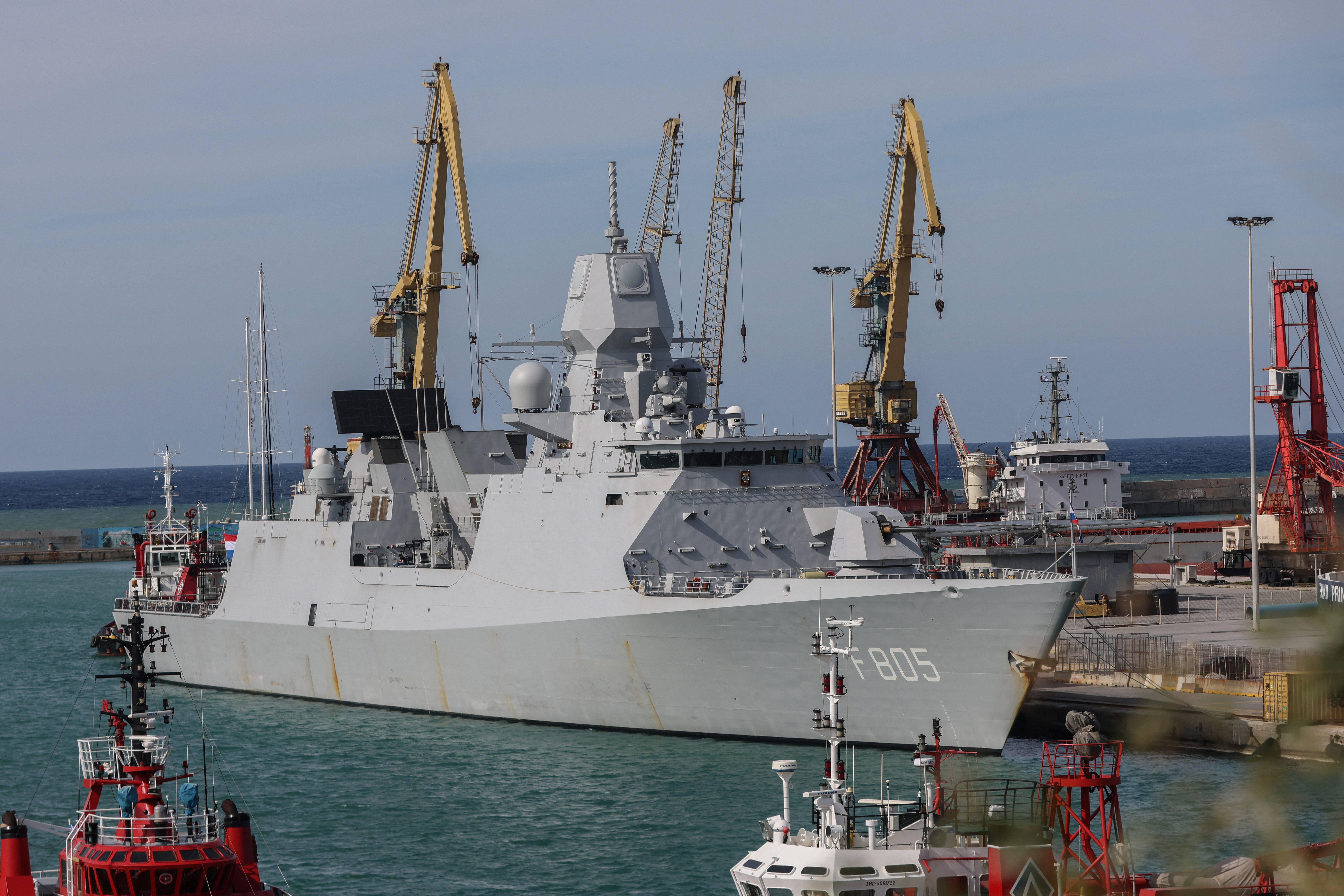
A Bluetooth tracking device which was posted to a Dutch frigate. deployed to the waters off Cyprus after the island was hit by an Iranian-made drone last month, allowed it to be tracked remotely for days on end.
Dutch television channel Omroep Gelderland reported that a device worth around €5 was attached to a postcard which was posted to the ship using the Dutch military’s postal service, thus allowing the sender to track its movements remotely.
The ship, named the HNLMS Evertsen, had been deployed to the waters off Cyprus as part of the French aircraft carrier the Charles de Gaulle’s carrier strike group, and was sent to the region over a month ago.
According to Omroep Gelderland, the device which was sent to it “is normally intended for finding your keys, for example”.
It explained that the device was sent from the Netherlands using the Dutch military’s postal service, and was transported via the Niewe Haven naval base in the province of North Holland to Eindhoven airport, from whence it flew to Crete.
Once in Crete, the device was transported to the port of Heraklion, where it was taken aboard the HNLMS Evertsen, which had docked in the port late last month.
The ship left Heraklion on the morning of March 27, with the device tracking its location until it arrived off the coast of Cyprus on March 28, at which point the device went permanently offline.
A Dutch defence ministry spokesperson told Omroep Gelderland that “adjustments have since been made” in response to “this incident”, and that now, it is forbidden to send a greetings card containing batteries to Dutch warships.
The spokesperson added that the tracker was found while incoming mail was being sorted aboard the ship, and that while the ship could, therefore, have been tracked at sea, “this would not have posed an operational risk”.
Dutch Defence Minister Dilan Yesilgoz has since informed her country’s parliament of the issue.
![French President Emmanuel Macron aboard the Charles de Gaulle last week [Reuters]](https://cyprus-mail.com/wp-content/uploads/2026/03/2026-03-09T162732Z_296799001_RC241KAI1ORK_RTRMADP_3_IRAN-CRISIS-CYPRUS-FRANCE.jpg)
The incident is the second of its kind to have taken place aboard a ship in the Charles de Gaulle’s carrier strike group, with a sailor aboard the Charles de Gaulle itself having last month inadvertently leaked its location after logging a jog around it on mobile fitness app Strava using a smartwatch.
The sailor, referred to by French newspaper Le Monde as Arthur, ran seven kilometres in 35 minutes, with the data then appearing online, showing the ship to have been located northwest of Cyprus, south of Antalya, while he was on his run.
In response, the French armed forces told AFP that the incident “did not comply with the current instructions” issued to sailors, and promised that appropriate measures would be taken.
Earlier, the HNLMS Evertsen had faced another kind of problem, with it being revealed that the ship’s main naval gun was inoperable.
However, at the time, its commander Marcel Keveling insisted that the ship had “sufficient alternative weapons systems”, and that the primary function of the frigate’s deployment to the region was air defence, rather than surface-level combat.
Alongside the HNLMS Evertsen, the Charles de Gaulle’s carrier strike group also includes Italy’s Federico Martinego frigate and Spain’s Cristobal Colon frigate.
While no timeframe has been published regarding an eventual end to the group’s deployment, Dutch newspaper De Volkskrant had reported last month that the country’s government had stressed that the sending of its frigate will constitute “a limited deployment of a defensive nature, both geographically and in terms of time”.





Click here to change your cookie preferences