
The real danger is a clash of ignorance and a loss of moderation in a world of increasing power and shrinking trust
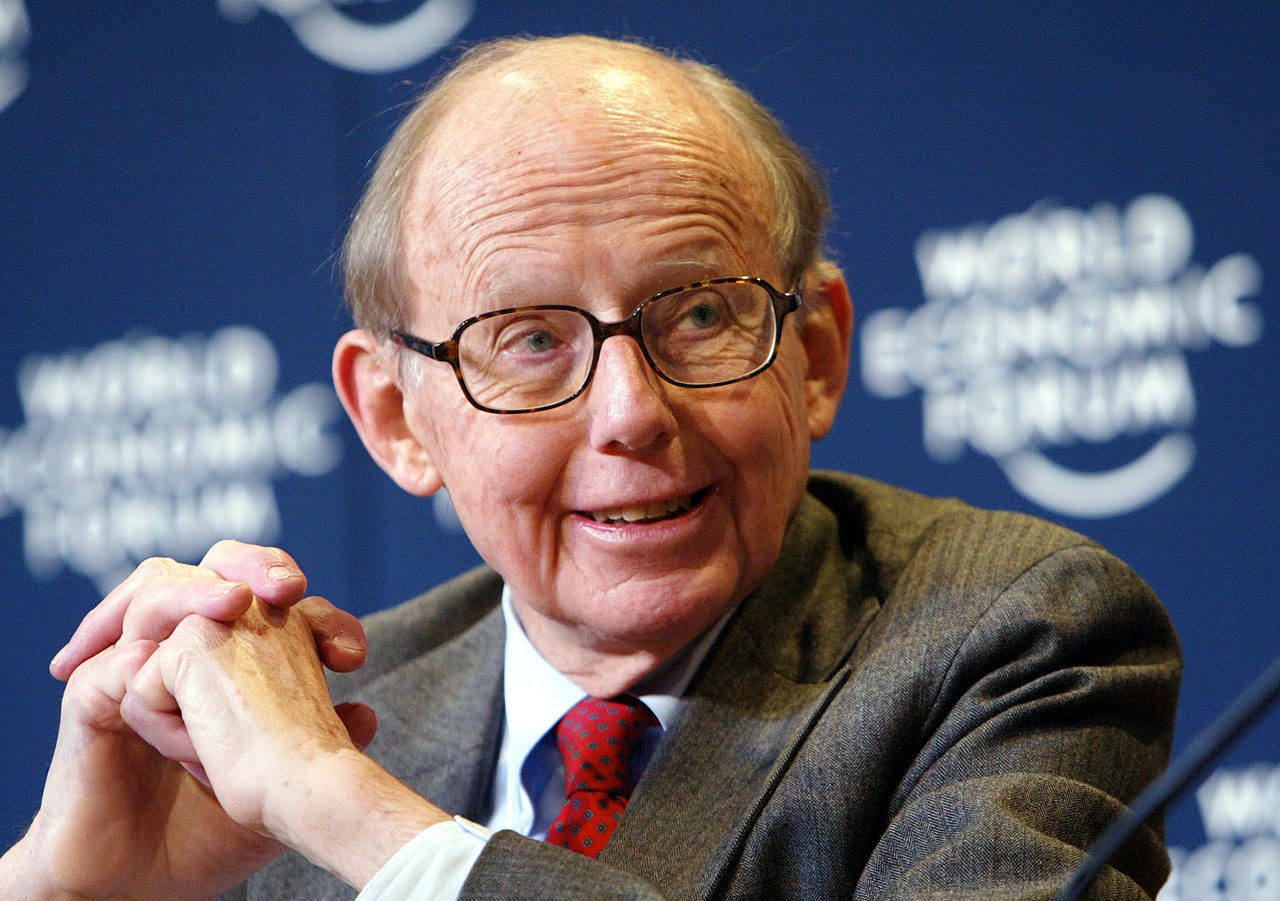
Thirty years on, why revisit Professor Samuel Huntington’s seminal and widely debated book, The Clash of Civilisations and the Remaking of World Order, published in 1996?
Not to celebrate a thesis. Not to settle old academic debates. But because the language of a “clash of civilisations” is returning – and beginning to shape the way states think and act – risking a self-fulfilling prophecy in an increasingly dangerous and dystopian world. What we took for granted in the 1990s no longer holds.
Look around. War in Ukraine. War in Iran. A widening arc of violence from Gaza to the West Bank and into Lebanon. Instability extends into the Red Sea. Tension in the Indo-Pacific. Growing instability across parts of Africa and Latin America. A steady erosion of international law and agreed norms.
At home, distrust of institutions, political polarisation and a sense that leadership has lost its compass are widespread.
These are not local problems. They are systemic. This is the global setting in which Huntington’s argument returns.
After the end of the Cold War in 1991, when many believed liberal democracy would spread everywhere and that the Western model had become universal, Huntington warned otherwise. Culture, he argued, would matter more than ideology. Civilisations – not systems – would shape the fault lines of the future. His student, Francis Fukuyama, had prominently argued the opposite in The End of History and the Last Man: that history had effectively ended with the triumph of liberal democracy over totalitarianism.
History did not end as we all witness.
China is rising without becoming Western. Russia is reasserting its own path. India’s confidence and influence are growing. Political Islam remains a force to be reckoned with. Modernisation did not erase the differences. If anything, it strengthened them. The world did not converge. In that sense, Huntington was partly right. But only partly.
Civilisations do not make war. States do. Power, control of resources, national interest, fear, historical grievance and the judgement – and misjudgement – of leaders, including their personal agendas, drive events. The war in Ukraine and the war in Iran are not explained by culture alone. Nor are those across the Middle East. These are struggles over security, territory, influence and survival – often wrapped in the language of identity and civilisation.
That distinction between culture and cause matters – more than we sometimes admit. Once conflict is framed as civilisational, compromise becomes betrayal. Every dispute becomes existential. Diplomacy shrinks. This is where Huntington’s thesis can be misused.
Huntington did not call for a clash. He warned against illusion – the illusion that one model could fit all societies, that history would converge neatly, that differences could be brushed aside. He argued for realism and restraint. What we see today is something else: not random disorder, but systemic fragmentation across civilisational zones – a shifting strategic landscape where power is shifting, identity is hardening, trust is thinning and tribal politics is on the rise.
That combination is combustible. The deeper danger is not that East and West are destined to collide. It is that leaders, publics and commentators begin to speak as if they are. Words shape expectations. Expectations shape policy. Policy shapes outcomes. Outcomes become praxis – lived reality. The result is a slide from rivalry into inevitability.
There is also a second, less discussed fault line: within the West itself.
Huntington identified the West’s strength in constitutionalism, individual liberty, democracy, human rights and the rule of law – alongside economic and military power and a long period of imperial expansion.
Trust, however, rested on these institutional foundations – among its citizens and between like-minded states – precisely because they were not extended equally to those under Western domination.
Today, that trust is under strain. Institutions are questioned. Political discourse has hardened. Social media and AI amplify anger faster than reason, blurring the line between reality and perception – with real consequences. In such an environment, truth is the first victim. Across the United States and Europe, political fragmentation is deepening, public confidence is eroding and cohesion within alliances such as Nato is increasingly tested.
A divided society speaks less clearly abroad. If there is a “clash” underway, part of it runs through Western democracies themselves – between confidence and doubt, cohesion and fragmentation. This matters strategically. Influence abroad rests on credibility at home.
What, then, is the lesson thirty years on?
First, beware of simple narratives. The world is not neatly divided into civilisational blocs. It is interconnected – economically and technologically. Rivals trade even as they compete. Lines are blurred. Yesterday’s adversaries can become today’s interlocutors – as recent developments in Syria illustrate.
Second, resist absolutism and messianism. When every issue is framed as a struggle between “our” values and “their” values, diplomacy has no room to operate. Interests must be named plainly. Differences must be managed, not moralised.
Third, restore proportion in leadership. Not every dispute is existential. Not every adversary is irredeemable. Aristotle’s old insight – that virtue lies in balance – still has practical value. In a heated environment, proportion is strength.
Fourth, repair trust at home. Without it, foreign policy loses its anchor. A society that doubts itself will struggle to persuade others.
None of this requires denying differences between civilisations. These differences are real and enduring. They are not only cultural but often religious – touching questions of belief, identity and meaning that are not easily compromised. But difference does not have to mean destiny. We can disagree without becoming disagreeable. When moderation fails, history tends to repeat itself – never in the same form, but always with the same consequences.
Huntington helped correct a post-Cold War illusion. He reminded us that identity matters, that history does not dissolve, and that the world is plural. Where he went too far was in suggesting that civilisational lines would become the main drivers of conflict.
The disorder of today is better understood as a mix of power transition, strategic rivalry, technological disruption, competition over resources and internal strain within states. Civilisational language often follows these realities – it does not always cause them.
That is where leadership and citizen education matter. Statesmanship lowers the temperature. It keeps channels open. It avoids turning every disagreement into a test of identity. It recognises limits. It knows when to press – and when to pause. An educated and informed public is less easily drawn into absolutism.
The alternative is a world that talks itself into conflict.
This is also what diplomacy is all about: preventing conflict from becoming inevitable.
Thirty years on, the question is not whether Huntington was right or wrong. It is whether we have the discipline to avoid proving him right for the wrong reasons.
The real danger today is not a clash of civilisations.
It is a clash of ignorance, growing intolerance and a loss of moderation in a world of increasing power and shrinking trust – where language is too often used to divide the world into absolutes of “good” and “evil”, to inflame rather than to resolve, and where the simple principle of treating others as we would wish to be treated is too often forgotten.




Click here to change your cookie preferences