
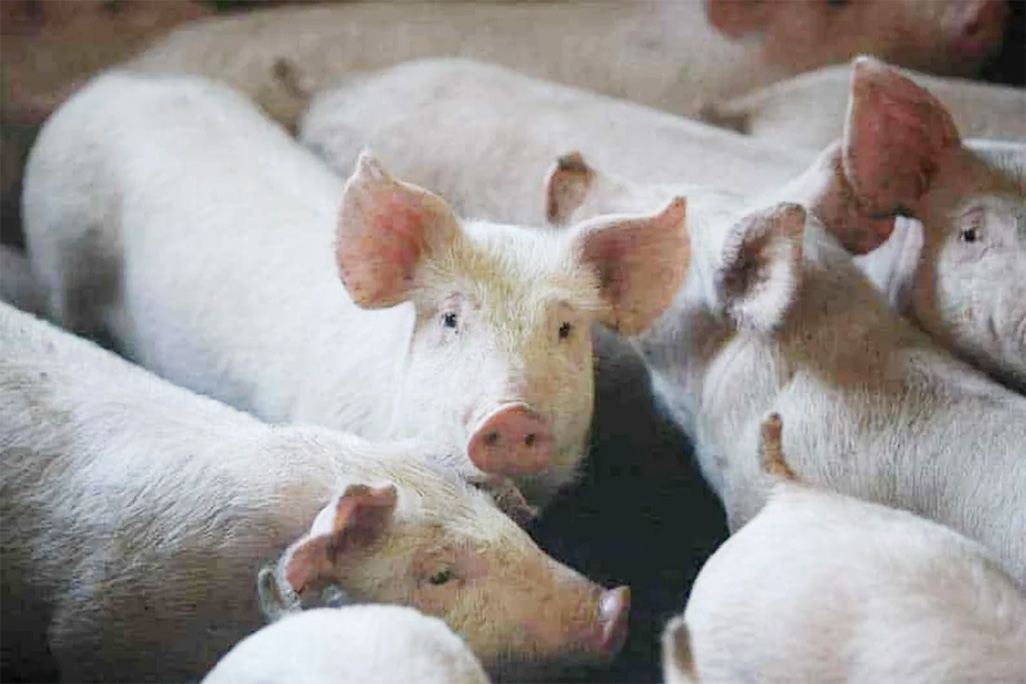
A third pig farm has tested positive for foot-and-mouth disease (FMD), authorities said on Tuesday as the number of infected farming units rose to over a hundred.
The disease has spread quickly over the past couple of weeks, with the number of affected farming establishments doubling during this time.
The latest pig farm where FMD was detected is located in the Paliometocho area, Nicosia district. It holds about 5,000 animals.
It’s adjacent to the two other pig farms which tested positive for the disease in recent days.
“It doesn’t surprise us, it was expected, given that this farm was in close proximity to the other two,” said Sotiria Georgiadou, spokesperson for the veterinary services.
Together, the three farms hold approximately 24,000 animals – accounting for about seven per cent of the pig stock.
They will all have to be culled.
To date, eight per cent of the cattle stock in the south has been slaughtered, as well as 2.8 per cent of the stock of sheep and goats.
Of the 102 farming units already infected, 13 concern cattle, 86 for sheep and goats, and three for pigs.
So far the second round of vaccinations has covered 73.8 per cent of the cattle stock, and 60.56 per cent of sheep and goats.
Asked about the prospect of exempting vaccinated animals from culling, Georgiadou said that animals receiving two jabs and which are not in proximity to infected farms, are considered protected – although nothing is for certain.
But, she stressed, in the event of “natural infection” – meaning from the virus not the vaccines – the instructions of the European Commission are clear: these animals must be culled, no exceptions.
Regarding disposal of the carcasses of the destroyed animals, the official said this is done in collaboration with various services – such as the departments of agriculture, geological survey and water development.
The carcasses are buried under layers of earth, using sealants and disinfectants.
Georgiadou again appealed to livestock farmers to strictly adhere to bio-security measures. She said mechanical transmission of the virus appears to have accelerated the spread.
She called on farmers to limit their movements, and for regular disinfection of clothes and vehicles.
With many farmers up in arms and threatening more disruptive action, Georgiadou spoke on the issue of compensation.
Units that had animals culled but opt to continue operating, will receive compensation for loss of income on a case-by-case basis. For those deciding to get out of the business, they will be compensated for the market value of their animals, plus for expenses for hay and milk.
On the overall situation, Georgiadou said the animal stock in Cyprus remains robust – so that replacement animals can be found for those affected units wishing to re-engage once the epidemic is over.



Click here to change your cookie preferences