
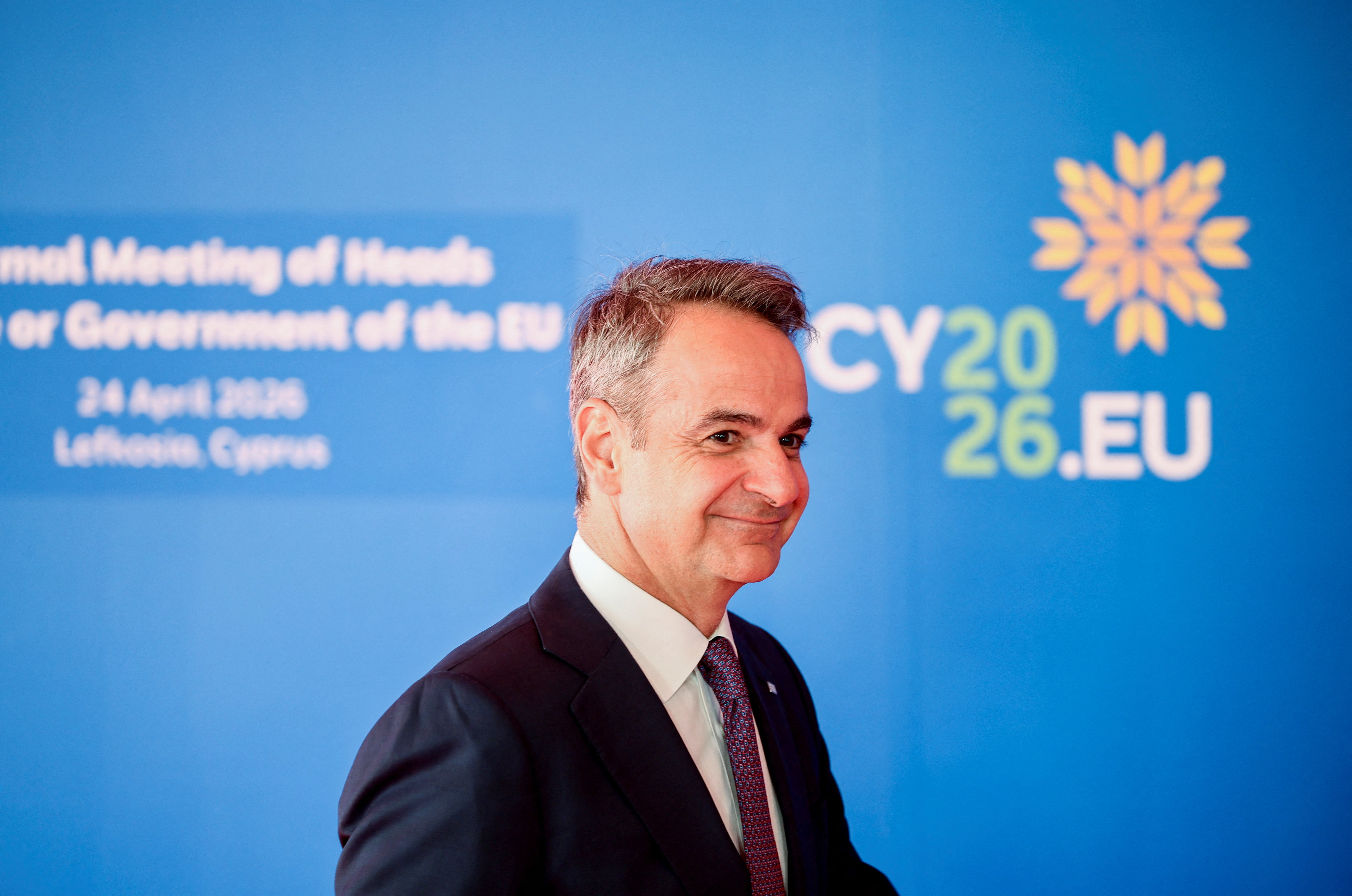
Greek Prime Minister Kyriakos Mitsotakis on Friday called for a deeper commitment to European strategic autonomy and solidarity in the field of defence, highlighting recent support for Cyprus as proof the European Union can act collectively in times of crisis.
Speaking upon his arrival at the day’s European Council summit in Nicosia, Mitsotakis said leaders had on Thursday night discussed ways to further strengthen the concept of European strategic autonomy, as well as enhance defence cooperation among member states.
“We had the opportunity yesterday to discuss how we can further upgrade the concept of European strategic autonomy and European defence solidarity,” he said.
He pointed to Greece and other EU member states standing by Cyprus after the island was hit by an Iranian-made drone last month, describing it as a milestone moment.
“Greece and many other European countries stood by Cyprus when it came under attack in the context of the conflict between the US, Israel and Iran,” he said. “I would say that this was the first tangible proof that Europe can stand on its own and support member states that are under threat.”
Mitsotakis reiterated his long-standing position on the need to activate Article 42.7 of the Treaty of the European Union, commonly known as the Lisbon Treaty – the bloc’s mutual assistance clause – which obliges member states to aid any EU country that comes under attack.
“For quite some time now, I have been speaking about the need for a substantial upgrade and activation of Article 42.7,” he said, adding that the clause represents a “key mechanism” for collective defence within the bloc.
He welcomed the fact that the issue has now gained prominence at the European Council level, describing it as an important step forward for EU security policy. “I consider it very important that this issue has now firmly entered the agenda of the European Council,” he said.
Looking ahead, Mitsotakis said Greece intends to use its upcoming tenure as the holder of the Council of the EU’s rotating presidency in the second half of next year to push the discussion further.
“Greece will certainly make use of its presidency to further elevate this discussion,” he added.




Click here to change your cookie preferences