
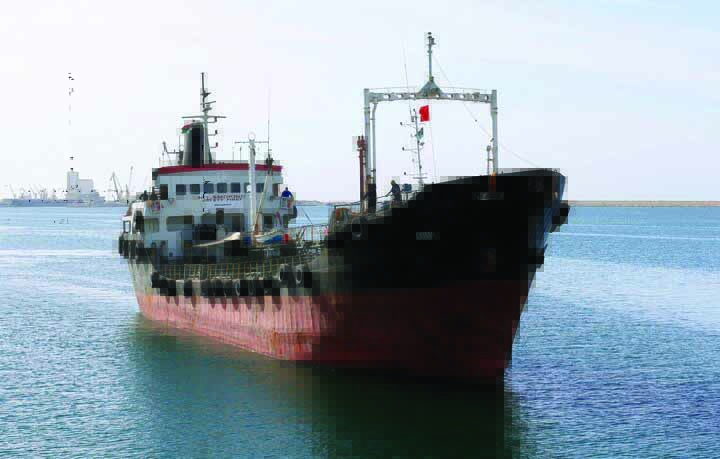
In recent years, the world has witnessed record investment in environmentally friendly renewable energy, rapid advances in battery technology and ambitious net‑zero commitments, all supported by sharply falling costs. Yet, the events of recent months have served as a reminder that oil remains an important driving force of the global economy.
Global oil production rose in 2023–2025, driven mainly by demand from aviation, petrochemicals and transportation. Electric Vehicles (EV) continue to gain market share, but heavy industry, shipping and aviation still rely almost entirely on oil‑based fuels.
At the same time, petrochemicals remain essential for industrial uses, such as plastics, fertilisers and pharmaceuticals and, according to the International Energy Agency (IEA), petrochemical feedstocks will account for more than 60 per cent of global oil‑demand growth in 2026, up from 40 per cent in 2025.
This dependence became clear when the recent geopolitical tensions escalated in the Strait of Hormuz, a chokepoint through which roughly 20 per cent of global oil supply and a significant share of LNG exports pass.
Brent prices surged as insurers raised premiums, shipping companies rerouted vessels and markets priced in the risk of a prolonged instability.
The sensitivity of markets to disruptions is amplified by the fact that global oil inventories, although rising in late 2025, remain concentrated in non‑OECD regions, while key pricing hubs continue to operate near multi‑year lows.
Rising oil prices feed directly into transportation costs, industrial inputs and food prices, generating strong inflationary pressures. As a result, central banks, that had been preparing to ease monetary policy, suddenly faced a sharp rebound in inflation.
For economies burdened with high debt and slowing growth, the risk of a renewed inflation cycle is particularly unwelcome. Higher energy costs also erode household purchasing power and corporate profit margins, slowing economic activity and creating conditions suggestive of stagflation.
History offers clear lessons. The 1973 oil embargo quadrupled prices and pushed inflation into double digits, contributing to a global recession. The 1979 Iranian Revolution triggered another spike, leading to a second wave of stagflation.
More recently, in 2008, oil reached USD 147 per barrel, adding pressure to the slowdown that preceded the financial crisis.
Today’s market, while more diversified, remains vulnerable: global oil demand is still expected to rise by 860,000 barrels per day in 2026, according to the IEA’s latest projections.
The conclusion is straightforward: while renewable energy is expanding rapidly, it cannot yet replace oil or its central role in global supply chains. Even the development of green infrastructure itself depends on oil: from extraction equipment to international shipping.
Despite rapid EV adoption, global oil demand is not expected to peak before the end of the decade, with the IEA forecasting a plateau around 105.5m barrels per day by 2030.
For small countries with limited energy diversification, global oil price shocks carry particular risks. Cyprus, which relies on imported fuels and uses heavy fuel oil for most of its electricity generation, is especially exposed.
Any increase in international prices is transmitted directly into electricity costs, burdening households and businesses and undermining economic competitiveness.
With oil still representing the dominant input in Cyprus’ power generation mix, even modest fluctuations in Brent prices can materially affect inflation, fiscal planning and the cost base of export‑oriented sectors.
Until alternative energy solutions reach sufficient scale, oil will continue to shape macroeconomic developments.
The world is moving toward renewables but for now, energy security still relies on oil. And as long as geopolitical risks, supply‑chain bottlenecks and uneven inventory distribution persist, the global economy will remain acutely sensitive to oil‑market volatility.






Click here to change your cookie preferences