
Vigilance required to protect trees from pests
There are many different flowers in bloom now including roses, which flower all year round in some gardens, and mostly with a sweet perfume.
In my garden my favourite is Rosa banksia, which has dear little yellow flowers, although there are some bushes of them that have white flowers, but alas both have no perfume.
What kind of plants should you grow to attract bees and butterflies to your garden? Flower colour is an important factor. Bees prefer shades of blue through to purple, which is probably why you find them hovering on lavenders and rosemarys.
Butterflies seek flowers with colours like yellows and whites, and you may see many of them around your citrus fruit trees, but there are exceptions to that rule.
Some insects are drawn to the perfume of the flowers, although it would seem that they don’t like the perfume of peppermints, cloves or those from the geranium family.
If you want to attract insects to your garden and you have lots of space, then consider bulbines or bulbinellas, both of which grow well here, and attract much wildlife, but they can take over your garden if you are not careful, so you have to keep them trimmed back.
A popular shrub or small tree, which seems to attract the same insects is Leucophyllum frutescens (the Texas Ranger), which flowers and flowers again, especially after a shower of rain, when its dusky rose-pink flowers quickly open up. You can cheat by spraying the top of the bush with water and it will produce even more flowers.
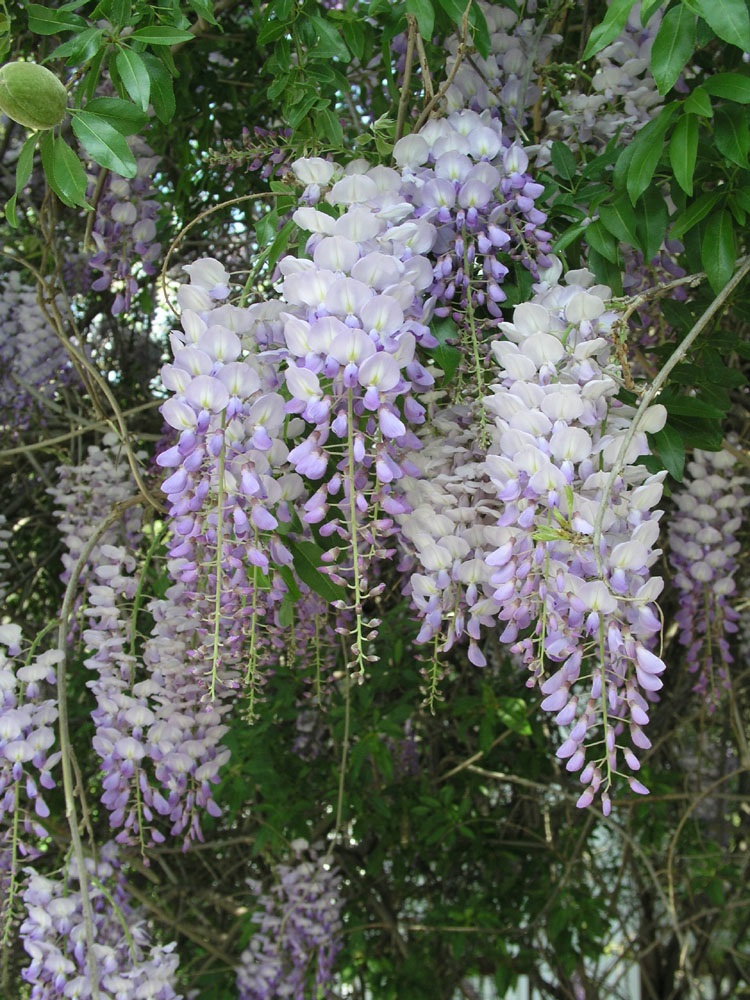
Wisteria, that charming climber, which will drape itself all over a railing or fence in no time at all, is another of my favourite plants and the flowers also attract insects by the score even though the flower panicles are very short lived and may drop in any heavy rain.
Prunus trees were originally non local having their origins as far apart as China to Asia Minor and will grow in our gardens up to 1000-1500 metres elevation. Citrus trees also emanated from China in the main, but have adapted to the Cyprus climate exceedingly well.
All prunus and citrus trees are known as hermaphrodite, which means that they have the characteristics of both male and female flowers. Prunus fruits are known as ‘drupes’, fleshy one-seeded fruits, whilst citrus fruits are botanically known as ‘hesperidium’, which means modified berries containing seeds (pips in some cases).
Most houses here have a fruit tree or two in their gardens. Oranges and lemons are usually the favourites and perhaps an olive, if there is space.
May is the last month to feed them with 20.10.10 fertiliser – just where the feeding roots are, between the trunk and the canopy of the tree and then no more until December. As the citrus flowers begin to fade, the process of making the fruits begins.
I am always being asked about growing other fruit trees. The only known apple that will grow up to 300 metres elevation, is one called Anna, which was bred in Israel. Although many varieties of apples are available here, they are generally grown at higher elevations. Some fruits need a ‘chill period’ during their dormant time, cherries in particular, so grow better away from the coast.
Stone-fruit trees are liable to exude resinous gum from time to time. Frequently little or no harm results, but sometimes the gum is the symptom of a disease of bacterial origin, often called canker. Another symptom of canker can be seen when new leaves have circular dark-brown spots.
Spores enter trees through wounds that have not healed over, sometimes caused by winter pruning. In these cases, whole branches may die back quite suddenly, sometimes in the middle of the summer and eventually the trees may have to be destroyed.
Cut back diseased branches to at least six inches behind the canker and burn them if you are able to. When pruning, do ensure that you thoroughly clean your pruning knife or saw, so as not to transfer the canker to other trees.
The gum appears on branches and sometimes on the trunk from what looks like little round insect holes. Use ‘Cuproxat’, a copper-based liquid and similar to ‘Murphy’s Copper Fungicide’, to try and eliminate this problem.
Using 50ml of ‘Cuproxat’ in 10 litres of water spray the trees as the buds begin to swell but I hasten to add not when the flowers are open. Remember to wear eye protection when you do this and wash your hands well afterwards.
It is not all easy to grow fruit trees. Leaf curl is one of the most common diseases of peaches, nectarines and almonds. This is a spring problem when the young leaves develop distorted and puckered patches and whitish green or pink blisters, which redden and become thickened until the leaf may be destroyed.
Later on in the year foliage may be covered with a white powdery bloom and fruit may also carry warty spots. If the disease is not treated then these trees are likely to have distorted leaves, which fall prematurely. Loss of leaves means fruit set is poor and they do not fully develop. Twigs may also be attacked and die back as a consequence.
A reminder to clear up old foliage under trees, whether they be ornamental or fruit-bearing, or you will find that any rain or watering will be wasted as it can’t soak though the earth. Polygala trees shed all year round, flowers and dead leaves, and can make a thick crust if not cleared up regularly.
There are a lot of bugs around in May as temperatures shoot upwards. You can deal with greenfly, blackfly and brown-fly, either by using a chemical spray or water with a drop or two of washing-up liquid. Watch out for these pests on pomegranates, almonds, apricots and peaches.
The biggest problem with fruit trees here in Cyprus is the Mediterranean fruit fly. Only lemons, pecans and loquats seem to escape, perhaps because of their thick skins. It takes a mere twenty days for an egg to become a mature fertile egg-laying adult, so smart action is required unless you want your fruits to be full of little white maggots.
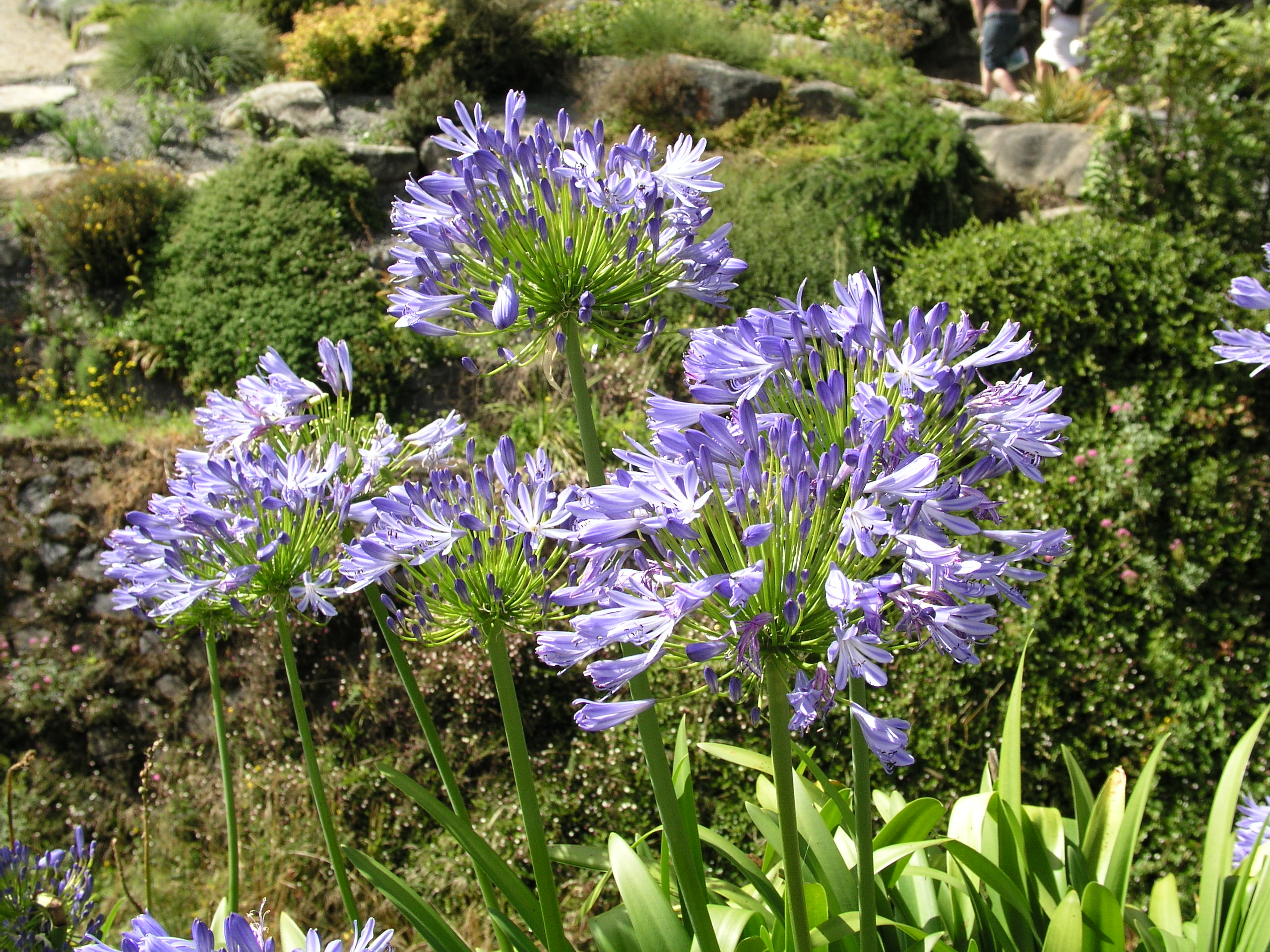
Moving on to summer flowering plants you may like to try agapanthus, originally from South Africa, that just love a sunny position in the garden or veranda. You can plant the bulbs or better still at this time of year, buy some of these gorgeous summer flowering plants already potted up when you know that they are more likely to flower.
Some gardeners tell me that their agapanthus don’t flower at all and it may be that they are too crowded together. They like to be planted quite deeply in a moist but well-drained soil and grown in full sun, so bear that in mind. They may not flower if their roots are too restricted.
Mine have been in pots for years and years and yet flower every year. In places like Australia and New Zealand I have seen them growing profusely along the edges of roads with huge flower heads and without any special care at all!
If you have had no luck with agapanthus, try Hemerocallis (Day Lilies). These Asian origin plants also like to be planted in full sun to partial shade. They benefit from some regular watering but do not like to be waterlogged.
Remember to remove dead flowers daily, which should encourage more blooms to appear. As they are perennials, clumps will eventually form and can be divided up every few years or so.
Plant of the month: Freesias
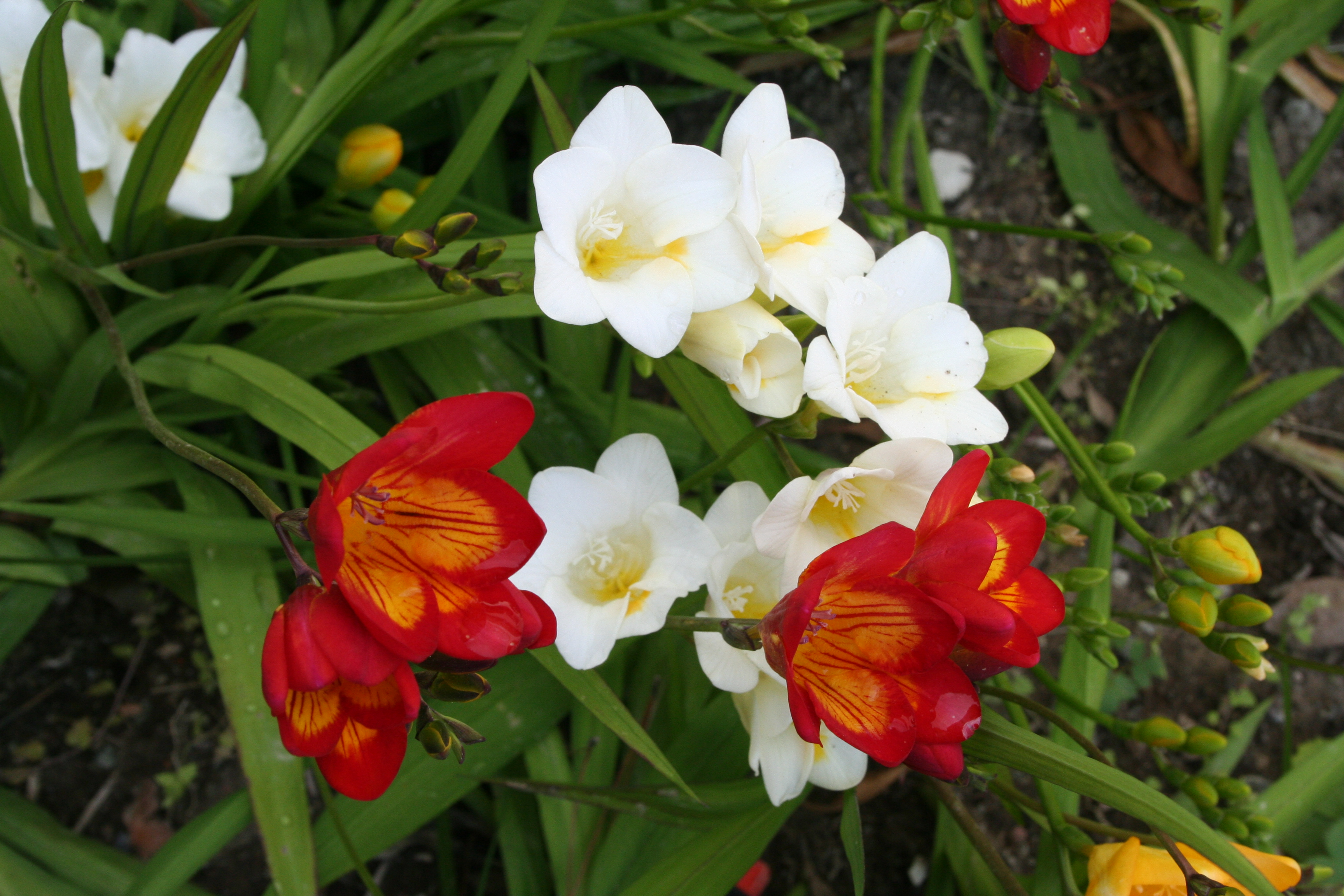
These lovely plants in wonderful colours of gold, deep red, purple and white belong to the iris family and are classed as the most beloved flowers in the world. They are often chosen by brides for their wedding bouquets because of their delightful perfume.
The grow well in our spring gardens here with lots of sunshine to bring out the flowers, some single and others double. Rather like many other plants that grow well here, they started life in eastern Africa, mainly Kenya.
They also grow well in pots, so if you garden on a veranda, you should be able to grow them. Although they grow from a corm they are classed as herbaceous plants, which just means that they will/should come up every year.
They don’t like cold winters though, but by keeping them in a rich well-drained soil, they will probably survive. Plant the corms about 2 inches deep and watch for the growth which could be quite tall and need some eventual staking.
In the autumn as the stems and leaves die, you can leave the corms in the ground or dig them up and keep them somewhere dry until replanting time. Freesias can produce little bulbils along the stem as well, which should eventually grow if left in the ground. The corms will also have side growths which when planted will eventually flower – what a bonus!




Click here to change your cookie preferences