
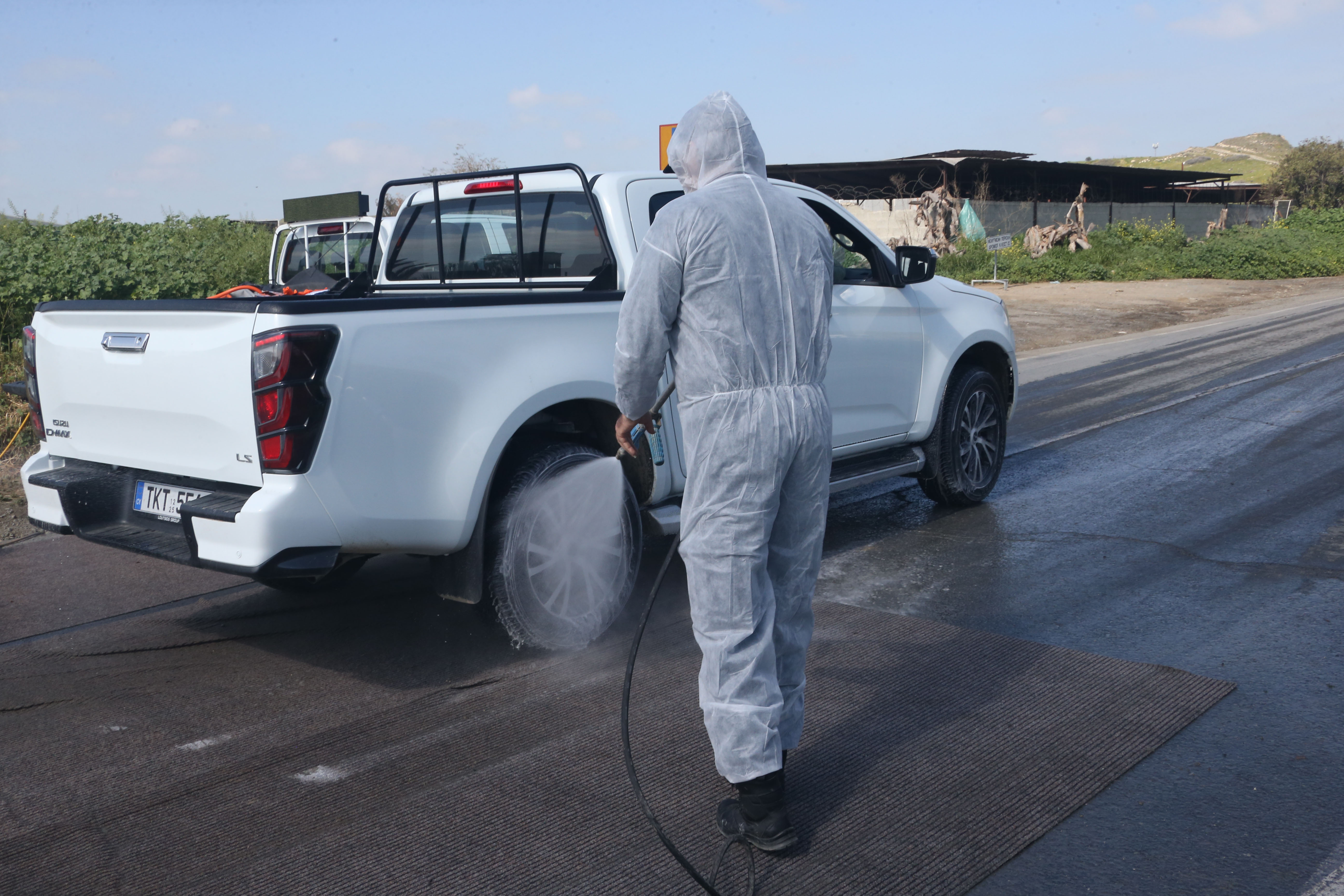
Livestock at two more farms were to have been infected with foot and mouth disease on Saturday, bringing the total number of infected farms to 110 across the island.
Both farms were sheep and goat farms near Athienou.
Meanwhile, the veterinary services department said that it has not yet come to a decision regarding the fate of animals belonging to rare breeds which have been diagnosed with the disease.
That decision, it said, will be announced “in the coming days”.
According to European Union law, when an animal is found to have foot and mouth disease, every animal on that farm must be culled, though derogations are occasionally available for rare and endangered breeds.
More than 30,000 animals have already been culled, with veterinary association chairman Demetris Epaminondas having said previously that there is “no less painful alternative” to culling when attempting to stem the spread of the disease.
“The killing of all animals in such cases is imposed by European legislation and there is no less painful alternative,” he said, before adding that European Union law on the matter is “particularly strict”.
He also stressed that vaccinations of animals cannot replace culling as a method of preventing the disease’s spread, as the vaccine’s aim is “to limit the transmissibility of the disease”.
“Even a vaccinated animal, if it is found to test positive, must be culled,” he said, before going on to say that animals can remain infectious for four to six months.
He added that allowing infected animals to live also entails the “risk that the virus will be transmitted further either by air, or by machinery, or in any other way which would affect other units”.
“That is why these extreme measures are being taken,” he said.




Click here to change your cookie preferences