
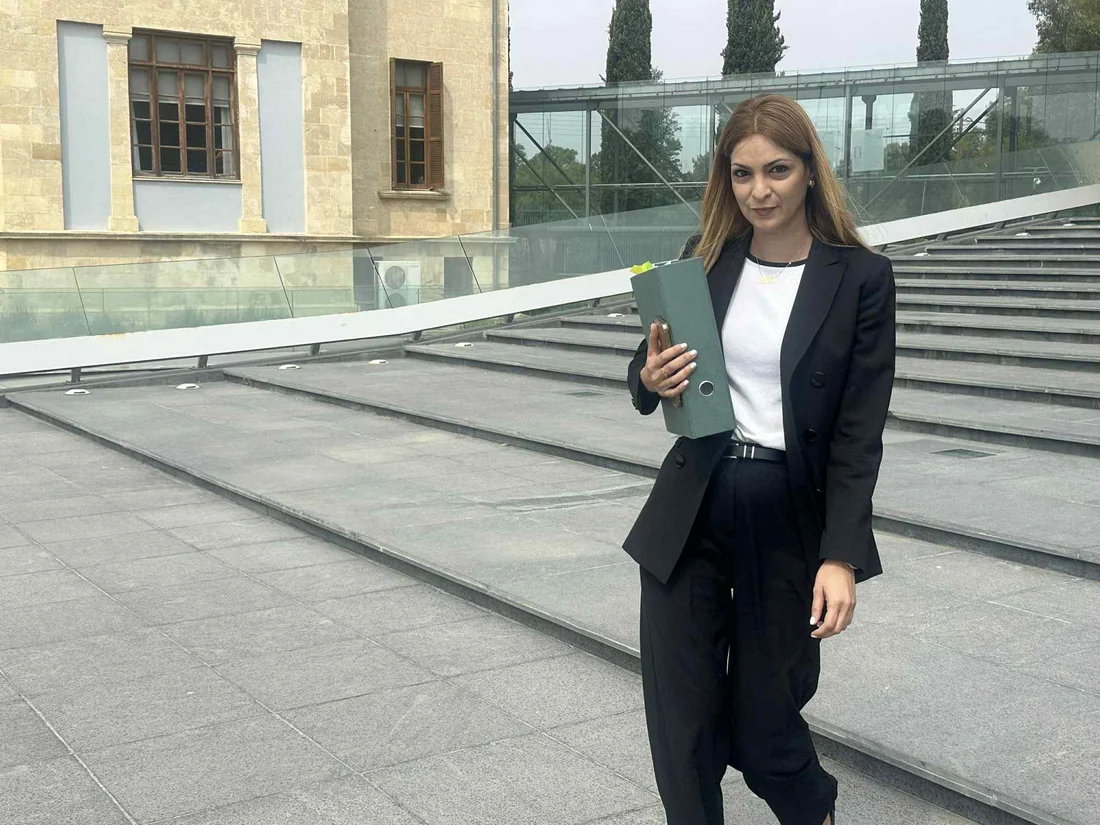
Ousted judge Doria Varoshiotou said on Tuesday that she filed an appeal on Monday with the European Court of Human Rights (ECtHR) over the termination of her services, which she claims was linked to her stance on the death of Thanasis Nicolaou.
“I feel particular satisfaction that I refused to change my conclusion in the Thanasis Nicolaou case,” Varoshiotou said in a statement.
Varoshiotou had ruled that conscript Thanasis Nicolaou, who died in 2005, had been strangled, overturning a finding of suicide 19 years after his death and following a long campaign by his mother, Andriana Nicolaou.
On February 6, the Supreme Court rejected her appeal against her dismissal in a five-to-three ruling, upholding the supreme judicial council’s decision to relieve her of her duties.
In the statement issued on Tuesday, Varoshiotou said the majority decision confirmed that her dismissal stemmed from her ruling of May 10, 2024, which she “refused to change after instructions received from the administrative president of the Limassol district court on May 13, 2024”.
She added that on June 28, 2024, she was rebuked by the president and a judge of the Supreme Court during a private meeting.
Varoshiotou said the Supreme Court “ratified the findings for ‘public interest’ reasons” and incorporated the conclusions of criminal investigators into its ruling on the cause of death.
“The findings of the criminal investigators reached the same conclusion as mine and pointed to potential perpetrators with criminal liability,” she said.
However, she noted that the judges who ratified those findings were also members of the Supreme Judicial Council that later decided to terminate her services, citing alleged “errors”.
Varoshiotou said she would not go into further detail but pointed out that the inquest had been reopened after the ECtHR ruled against the Republic of Cyprus, highlighting the need to exhume the remains to investigate alternative causes of death.
During the exhumation, state pathologist Panicos Stavrianos, who had been excluded from the trial, was present as an observer, she added.
She stressed that judges should not be dismissed on the basis of their rulings.
Following her refusal to amend her findings in the Nicolaou case, she said she was instructed to alter the conclusions of two previous inquests, despite no factual disputes having arisen. She added that she attempted to reach an understanding and informed authorities of her intended actions, noting that the law does not allow a court president “to give instructions to a death investigator to modify findings”, as this would constitute interference in judicial work.
Varoshiotou said the supreme judicial council justified her dismissal on the basis of a legal position expressed in a ruling with which it disagreed.
“In the decision of the Supreme Judicial Council, as ratified by the majority of the Supreme Constitutional Court, I am accused of having ‘made up’ judicial procedures,” she said, adding that she was effectively penalised for expressing her legal opinion.
Furthermore, Varoshiotou said it would be ungainly of her to comment on the “extremely serious characterisations used in the decision that undermine my character, conduct and legal training, to support the view that I am unfit for the position of district judge”.
She maintained that she had carried out her duties “efficiently” and in a “conscientious” manner, adding that “the dark spot, as it appears from the documents submitted, is once again the Thanasis Nicolaou case”.
No reference was made, she said, to “my productive work during my judicial service”.
“In this case, serious issues touching on the foundations of justice have been highlighted. It is sad, in my opinion, that for the first time in our country’s judicial history, a judge has been removed in such an unprecedented manner. This case goes beyond the individual level. It concerns how the state addresses serious issues relating to judicial independence,” she said.
She added that this may explain why a minority of the Supreme Constitutional Court deemed it necessary to refer a question to the European court before issuing its ruling.
According to the Constitution, Varoshiotou said, judges hold permanent positions from the date of appointment and may only be dismissed for misconduct.
“In conclusion, despite my short-lived judicial career, I feel spiritual and mental satisfaction for the work I carried out with complete dedication over these two years. However, I feel particular satisfaction that I refused to change my conclusion in the Thanasis Nicolaou case, remaining faithful to the fundamental principle that no one interferes with a judge’s judgement, which is subject only to review by higher courts through legal remedies established by law,” she said.
Varoshiotou added that while her appeal before the ECtHR is pending, she will continue to serve justice in another capacity and will make no further public statements on the matter.





Click here to change your cookie preferences