
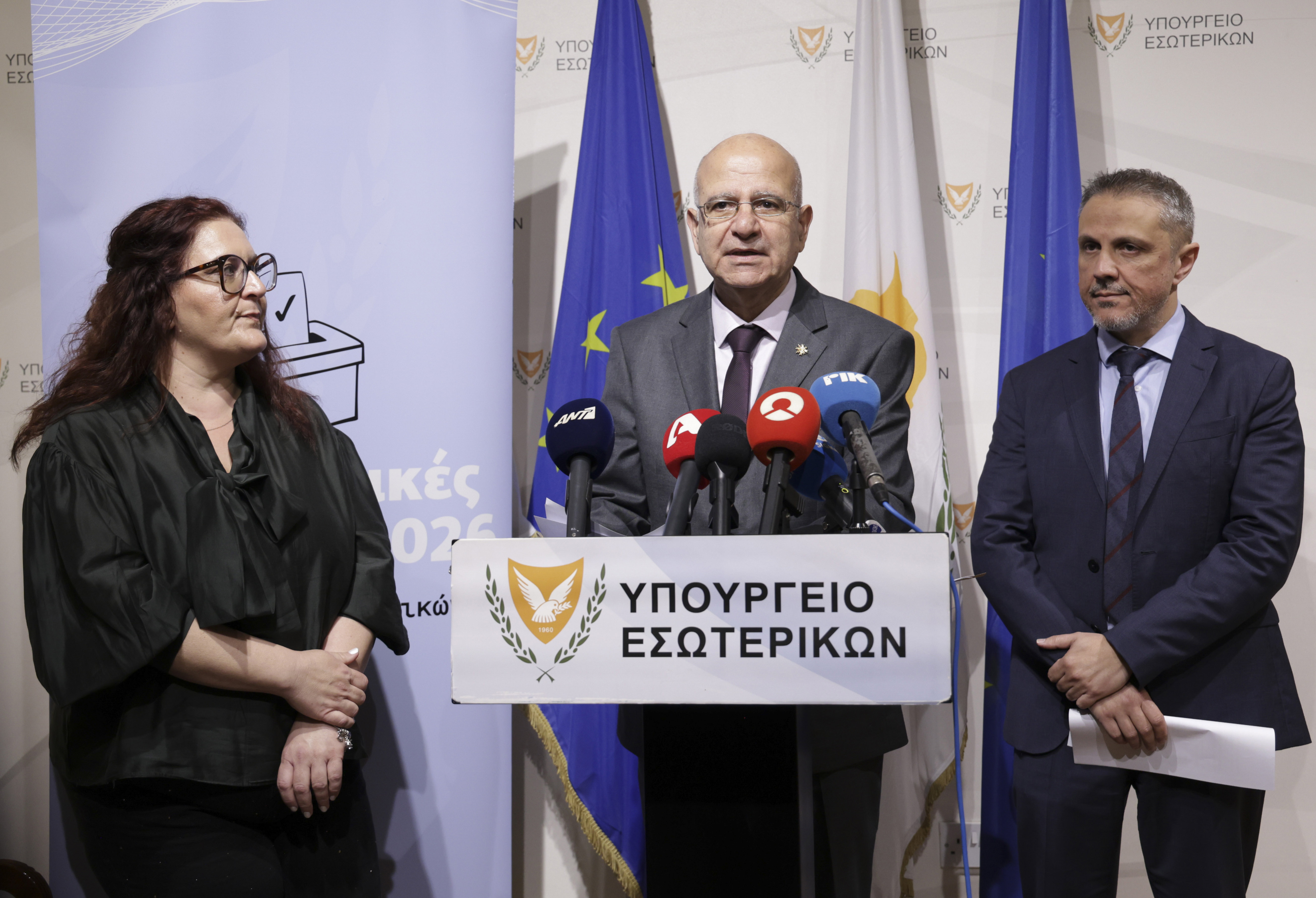
Exactly 753 people filed candidacies for the forthcoming parliamentary elections on Wednesday, as official registrations for those vying to win one of the 56 seats in the House took place.
Those candidates belong to no fewer than 19 political parties, with a number of candidates also sitting as independents.
Chief returning officer Elikkos Elia said that the number of candidates and parties is the highest in history, with the previous high for both – 651 candidates and 15 parties – having been set last time around in 2021.
He added that 529 of the candidates are men, while 224 are women, with women therefore accounting for just shy of 30 per cent of the candidates.
Of those candidates, 261 were registered in the Nicosia district, belonging to a total of 18 parties. A total of 180 candidates in Nicosia are men, while 81 are women.
In the Limassol district, 167 people filed candidacies, with 17 parties to be represented on the Limassol ballot paper. There, 120 candidates are men and 47 are women.
The Famagusta district had the third-highest number of candidates file, with 141, of whom 100 are men and 41 are women. Like in Nicosia, 18 different parties will be on the ballot paper.
A total of 76 people filed candidacies in the Larnaca district, of whom 50 are men and 26 are women, with those candidates belonging to 16 different partes.
In the Paphos district, exactly 67 people – 50 men and 17 women – belonging to 16 parties filed candidacies, while the district with the fewest number of candidates is the Kyrenia district, where 41 people filed candidacies, of whom 29 are men and 12 are women.
However, a total of 17 parties will be represented on the ballot paper in Kyrenia – more than in Larnaca or in Paphos.
Elia said on Wednesday that ballot papers will begin to be printed on Saturday, and that with the high number of candidates and parties “various alternatives” are being discussed regarding how a ballot paper can be printed to ensure that all candidates appear on it.
“It seems that in Nicosia, with 19 [seats], and so many parties, we will go with the option of printing the front and the back,” he said.
Regarding the day’s registrations, he said that the government is “particularly happy about the civilised climate we had today in all districts and the way the nominations were submitted”.
“This honours our democracy itself,” he said.
A total of 56 seats will be up for election later this month, of which 19 will belong to MPs from the Nicosia district, 12 to MPs from the Limassol district, 11 to MPs from the Famagusta district, six to MPs from the Larnaca district, five to MPs from the Paphos district, and three to MPs from the Kyrenia district.
The Paphos district gained an extra seat ahead of May’s election due to the growth in its voting population, with that gain coming at the Nicosia district’s expense.
The Republic of Cyprus’ constitution initially foresaw a parliament with 50 voting members, of whom 35 would be Greek Cypriots and 15 would be Turkish Cypriots, as well as non-voting observers belonging to the Armenian, Latin, and Maronite communities.
Following the breakdown of constitutional order and the outbreak of intercommunal violence in 1963, the Turkish Cypriots were unable to return to their seats in parliament, leaving just 35 voting members.
That figure was raised to 56 Greek Cypriots ahead of the 1985 parliamentary elections after the constitution was altered using the doctrine of necessity. The amendment foresees 24 Turkish Cypriots also being elected, but with the Cyprus problem remaining unsolved, this has not yet happened.





Click here to change your cookie preferences