
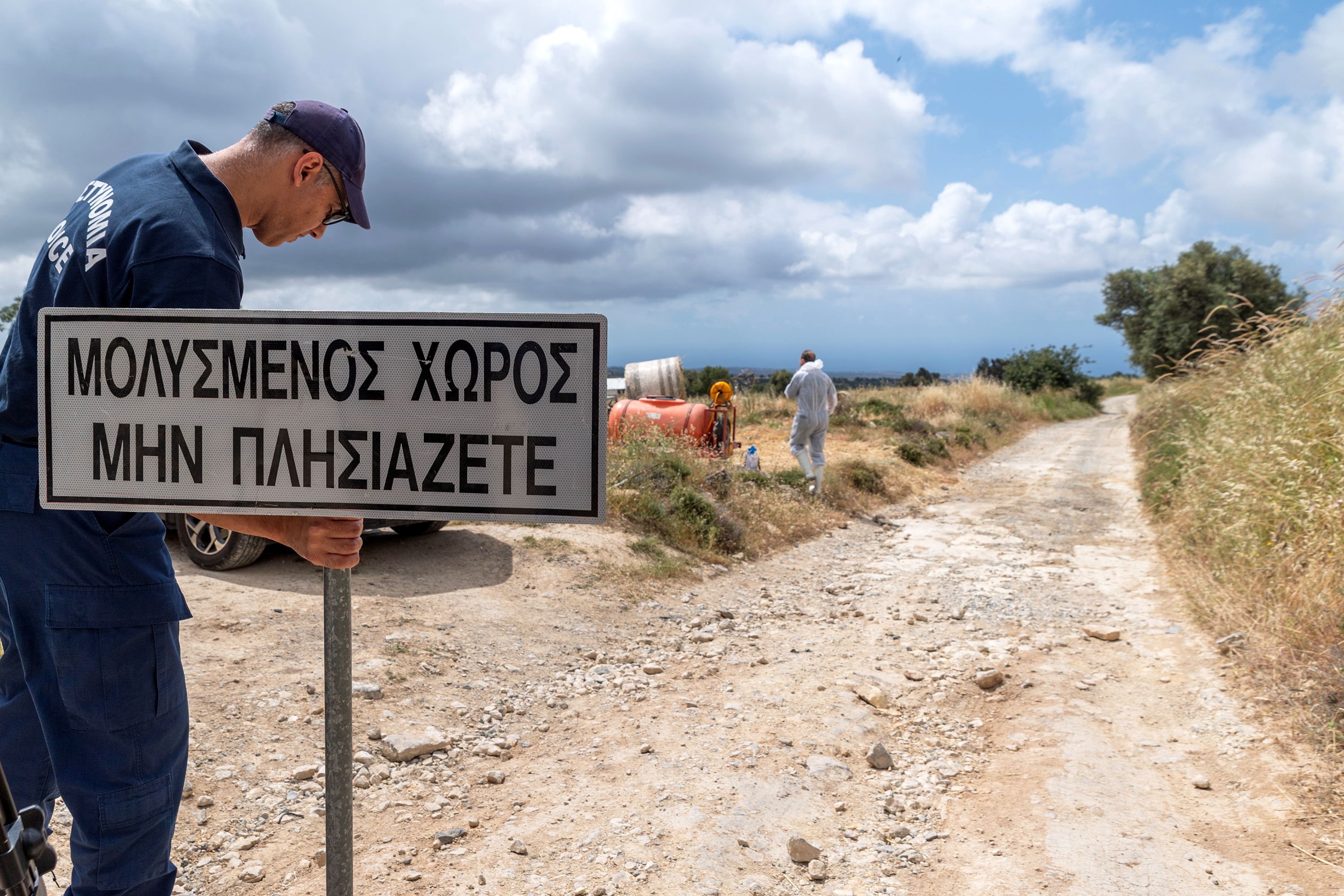
Veterinary services on Tuesday said no culling had been planned at the infected small farm in Pachna, based on conditions in the area at the time and the need to ensure the safety of personnel managing the situation.
In a statement issued following developments on Tuesday and public claims surrounding the case, the services said there had never been any official communication from staff to the farmer regarding a process to cull the animals or any possible loss of compensation rights.
They said no member of the veterinary services had informed the farmer either about how a possible cull would proceed or that compensation would be withheld for animals that might be destroyed.
The services also addressed claims about a second round of testing and a negative laboratory result at the farm, saying no second laboratory examination had been carried out in any case where samples had initially tested positive for the virus.
They said the same approach had been followed in the Pachna case, in line with principles of equal treatment, sound administration and good faith, meaning the samples in question were not retested.
The negative results being referred to publicly, they added, concern other farms in the area where sampling took place as part of the required systematic analysis, and not the infected unit in question.
The veterinary services also expressed concern over incidents of tension and the spread of inaccurate information, saying such actions significantly hamper efforts to manage the situation and the work of staff on the ground.
They also condemned the behaviour of certain individuals towards service officials in Pachna and called for respect for personnel working under particularly difficult conditions.
At the same time, they renewed their appeal to livestock farmers to remain calm, cooperate with authorities and rely only on information from the competent services.
They added that the state remains ready to provide all possible support to affected farmers, within the framework of the law and applicable national and European legislation.





Click here to change your cookie preferences