
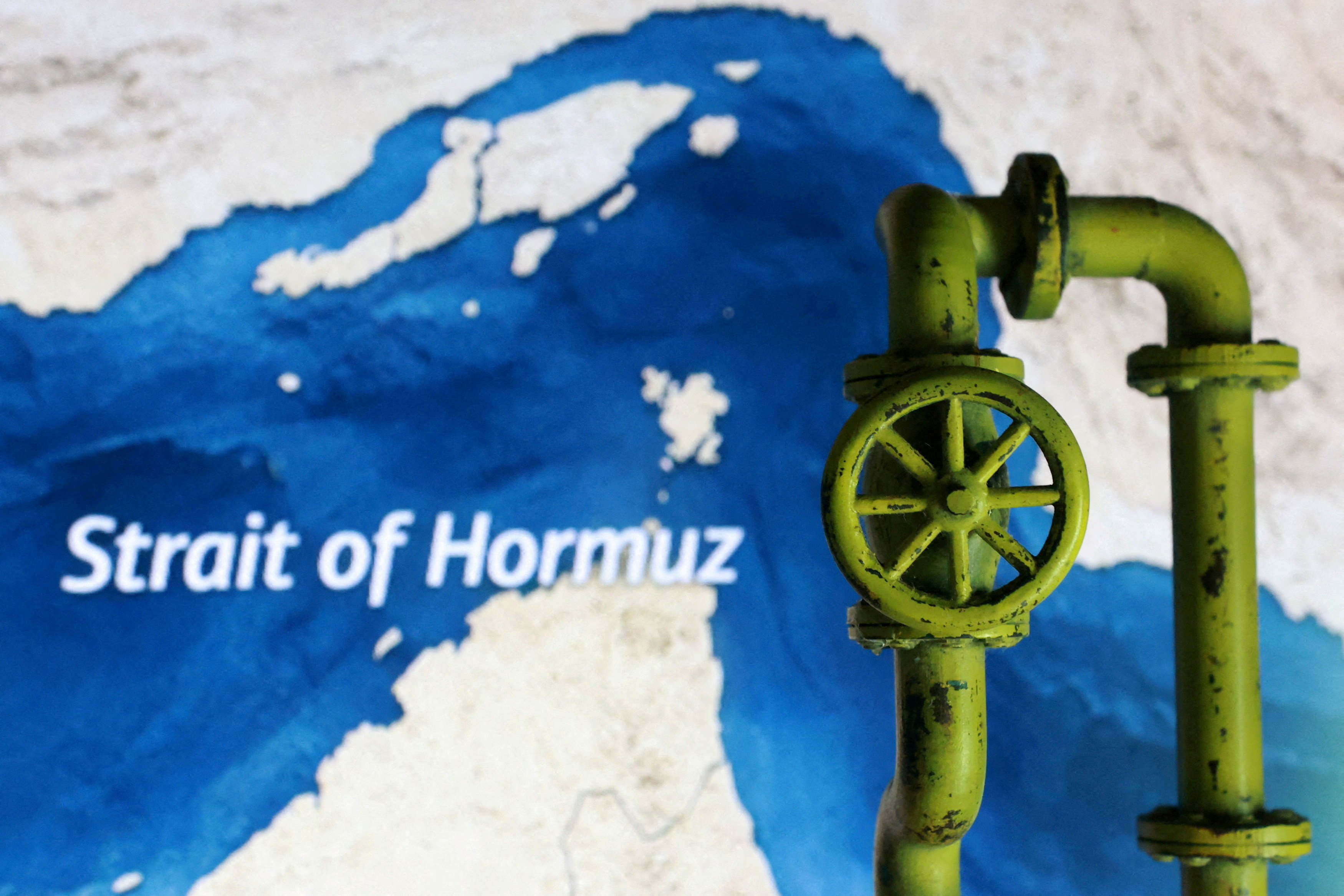
The developments of the past few days clearly demonstrate the adage “it is easier to start a war than to end one,” a recognised principle of military history and geopolitics. As the FT points out, Epic Fury’ has turned into ‘Economic Fury.’
With the US-Israel-Iran war, now in its third month, fuel supply disruptions are spreading to Asia and are threatening Europe. The shutdown of crude oil and products flows through the Strait of Hormuz has sent prices sky-high. It has also created a full-blown crisis for the jet fuel market, with supply insecurity now becoming acute.
The opening of the Strait of Hormuz is important, but it would be a mistake to consider it will be a full return to normality. As and when it happens, it is better understood as a partial stabilisation under constant risk.
The fact that it keeps opening and closing shows that we are not yet at a solution and is in fact more destabilising than a complete closure. It has created a high-frequency shock environment where uncertainty itself has become the main economic force.
Geopolitical tensions, rather than traditional supply-and-demand fundamentals, are now becoming the dominant driver of energy prices, rather than market forces, creating extreme volatility.
This is demonstrated by events in April. Following President Trump’s threats to hit Iran “extremely hard” in early April the Brent oil price soared to over $110/b. By mid-April Trump ‘talked’ prices down to about $94/b, but by the 16th Brent was back over $98/b when he refused to lift the blockade of Hormuz. Following his welcoming of news that Iran was reopening the Strait of Hormuz to commercial vessels, Brent fell to $87/barrel, but by Monday 20 April it rebounded to about $95/b, after the seizure of an Iranian cargo ship by the US Navy and to $99/b on 22 April after the cancellation of the expected meeting between US and Iran negotiators in Islamabad. Following more recent threats to the ceasefire it has climbed to $118/b.
If no deal is reached when new talks resume, and President Trump carries out his threats and hits Iranian infrastructure, we will be back in a worse position than we are now. The risk of a prolonged conflict beyond May is a shortage of oil product stocks, including jet fuel, petrol and diesel, with huge economic consequences. The stakes of no deal are rising.
This repeated openings/closing of the Strait of Hormuz create:
- Uncertainty and paralysis
- Volatility without resolution
- Permanent risk premiums
Markets can manage “bad but clear”. They struggle with “uncertain and ever-changing.” The result is that markets and prices have become extremely volatile, oil traders price-in a permanent geopolitical premium, and markets hold back hoping for change.
Repeated openings/closings are unsustainable. If this kind of instability continues, it can lead to one of three outcomes:
- Stabilisation through deterrence: A strong military presence to keep the Strait open
- Escalation into prolonged disruption: This would lead to markets repricing structurally higher
- Most likely a managed-tension equilibrium: That is, the Strait is technically open but operates under constant risk
The repeated opening and closing of the Strait of Hormuz means that economic disruption is intensifying, uncertainty is becoming the main cost factor, and global trade continues to slow even without a full closure, causing massive economic disruption.
What happens if “stop-go” continues
President Trump thought Iran would be “like Venezuela – show up, capitulate, done.” Now he’s stuck with no one rushing to help. And he is learning about unanticipated consequences the hard way
If “stop-go” continues for another 1-3 months, then tension and shipping disruption through the Strait of Hormuz will continue and regional fuel supply shortages could be exacerbated. Brent price volatility will continue in the range $100-$130/b and fuel prices will continue rising by as much as 30 per cent-50 per cent in extreme cases.
Greek refineries are already warning they have secured sufficient oil only to early June. While current inventories are adequate, a continued closure of the Strait of Hormuz is making it harder and more expensive to source oil, is risking future shortages if the situation does not improve. With Greek refineries the main suppliers of oil products to Cyprus, if this happens Cyprus may experience shortages by end of May/June.
Opening of the Strait of Hormuz
Opening of the Strait, when it happens, will not be a reset to pre-war conditions, but a pause in the disruption, with an ongoing cycle of geopolitical risk. Even if energy flows resume, it may take 3-5 months for fuel flows to recover, with the crisis leaving lasting structural effects:
- Supply disruptions are expected to linger, causing continued price volatility
- The crisis is already accelerating diversification. China is already reviving coal-to-gas megaprojects
- Europe is prioritising LNG outside the Gulf, from the US and Africa
- Asia is diversifying suppliers and increasing storage
- China is relying more on pipeline gas from Russia and Central Asia
The world has entered a strategic review with greater emphasis on energy security over cost-effectiveness and increased investment in strategic reserves, alternative shipping routes and domestic energy sources.
Nevertheless, reliance on Middle East energy supplies will remain important well into the future. As a result, there will be strong global incentives to keep the Strait open. This is creating a tense balance, not necessarily a secure one. In all likelihood Iran will retain some control. As a result, when the Strait of Hormuz opens:
- In the short term: There will be a substantial but incomplete return to normality, with fuel flows resuming and prices falling
- In the medium-term: There will be persistent risk premium, and trade behavior will be cautious
- In the longer term: There will be increased shift towards diversification and energy security
The system will be operating again, but, depending on Iran -but also on others is the region, notably Israel- under conditions where another shock could occur quickly and with immediate global impact. The decisive factor will be whether confidence in the security of the Strait of Hormuz is restored and sustained.
Markets are shifting from an energy system based on efficiency to one based on risk management and resilience at higher costs. Energy prices will remain above pre-crisis baseline levels for some time to come.
The implications for a return to global growth will be positive, with a reduced risk of recession and a stabilisation of global trade flows. However, ongoing geopolitical uncertainty will remain.
The opening of the Strait of Hormuz will reduce supply chain pressure and inflationary pressure significantly and will create new balances but will not restore the old system anytime soon. That will take time.
Charles Ellinas is Councilor of the Atlantic Council. The article is republished from the blog of the Cyprus Economic Society.




Click here to change your cookie preferences