
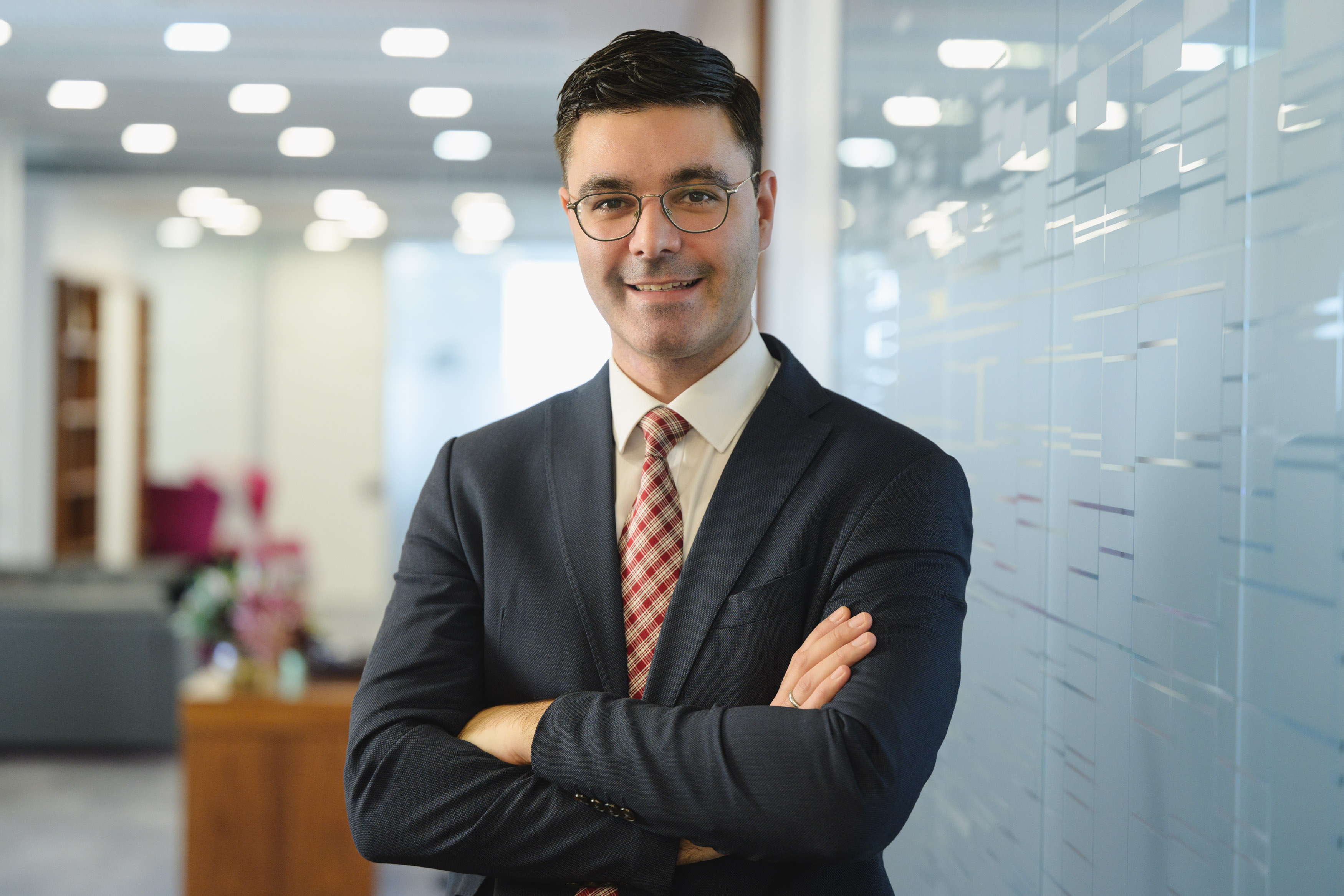
Cyprus’ insurance sector is entering a more demanding period from a position of relative strength, even as global insurance leaders become less confident about short-term growth, according to Constantinos Rossides, Director and Head of Actuarial Services at PwC Cyprus.
On the findings of PwC’s 29th Global CEO Survey and the firm’s 15th annual CEO Survey in Cyprus, Rossides said that “business leaders are increasingly being asked to balance immediate risk management with long-term strategic planning, at a time when uncertainty is reshaping both global and local markets.”
The global survey, which gathered responses from 4,454 chief executives across 95 countries, including 200 from the insurance industry, points to a clear decline in confidence. In the insurance sector, only 46 per cent of CEOs globally said they were optimistic about their company’s revenue growth prospects over the next 12 months, down from 56 per cent in 2025.
Rossides said this decline reflected a more uncertain environment, as many businesses remain “in the early stages of leveraging Artificial Intelligence to achieve tangible financial results”.
Cyprus, however, appears to be moving against the broader global mood. According to PwC’s Cyprus CEO survey, local business leaders remain more positive about their companies’ revenue growth prospects, despite operating in an environment marked by geopolitical, technological and economic pressures.
This optimism is also supported by market data. In 2025, total premium production in Cyprus rose by approximately 9 per cent in the life sector and 8 per cent in the general insurance sectors, growth rates which Rossides said exceed those of many European markets.
He also noted that the views recorded in the survey reflected the climate before the start of the war in Iran, offering “a clear picture of the concerns of businesses, before the latest geopolitical developments”.
At the same time, the survey points to a more complex risk environment for insurers. Globally, around 28 per cent of insurance CEOs identified cyberattacks as the main threat to their business, while technological transformation, macroeconomic instability and inflation also ranked highly among their concerns.
In Cyprus, however, the picture is somewhat different. Rossides said the main concern for CEOs is the lack of talent with the right skills, cited by 43 per cent of respondents. This was followed by geopolitical instability, at 30 per cent, and the pace of technological change, including Artificial Intelligence and broader digital transformation, at 22 per cent.
Cyber threats, cited by 21 per cent of respondents in Cyprus, remain a significant concern, particularly because insurance companies are exposed on two fronts. They are both potential targets of cyberattacks and providers of insurance coverage for cyber-related risks.
For this reason, Rossides said strengthening cyber resilience is not only necessary to protect organisations themselves, but also essential for maintaining customer trust.
The same caution applies to Artificial Intelligence. Although AI presents clear opportunities for the sector, Rossides said its value depends on how effectively it is integrated into core business operations.
“It’s not just about adopting technology,” he said, adding that the real challenge is “aligning it with business objectives, and ensuring teams have the right skills and tools to fully leverage its potential”.
This is particularly relevant as insurance companies accelerate their digital transformation. While AI is increasingly seen as a strategic opportunity, its financial benefits remain limited for now.
Globally, only 13 per cent of insurance CEOs said they had seen significant revenue growth and cost reduction from adopting AI. Most, however, have yet to record any meaningful financial impact.
A similar pattern is visible in Cyprus. Although 22 per cent of CEOs reported at least some increase in revenue or decrease in costs as a result of AI, 69 per cent reported little or no change in revenue, while 60 per cent said AI had little or no impact on costs.
Rossides said this shows that AI is “still far from being considered a guaranteed profitability driver in the insurance industry”. Nevertheless, companies that invest in AI in a more structured and holistic way are beginning to see modest improvements, either in costs or revenues.
Beyond technology, mergers and acquisitions continue to play a central role in the insurance sector’s growth strategy. According to the survey, insurance CEOs still view M&A activity as a key route to growth, scale and stronger competitive positioning.
Rossides said the main driver behind acquisitions remains the strengthening of bargaining power or market share, with almost three quarters of CEOs identifying this as their primary motivation.
This, he said, confirms that market concentration remains a strategic priority, particularly in mature or fragmented markets.
Access to new customers is also becoming increasingly important, as insurers seek to expand their distribution networks and strengthen their customer base. At the same time, economies of scale and operational efficiency are gaining weight, reflecting the pressure on profit margins across the sector.
Diversifying insurance portfolios also remains a relevant factor, although entry into new geographic markets, access to technology and intellectual property appear to be secondary priorities at this stage.
In Cyprus, this trend is already visible. Rossides said the local insurance sector is undergoing restructuring amid increasing concentration, with large banking groups either acquiring insurance companies or increasing their stakes in them in recent years.
As a result, the lion’s share of domestic premiums now comes from insurance companies that are either owned by banks or work closely with them, pointing to the continued dominance of the bancassurance model in Cyprus.
Despite these pressures, Rossides said the Cypriot insurance sector remains built on strong foundations, with a clear understanding of the challenges created by the changing environment.
He added that sector CEOs appear determined to maintain growth momentum by investing in innovation and human resources, protecting their organisations against modern risks, and making better use of synergies between banks and insurance companies.
With these priorities in place, Rossides said Cypriot insurers have the potential to turn uncertainty into an opportunity, creating “a market that is stronger, more resilient and more flexible in the face of future developments”.




Click here to change your cookie preferences