
Pale Blue co-founders Mike Yerou and Michael Mavris on the future of contactless payments in Cyprus
The landscape of commercial transactions in Cyprus is undergoing a profound shift as the island moves closer to a cashless society.
While international payment giants have long dominated the fintech space, their focus often remains fixed on large-scale corporations, leaving small and medium-sized enterprises (SMEs) and independent contractors to navigate a maze of complex hardware and costly subscriptions.
Pale Blue, a home-grown software engineering firm, is aiming to dismantle these barriers with its innovative mobile application, Paid.
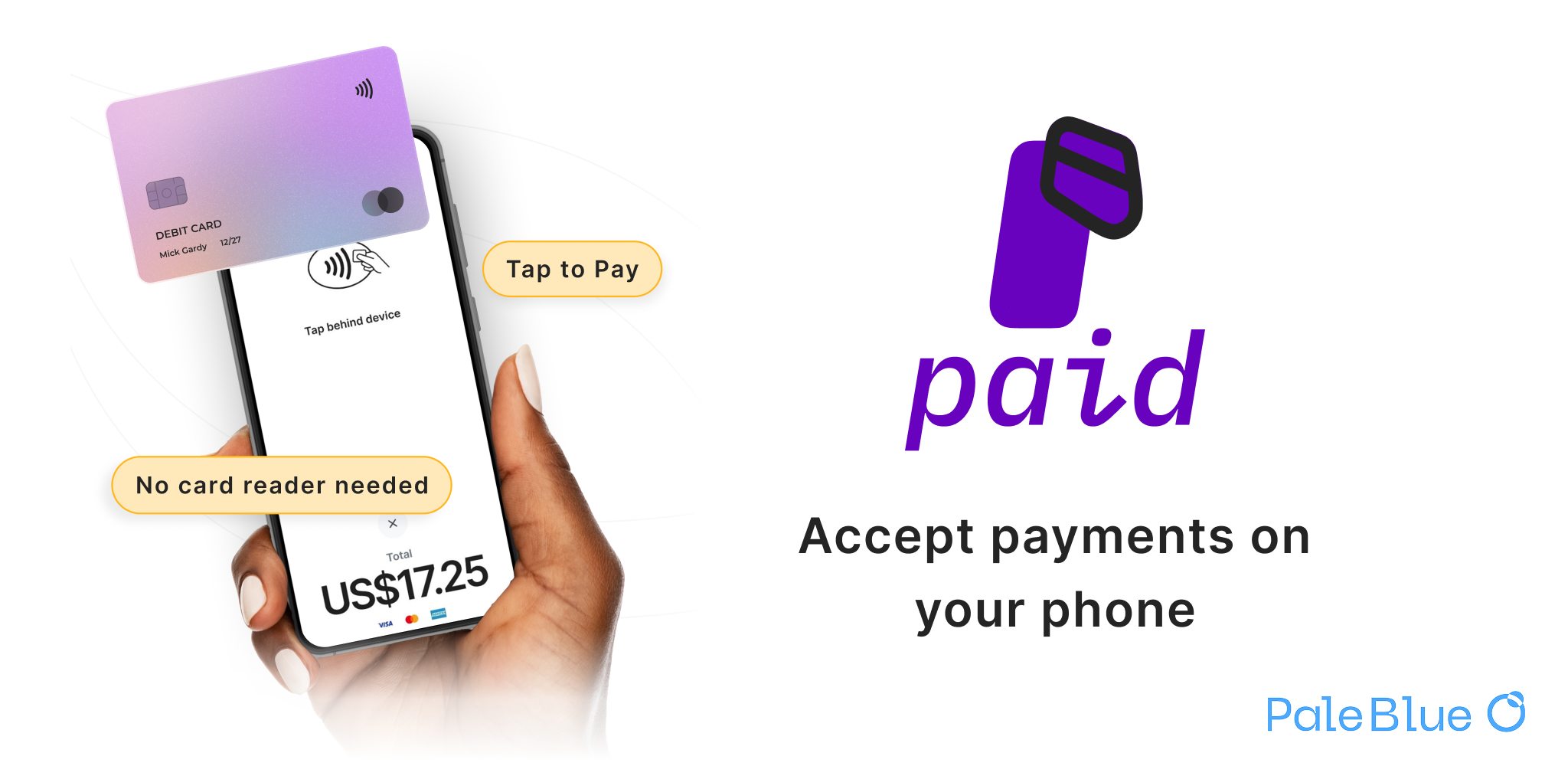
This softPOS technology transforms a standard NFC-enabled smartphone into a fully functional payment terminal, effectively eliminating the need for traditional, bulky card readers.
By leveraging tap-to-pay technology, the app allows solopreneurs, food vendors, and freelancers to accept contactless payments within minutes of downloading the platform.
This pay-as-you-go model specifically addresses the administrative and financial hurdles that have historically slowed the adoption of digital payments among the island’s smaller merchants.

In this wide-ranging discussion, Pale Blue co-founders Mike Yerou and Michael Mavris spoke exclusively to the Cyprus Mail about the app’s recent official launch in its home market.
They outlined how the “device-agnostic” approach of Paid, available on both iOS and Android, ensures no business is left behind in the digital transition.
The two co-founders further delved into the strategic partnership with Stripe that simplifies compliance and shared their vision for why the “death of the hardware terminal” may be closer than many think.
Ultimately, the interview explores the evolution of the Cypriot payment landscape and how Paid is positioning itself as a vital tool for local businesses striving to meet modern consumer expectations.
CM: With the recent surge in digital-first solutions across the Mediterranean, how have you seen the payment landscape in Cyprus evolve over the last year, and what role does Paid play in this transition?
Over the past year we’ve seen many international payment processors establish a presence in Cyprus. However, most of them initially focus on large corporate, forex, or fintech clients. Small and medium-sized businesses are often treated as an afterthought.
When we created Paid four years ago, our focus was exactly the opposite. From day one, we built the product specifically for solo professionals, small businesses, and SMEs. As a result, many of the features in Paid are tailored to the real needs of these merchants, simplicity, speed of setup, and minimal operational overhead. Our goal is to make digital payments accessible to businesses of any size.
CM: Traditional card terminals often come with high overheads and technical hurdles; how does your SoftPOS technology specifically address the challenges faced by local SMEs and solopreneurs in the region?
From the very beginning, our goal was to allow businesses to start accepting payments within minutes. Traditional terminals often involve subscriptions, setup fees, contracts, and additional hardware.
With Paid, there are no subscriptions and no setup fees. Businesses simply download the app and start accepting payments.
Even more importantly, there is no need for a card reader. Any modern smartphone with NFC can act as a payment terminal using tap-to-pay technology. This allows merchants to accept contactless payments directly from their phone, making it one of the fastest and most accessible ways for a business to start accepting card payments.

CM: Paid is available on both iOS and Android. Was this “device-agnostic” approach a priority for you to ensure no business is left behind?
Absolutely. Accessibility was a priority from the beginning.
We launched on Android first and shortly after on iOS because we wanted businesses to be able to use Paid regardless of the platform they prefer. Many solutions prioritise one platform and leave the other behind.
With Paid, we remain committed to maintaining feature parity between the two platforms whenever possible. When we introduce a new feature, we aim to make it available to both Android and iOS users so that all merchants can benefit equally.
CM: Cyprus has specific requirements regarding credit card acceptance for businesses; how does your 10-minute setup process help local companies stay compliant without the usual administrative headache?
One of the most interesting aspects of Paid is that merchants do not need to speak with a salesperson or schedule any meetings to start accepting payments.
The process is fully self-service. Businesses simply create a Stripe account, the global leader in online payment infrastructure, and then sign in to the Paid app using their Stripe credentials.
All the compliance and KYC procedures are handled by Stripe, which has extensive experience operating globally. This means businesses can get started quickly while still meeting all the necessary regulatory requirements.
CM: Looking at the broader fintech sector, do you believe the “death of the hardware terminal” is imminent, or will solutions like Paid coexist with traditional methods?
I believe both solutions will coexist for some time. In certain environments, such as very high-volume retail settings, dedicated card terminals may still be slightly faster.
However, mobile devices will likely handle the majority of payment acceptance in the future. We’ve already seen a similar shift with digital wallets like Apple Pay and Google Pay, which have significantly reduced the need to carry physical cards.
Tap-to-pay technology simply extends that same concept to merchants, turning a smartphone into a fully functional payment terminal.
CM: Beyond the technology itself, what is the primary goal for Paid in the Cypriot market over the next 12 months?
Just a few months ago, Paid became officially available in Cyprus, which makes this launch particularly exciting for us because it is our home market.
Over the next 12 months, our main focus is listening to local businesses and understanding their needs. We are actively collecting feedback from merchants across Cyprus so we can continue improving the product and adapting it to the specific characteristics of the local market.
CM: Given the global shift toward a cashless society, how are consumer expectations changing in Cyprus, and how does providing a seamless contactless experience on a smartphone help businesses meet that demand?
Today, customers increasingly expect businesses to accept card payments. In fact, many people no longer carry cash, which means a business may lose sales if it cannot accept cards.
This is exactly where Paid comes in. Our goal is to make card acceptance accessible to every merchant, no matter how small, by allowing them to start accepting payments in about 10 minutes.
There are no subscriptions, no setup fees, and no hidden costs. Just a smartphone and the ability to accept contactless payments instantly.





Click here to change your cookie preferences