
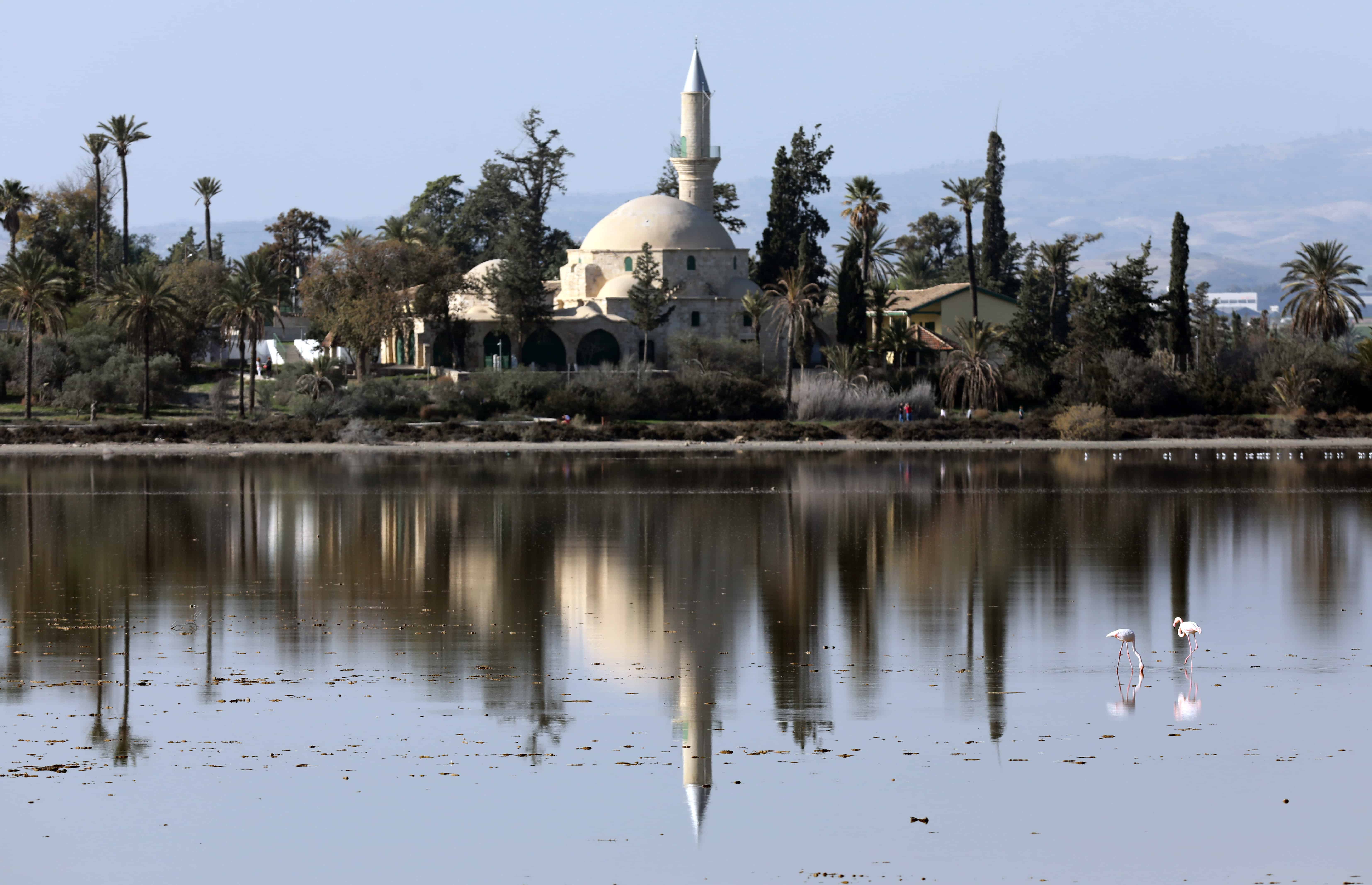
Copper slag dating to the Late Roman period has been discovered in the Aliki area of Larnaca during archaeological work carried out in 2025, the department of antiquities said on Monday.
This discovery was made during the Hala Sultan Tekke Hinterland Project, which ran for three weeks in October and November last year around the Late Bronze Age urban centre of Hala Sultan Tekke.
The project, initiated in 2021, has been led by the Vrije Universiteit Brussel.
The department of antiquities said that research combined surface surveys with geophysical methods to investigate settlement patterns and land use in the Larnaca Salt Lake area.
Archaeologists documented surface materials across the Salt Lake and in Pyrga, refining site chronology and pinpointing new areas for study.
Previous work in Pyrga identified large copper slag heaps, with dense Late Roman material nearby, suggesting a broader industrial landscape linked to metal production.
Further investigations in 2024 used ground-penetrating radar in collaboration with the University of Cyprus.
In 2025, the University of Ljubljana and the University of Zurich conducted a magnetometric survey of about 8,000 square metres.
The results revealed subsurface anomalies, including linear features and high magnetic intensity zones, some indicating potential metallurgical installations and slag deposits, while others may represent natural geology.
These findings enhance understanding of ancient activities in the area and support future excavations.




Click here to change your cookie preferences