
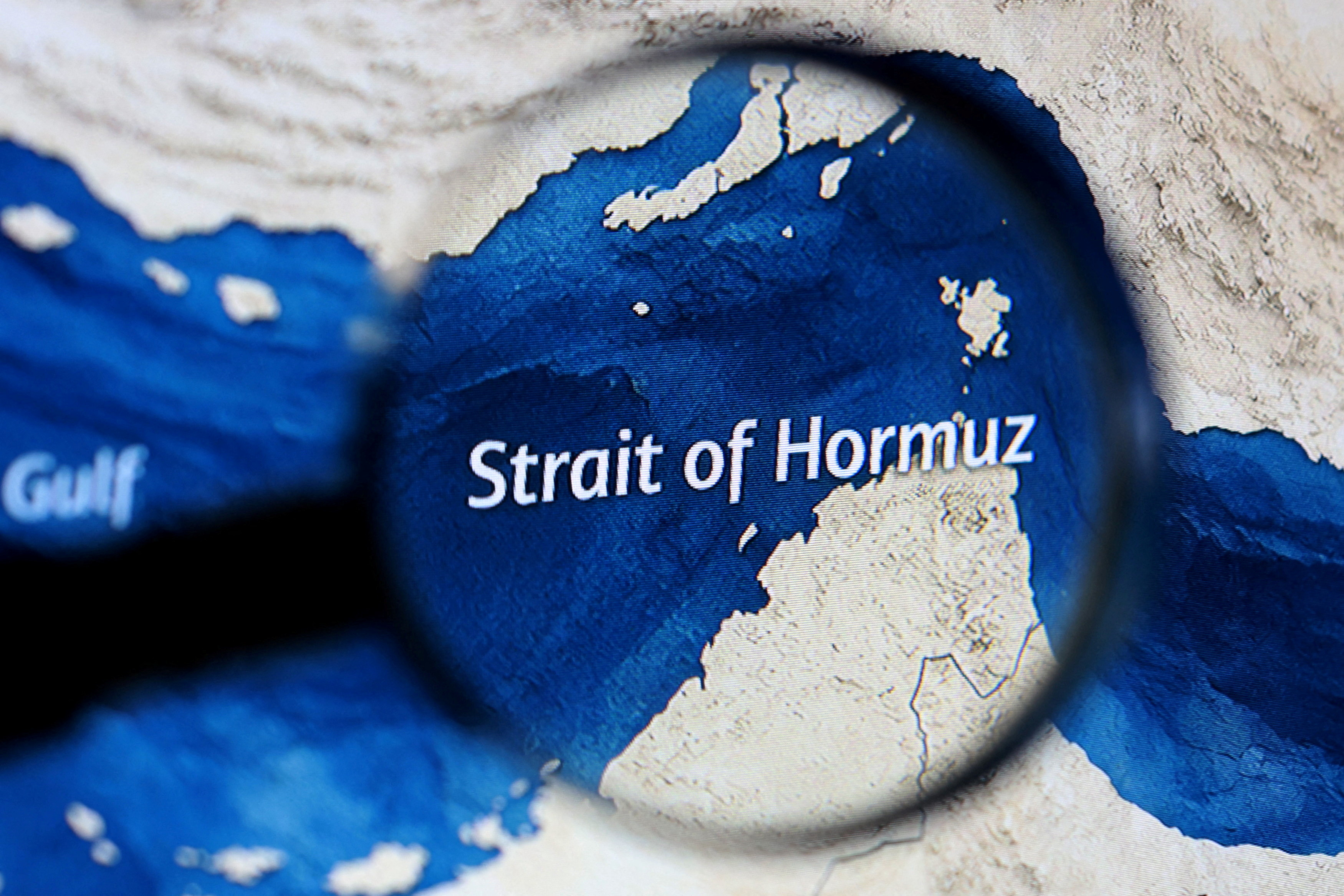
The Strait of Hormuz saw only a fragile and uneven recovery in April, with vessel traffic still far below normal levels despite brief reopening windows linked to ceasefire signals, according to AXSMarine.
One month after the key waterway stopped functioning as an unobstructed passage for commercial shipping, the company said April brought “no clear normalisation”. Instead, vessel movements followed a stop-start pattern, shaped by ceasefire announcements, military enforcement actions and continued security incidents.
Although activity across dry bulk, tanker and gas carrier segments improved from March’s severe contraction, AXSMarine said traffic remained sharply below pre-conflict levels throughout the month. Short periods of stronger movement did emerge, but each recovery proved fragile, with flows repeatedly falling back as geopolitical conditions shifted.
At the same time, the company explained that AIS disruption, irregular vessel behaviour and the growing presence of sanctioned or opaque operators continued to complicate market visibility. As a result, it said any assessment of actual shipping flows increasingly depended on “contextual analysis rather than raw tracking alone”.
Across four tracked segments, confirmed crossings rose to 301 in April, up from 238 in March, marking a 26.5 per cent month-on-month increase. However, AXSMarine noted that this improvement came from “an exceptionally low base”.
Compared with April 2025, when 3,297 crossings were recorded across the same broad group, activity remained down by 90.9 per cent. Dry bulk and multipurpose crossings were 83.9 per cent lower year on year, tanker crossings fell by 93.2 per cent, gas carrier activity remained 87.9 per cent below last year’s level, while liner traffic was still down by 94.7 per cent.
The imbalance was also clear in the direction of travel. According to AXSMarine, outbound movements accounted for 64.1 per cent of all April crossings, suggesting that operators were still prioritising exits from the Gulf rather than taking on fresh inbound exposure.
Following the sharp contraction recorded in March, April began with extremely limited activity. During the final week of March, confirmed crossings across dry bulk, tanker and gas carrier segments averaged fewer than five per day.
By early April, however, this had started to recover gradually, reaching around ten daily crossings even before any formal ceasefire announcement.
AXSMarine said the early-April US-Iran ceasefire created a temporary framework under which transit was expected to resume. This led to a measurable, though still modest, increase in activity, with 84 confirmed crossings recorded between April 1 and 7, compared with 48 during the previous week.
However, the upward trend did not last. The company said the US Navy’s announced counter-blockade targeting Iranian ports and coastal movements “reversed the upward trend almost immediately”, pushing daily crossings back into single digits.
A second reopening window emerged on April 17 and 18, after renewed political signals linked to a broader regional ceasefire. This produced the strongest activity of the post-disruption period, including 28 confirmed crossings on April 18 alone, with all major vessel segments participating.
Yet this rebound also collapsed quickly. AXSMarine said the reported seizure of the TOUSKA on April 19, combined with further incidents and conflicting signals around the ceasefire, triggered an immediate fall in traffic.
In the three days that followed, crossings averaged just six per day, a sharp decline from the reopening window.
By the end of April, the Strait remained operational, but AXSMarine said flows were “fragmented”. Vessel movements, it added, were no longer driven by normal commercial scheduling patterns, but by rapidly changing security conditions, exemptions and operator-specific risk tolerance.
Dry bulk and multipurpose vessels accounted for a large share of visible activity during the month. Compared with other segments, AXSMarine said these vessels appeared more willing to transit under uncertain conditions, particularly on outbound movements from the Gulf.
Even within this segment, however, the pattern remained clearly imbalanced. Crossings were dominated by west-to-east movements, reflecting vessels exiting the region after discharge or repositioning, while inbound cargo flows stayed more limited and selective.
Rather than pointing to a recovery in trade flows, AXSMarine said this activity suggested “a gradual clearing process”, with operators prioritising exits over new exposure. Vessel behaviour, including AIS blackout usage and irregular signalling, also showed that movements remained highly conditional on risk tolerance.
Tanker activity, meanwhile, remained heavily constrained and uneven throughout April. According to AXSMarine, a noticeable share of observed movements involved vessels linked to sanctioned, ghost fleet or opaque ownership structures.
These vessels were more frequently associated with AIS disruption, irregular routing and non-standard operational patterns.
Conventional tanker participation remained limited. Although both inbound and outbound movements were recorded, activity did not approach normal commercial levels and remained highly selective.
Large crude tanker movements also continued, but only intermittently. AXSMarine said isolated VLCC crossings were recorded later in the month, indicating that flows had not stopped entirely, but had also failed to return to any sustained or predictable pattern.
Gas carriers remained among the most constrained segments. LPG vessels accounted for most observed movements, though activity continued at a reduced pace.
AXSMarine said a significant share of these vessels appeared linked to sanctioned or shadow fleet operators, pointing to a concentration of activity among higher-risk participants.
LNG movements were particularly limited, with only two crossings recorded. The company said this reflected both the operational sensitivity of LNG logistics and the lower tolerance for disruption across long-haul gas supply chains.
Overall, gas carrier activity remained highly dependent on risk conditions, with “no indication of a broad-based recovery” during the month.
The liner segment was also severely disrupted. While a small number of container vessels continued to transit, AXSMarine said activity was largely limited to Iranian, Iran-linked or smaller regional operators.
There was no visible return of major liner companies to the route.
Several incidents during the month reinforced the elevated risk environment. These included the attempted transit and subsequent seizure of EPAMINONDAS, as well as reported attacks involving vessels such as EUPHORIA and MSC FRANCESCA during or around transit operations.
AXSMarine said these incidents showed the structural challenges facing liner shipping in the region. Unlike other segments, container shipping depends on schedule reliability and stable network planning, both of which remained unachievable under April conditions.
The pressure was also visible in vessel positioning. At the height of the disruption, more than 1,000 merchant vessels had accumulated west of Hormuz inside the Gulf.
By early April, total tracked vessels across both sides of the Strait stood at around 1,441, with 959 positioned inside the Gulf. Although this represented some easing from peak congestion levels, AXSMarine said the backlog remained substantial.
Over the month, congestion gradually declined. By the end of April, the number of commercial vessels west of Hormuz had fallen to approximately 900.
However, the company said this reduction did not amount to normalisation. Instead, it reflected selective departures, constrained inbound flows and continued hesitation among operators to commit tonnage under uncertain conditions.
AIS disruption remained central to understanding the April operating environment.
AXSMarine said vessels continued to operate under extended blackout conditions, reappear after long signal gaps, or transmit irregular and sometimes misleading destination and cargo information.
In several cases, transponders were reactivated only after a transit had been completed or aborted, limiting the ability to verify movements in real time.
As of mid-April, 949 vessels were still tracked west of Hormuz, with 307 operating under blackout conditions. This placed the regional AIS-dark rate at around 32 per cent, more than double the pre-conflict baseline of approximately 17 per cent.
By month-end, although total vessel counts inside the Gulf had declined to around 900, visibility remained impaired.
The impact was particularly pronounced among tankers, dry bulk vessels and ships linked to sanctioned or opaque ownership structures. According to AXSMarine, these segments showed a higher incidence of signal suppression, manipulation or irregular reporting behaviour.
As a result, the company said confirmed visible crossings represented only part of the picture. Interpreting actual activity required combining AIS data with vessel identity, ownership patterns, cargo indicators and behavioural context.
AXSMarine also estimated that, as of late April, around 15 to 16 million metric tonnes of crude oil remained stored aboard vessels within the Gulf.
Using a standard conversion factor for Middle Eastern crude grades, this corresponds to approximately 108 to 117 million barrels of oil at sea.
At pre-conflict transit rates of 15 to 20 million barrels per day through the Strait of Hormuz, the company said this volume could theoretically clear within six to eight days after a full reopening.
In practice, however, delivery timelines would be much longer. Typical voyage durations imply around two weeks to southern China and up to three weeks to northern Asia.
At the same time, any reopening would likely coincide with a resumption of terminal activity, bringing new loading volumes alongside the existing backlog. For this reason, AXSMarine said flows would be expected to scale gradually rather than normalise immediately.
The company concluded that April showed reopening the Strait of Hormuz is “not a binary event”.
Traffic responded quickly to ceasefire signals, but reversed just as quickly under renewed military pressure, vessel attacks and enforcement actions such as the US counter-blockade.
Rather than a steady recovery, AXSMarine said the market experienced a fragmented operating environment in which access depended on timing, vessel profile, ownership structure and risk tolerance.
Even as congestion eased to around 900 vessels west of Hormuz by month-end, flows remained far below normal levels.
The Strait, it concluded, continued to function not as a fully open global trade artery, but as “a constrained and selectively accessible corridor shaped by geopolitical risk”.





Click here to change your cookie preferences