
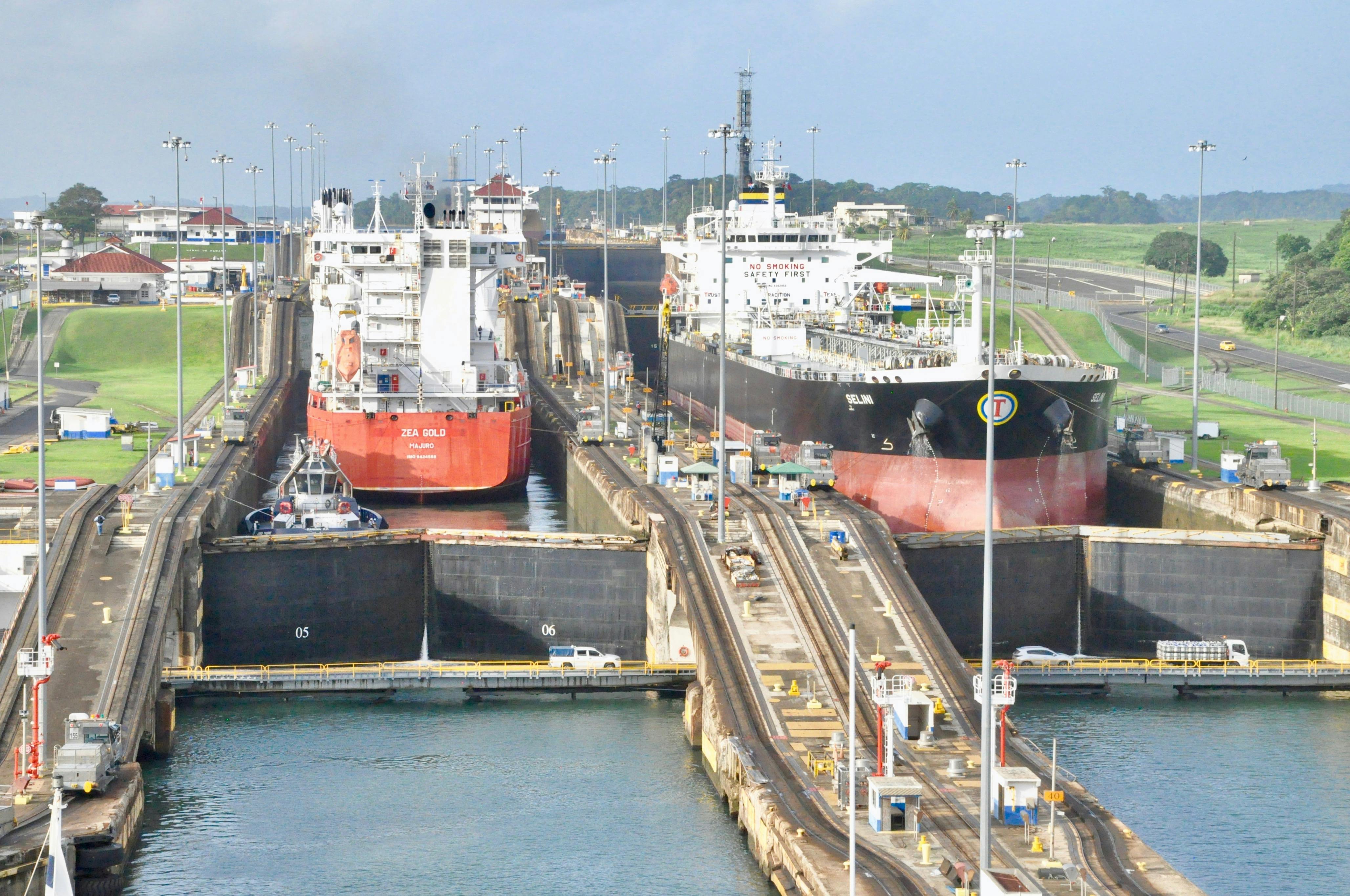
The Panama Canal is facing a renewed rush for priority passage, with shipowners and charterers paying millions of dollars to secure faster transit as disruption around the Strait of Hormuz redirects energy cargoes from the US Gulf towards Asia.
The waterway, one of the world’s most important trade routes, has become increasingly competitive in recent weeks, as companies try to avoid delays and keep vessels carrying oil, fuel, LPG and LNG cargoes moving on schedule.
In the most extreme cases, auction payments have reportedly climbed to as much as $4 million for a single priority slot. However, the Panama Canal Authority has stressed that such payments are not standard canal charges, but exceptional auction results shaped by urgency, freight rates and wider market conditions.
According to Reuters, the authority said recent $1 million-plus auction slots reflected a temporary surge in demand rather than a new pricing norm. It also said only a small number of slots are auctioned daily, while most vessels continue to use advance reservations.
The pressure has been driven mainly by the disruption of energy flows. With tensions in the Middle East making the Strait of Hormuz more difficult for shipping, Asian buyers have increasingly turned to supplies from the Americas, sending more cargoes through Panama.
The Financial Times reported that canal revenues have risen by 10 to 15 per cent since the conflict began, while daily vessel transits have increased from around 34 to as many as 40 or 41 on peak days.
This has been particularly visible in the energy market. Oil shipments to China, Japan and South Korea have roughly doubled, while traders have also been moving cargoes such as coal and fuel from the US Gulf Coast through the canal to reach Asian markets.
The Panama Canal Authority has also confirmed stronger activity. In the first half of its 2026 fiscal year, from October 2025 to March 2026, the canal recorded 6,288 transits, up by 224 year-on-year, while volumes rose by 5 per cent to 254 million PC/UMS tonnes.
The authority said traffic had strengthened further in recent months, with daily averages rising from 34 vessels in January to 37 in March, while some peak days exceeded 40 transits. It also said container traffic and liquefied petroleum gas remained among the strongest segments, confirming the growing role of energy cargoes in the latest increase.
As demand has risen, so have the auction prices paid by companies seeking certainty. Víctor Vial, the canal’s vice president of finance, said average auction prices had increased from about $135,000 to $140,000 before the Middle East conflict to around $385,000 between March and April.
The authority has tried to separate the headline-grabbing figures from normal operations. It said the canal offers several booking options, including long-term slot allocations, dedicated LNG arrangements, last-minute reservations and daily auctions, with only three to five auction slots typically made available each day.
That distinction is important. A reported $4m payment by an LPG vessel drew attention across the industry, but the canal said the result reflected temporary market conditions and was not a fee set by the waterway.
The current situation has inevitably drawn comparisons with the 2023 drought crisis, when low water levels sharply reduced daily transits and pushed booking prices to record levels. This time, however, the pressure is not being caused by a water shortage.
The canal authority has said water levels are currently at optimal levels, helped by unusually heavy rainfall during the dry season, which kept the Gatun and Alhajuela lakes close to maximum levels.
In other words, the canal is not facing the same physical restrictions that shaped the 2023 crisis. Instead, it is being squeezed by a sudden change in global trade patterns, with more energy cargoes seeking the same narrow route at the same time.
This is also forcing shipping companies to reassess alternatives. Sailing around the Cape of Good Hope remains longer and more expensive in fuel terms, but for some operators it is again being weighed against delays, auction costs and uncertainty in Panama.
The shift is feeding directly into the wider tanker and gas carrier markets. Longer voyages tie up vessels for more days, reducing available tonnage and giving owners more leverage in freight negotiations.
Rates for very large gas carriers (VLGCs) have been one of the clearest signs of that tightening. Clarksons Research data cited in market reports showed daily earnings rising to almost $170,000 per day, with benchmark Houston-to-Chiba freight also climbing sharply as US LPG exports and Asia-bound demand strengthened.
For shippers, the result is a difficult calculation. Paying millions for a Panama slot may appear excessive, but delays can also be costly when vessels are moving high-value energy cargoes in a tight market.
For the canal, meanwhile, the surge has underlined its renewed importance in global energy trade. After the drought-led disruption of 2023, Panama is again at the centre of shipping’s pressure points, this time not because there is too little water, but because too many vessels want to get through first.




Click here to change your cookie preferences