
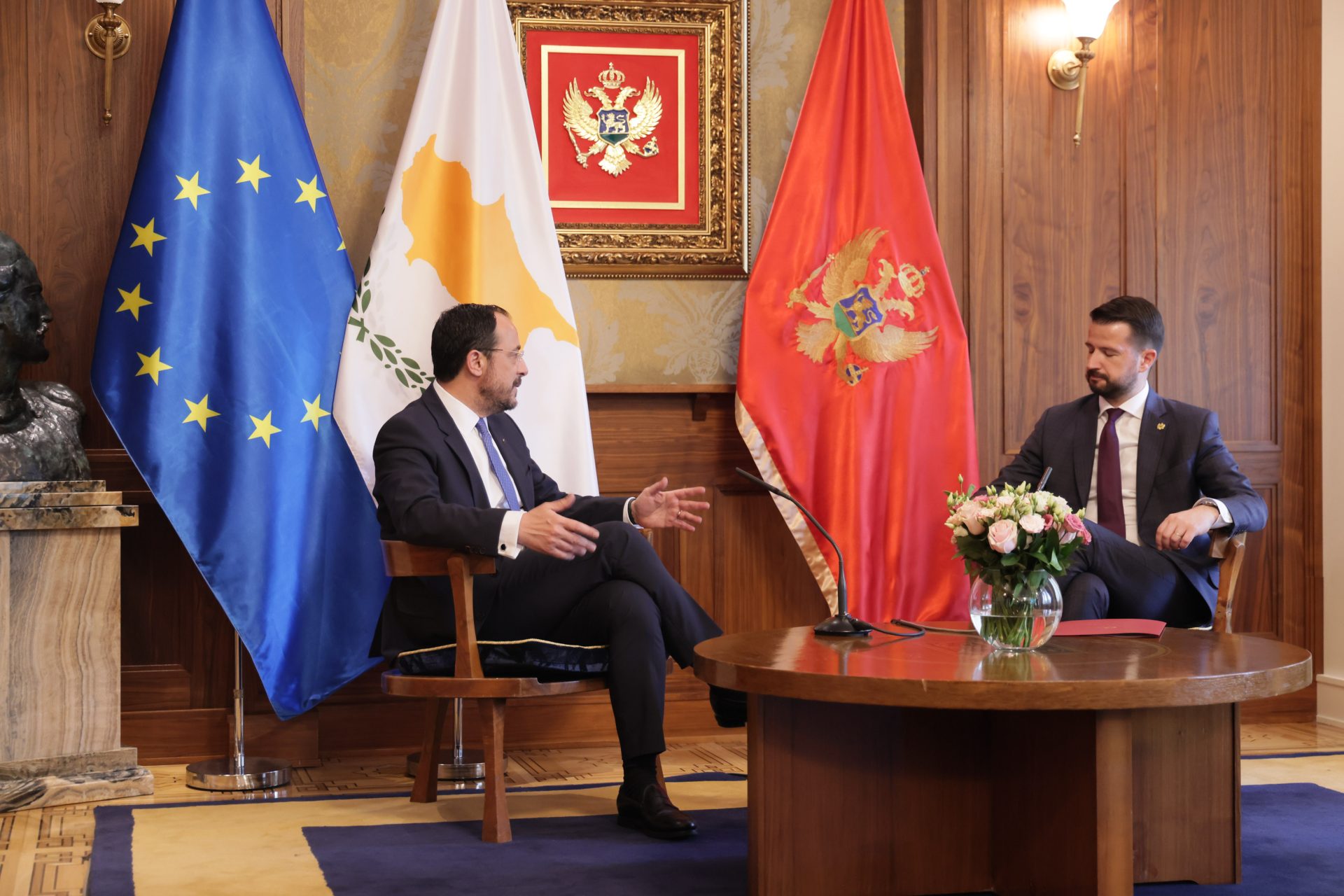
Montenegrin President Jakov Milatovic will visit Cyprus on Monday for talks with President Nikos Christodoulides, with Montenegro’s European Union accession process expected to dominate discussions.
Speaking to journalists at the presidential palace on Friday, government spokesman Konstantinos Letymbiotis said the visit reflects the “positive dynamics” in relations between the two countries and comes shortly after the establishment of a special working group tasked with preparing Montenegro’s EU accession treaty.
“This development constitutes a decisive step in the accession process of Montenegro and a significant political success of Cyprus’ EU council presidency,” Letymbiotis said.
He added that Cyprus had played a “decisive contribution” in advancing the process, describing enlargement in the Western Balkans as “a strategic priority”.
The working group recently held its first meeting in Brussels as Montenegro moves closer towards EU membership.
Cyprus has repeatedly backed the enlargement agenda and has presented Montenegro as one of the leading candidates among western Balkan states seeking accession.
According to Letymbiotis, Monday’s meeting will include discussions on regional stability, the European perspective of the western Balkans and the importance of maintaining momentum in the accession process.
The two presidents are also expected to discuss expanding cooperation in trade, investment, shipping, and business development.
Letymbiotis said the visit continues a series of high-level contacts between the two countries.
Milatovic previously visited Cyprus in June 2024, while Christodoulides travelled to Montenegro in April last year.
deputy European affairs minister Marilena Raouna earlier said enlargement has “transformative power” and stressed that progress by candidate countries should be matched by concrete action from the EU.
Montenegro aims to complete negotiations on all accession chapters by the end of 2026 and hopes to join the bloc by 2028.
The visit also comes amid political controversy in Montenegro surrounding allegations involving former national security chief Dejan Vuksic and claims of threats linked to explicit pornographic material.

The case has drawn renewed attention to institutional accountability and Montenegro’s recently strengthened laws against image-based sexual abuse, though authorities continue to investigate the allegations.





Click here to change your cookie preferences