
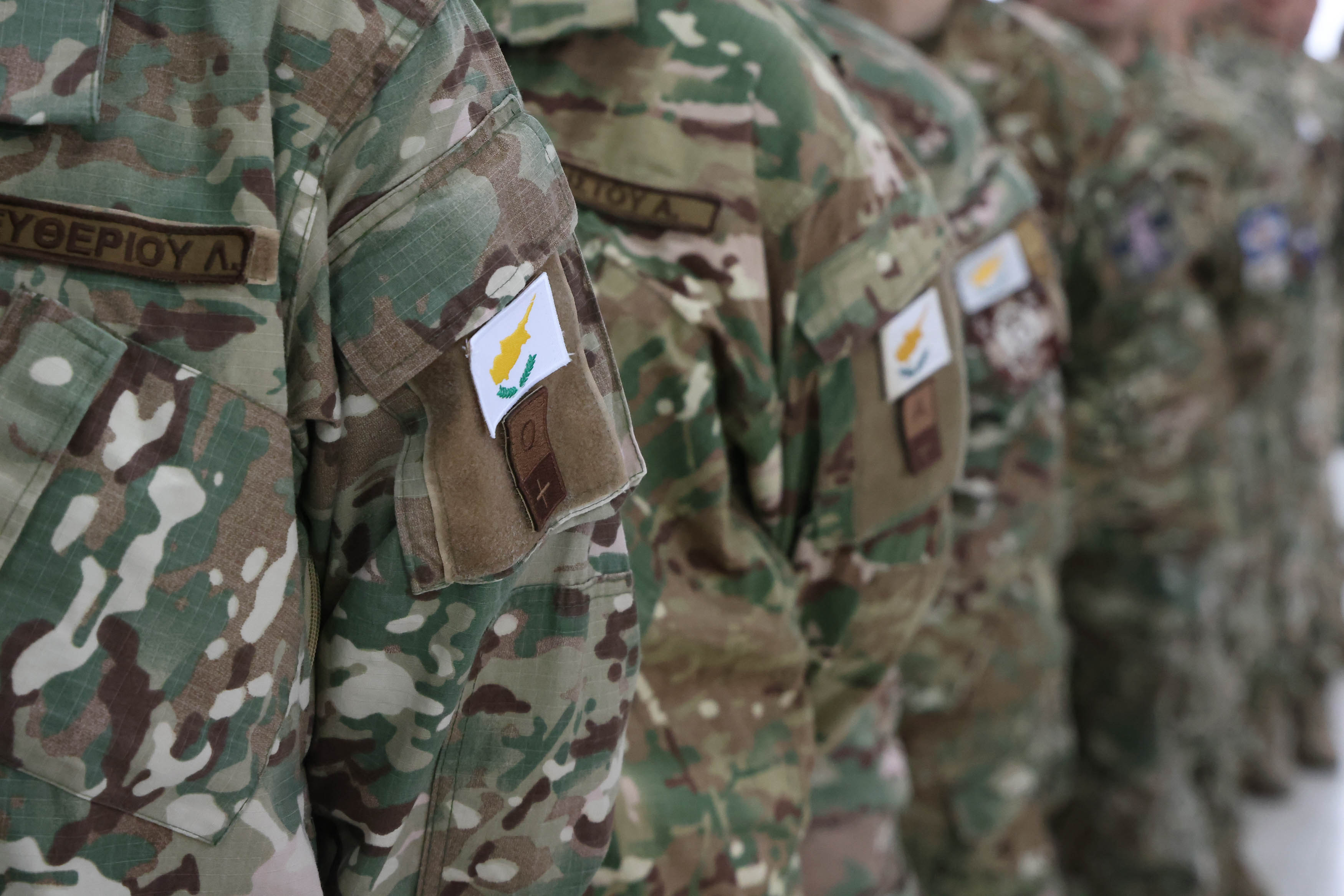
The balance of military forces in Cyprus remains clearly in Turkey’s favour, according to a report published on Thursday.
The report, compiled by the Cyprus Centre for Strategic Studies, said Turkish forces maintain “significant superiority in manpower, firepower, aeronautical capabilities and operational support”, while the upgrading of military infrastructure in the north has further strengthened Ankara’s strategic position in the Levant.
According to the analysis, there are approximately 3.6 Turkish soldiers for every National Guard member on the island.
In battle tanks, the ratio stands at roughly 2.1 to 1 in favour of Turkish forces.
The centre said Turkish military units in Cyprus do not operate independently, describing them instead as “an extension of the broader military and administrative system of Turkey”.
Based on international military models concerning operational support structures, the report estimated that Turkey possesses external logistical and administrative support capacity ranging between 80,000 and 102,000 personnel capable of sustaining forces in potential theatre of operations on the island.
By contrast, the report said the republic has “limited strategic depth and clearly smaller capabilities for long term operational support”, which directly affects deterrence capabilities.
The analysis argued that Cyprus must adapt its defence strategy towards “a more flexible and technologically oriented defence model”, pointing to developments in unmanned systems, electronic warfare and information capabilities as factors reshaping modern warfare.
It also stated that available defence spending remains below declared objectives, adding that achieving expenditure equal to two per cent of GDP “exclusively on armaments does not seem realistically achievable under the current fiscal and geopolitical data”.
The report identified Greece as “the most important external strategic factor for the security of Cyprus”, while adding that the presence of the Greek force ELDYK carries “an institutional, historical and political strategic dimension” but does not by itself alter the military balance on the island.
The centre also referred to Turkey’s infrastructure expansion in the north, including the Lefkoniko air base, which it said now functions as an operational centre for Bayraktar unmanned aerial vehicles, including the Akinci platform.
Projects linked to naval and surveillance infrastructure in Ayios Sergios, and the Apostolos Andreas area were also highlighted as part of Ankara’s wider “Blue Homeland” strategy in the Levant.
The report said Cyprus is attempting to strengthen deterrence through new defence acquisitions, including Barak MX systems, anti-tank weapons, unmanned aerial systems and electronic warfare capabilities, though replacing Russian made equipment with Western systems remains “a complex and highly costly undertaking”.
The Cyprus Centre for Strategic Studies, founded by Dr Aristos Aristotelous, is an independent research institution dedicated to military analysis related to Cyprus and the wider Levant.





Click here to change your cookie preferences