
By Maria Demertzis
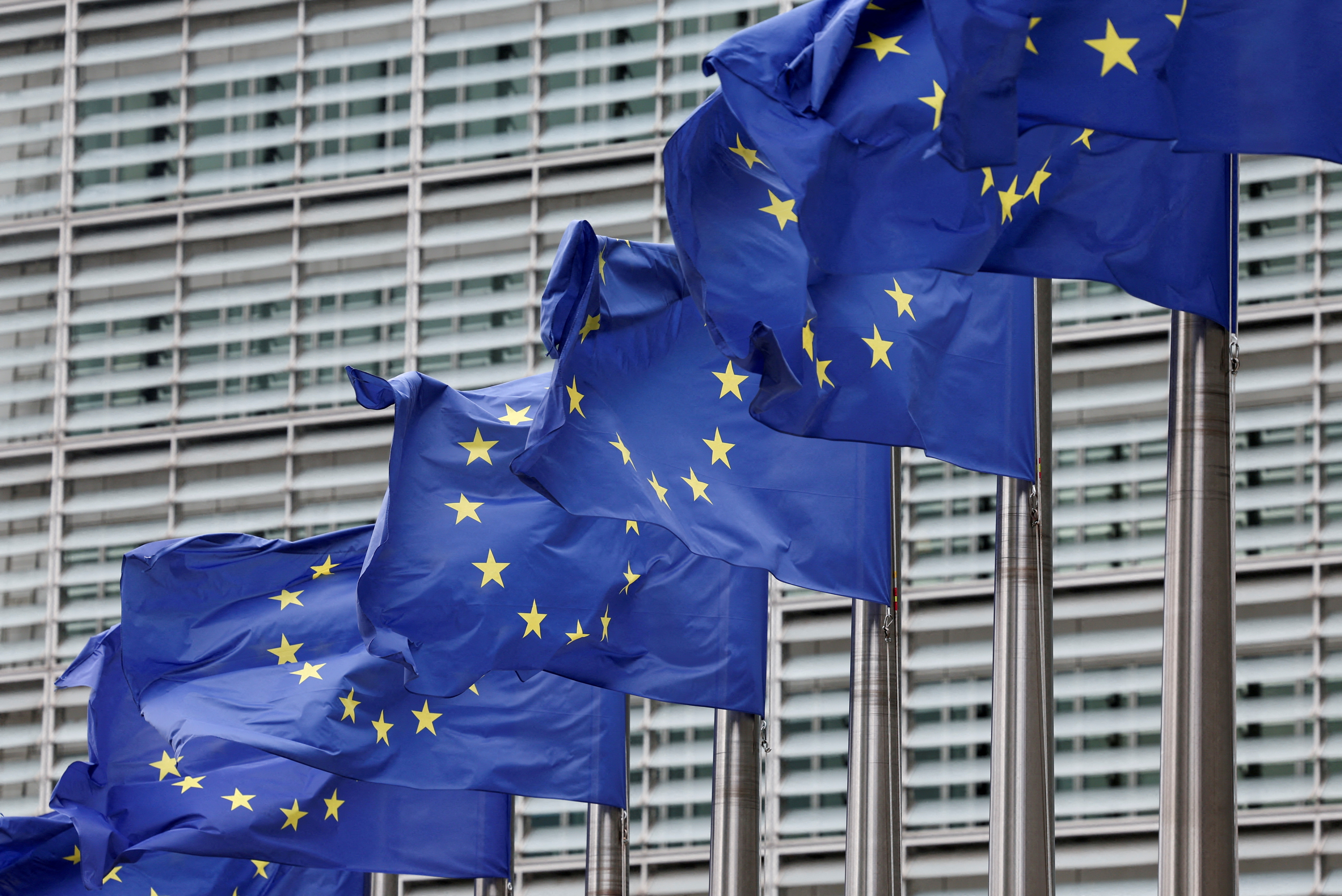
Mark Carney’s call for an age of middle powers in the World Economic Forum this year has left European capitals in an awkward place. For Canada, the label makes sense. But for the European Union, this creates confusion, if not awkwardness. France, Germany or Italy may each fall into the category of middle powers, but the EU surely has the weight of a great power. Yet it still behaves like a coalition of anxious medium-sized states, in which the whole ends up being less than the sum of its parts.
By any economic measure, the EU is more than middle-ranking. The EU is the largest trading bloc in the world, accounting for about 16 per cent of global imports and exports, and the third largest economy. The euro remains the world’s second most important currency, with a share of roughly 19 per cent across indicators of international use. A political entity with that market size, currency reach and regulatory depth is not just another player sheltering between Washington and Beijing. Europe’s weakness is not size. It is its failure to convert size into scale.
That failure is institutional. The EU is not a state, and on the most sensitive issues, be they economic, foreign policy or internal affairs, the Council of the EU still relies on unanimity. This is where every capital can step on the brakes, preventing a decision, as Hungary did, till recently, with its veto of the 90 billion loan to Ukraine. Or every capital can simply decide on foreign policy issues on its own, as in the recent split over a stance on the war in Iran. Every country has its own delicate geopolitical sensitivities to manage and is therefore not keen to relinquish control over issues of defence and security. But without relinquishing some sovereignty, at least occasionally, it is hard to see how the EU can speak with one voice in the global arena, which is necessary to exert power.
Equally, it is not about becoming a superpower. It is about having sufficient military, industrial, and financial coherence to defend its territory, protect critical supply chains, and resist coercion.
We know what we need to do. First, economic security is now a first-order priority. Mario Draghi’s report has most of what needs to be done to generate a much-needed increase in productivity and scale. But with economic security now the first objective, it should guide both the reforms pursued and our understanding of the necessary trade-offs between first-best outcomes and robust ones. Moving away from first-best approaches to reforming the single market is crucial to reducing critical and uncomfortable dependencies that make the EU vulnerable to coercion.
Second, spend on defence together, not merely more: common procurement, shared air defence, military mobility and industrial consolidation matter more than another round of nationally branded rearmament.
Third, treat enlargement as a strategy. The Commission’s 2025 Enlargement Package explicitly calls it a “political and geostrategic imperative”. A continent that leaves its neighbourhood in a grey zone should not be surprised when others move in.
Europe will not become a unitary military superpower, nor should that be its ambition. Its sphere of influence is narrower but still formidable: the European continent, the eastern neighbourhood, the Mediterranean, the trade and financial space tied to the single market, and the coalitions it can build with other advanced democracies. That is enough. The question is no longer whether Europe is big enough. It is whether it is organised enough.
Maria Demertzis is Professor of Economic Policy at the European University Institute, Florence. The article is reposted from the Blog of the Cyprus Economic Society https://cypruseconomicsociety.org/blog/blog-posts/




Click here to change your cookie preferences