
Cyprus could assume a strategic role in the development of the India–Middle East–Europe Economic Corridor (IMEC), according to academic Michalis Kontos, who highlighted the island’s geopolitical position and EU membership as key advantages.
Speaking to the Cyprus News Agency (CNA), Kontos, an associate professor at the department of political science and governance at the University of Nicosia, said that Cyprus is well placed to contribute to the corridor’s development.
“Cyprus, both due to its geographical location and its status as an EU member state, can play a significant role in the development of this corridor,” he said.
He explained that India’s growing global influence underpins its interest in the initiative, noting that it is the world’s most populous country and one of the largest economies.
He added that its long-term growth potential is reinforced by broader global trends, including the decentralisation and diffusion of power in the international system.
Moreover, Kontos said that India has already launched initiatives across the Middle East and eastern Mediterranean, driven largely by its ambition to advance the IMEC project.
“Cyprus’ strong relations with countries strategically located along the corridor, such as Israel and Greece, can also contribute to creating the appropriate diplomatic groundwork for its development,” he said.
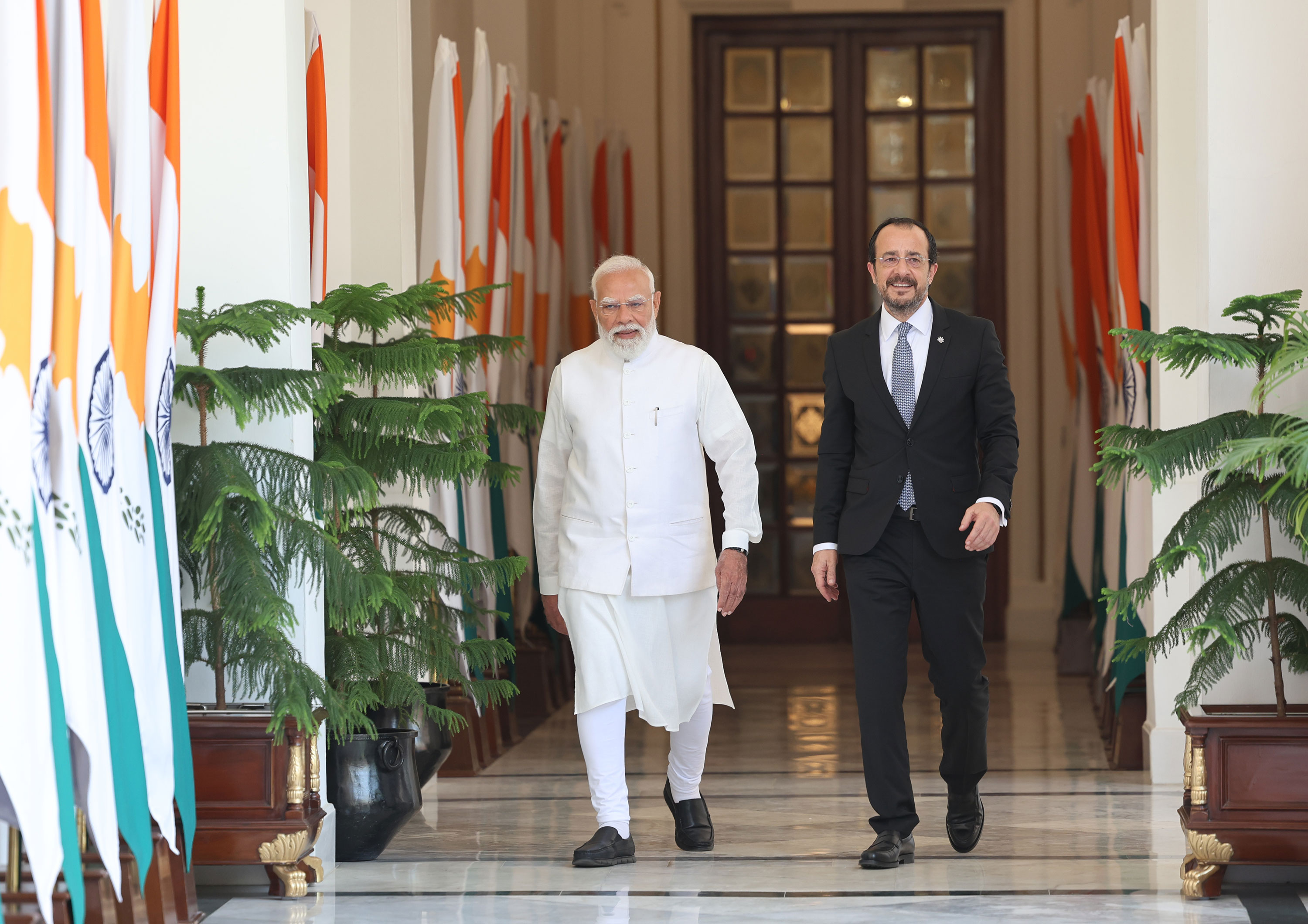
His remarks come amid renewed attention on Cyprus–India relations, with recent developments pointing to a deepening of economic and strategic ties between the two countries.
Invest Cyprus has sought to strengthen investment cooperation, while broader political engagement between the two countries suggests that bilateral relations are entering a more dynamic phase.
Kontos cautioned, however, that ongoing geopolitical instability poses a significant challenge to the corridor’s progress.
“The war in Iran, its spread to Gulf Arab states and the closure of the Strait of Hormuz have a significant impact on efforts to activate the IMEC planning,” he said.
He added that restoring momentum to the project after the end of the conflict will require sustained diplomatic effort.
“The return of the project to track after the definitive end of the war will require significant diplomatic activity, to which Cyprus can contribute,” he stated.
Beyond infrastructure and trade, Kontos pointed to broader areas of potential cooperation between Cyprus and India.
“It is also important to consider prospects for cooperation in areas such as energy and expertise in the development of modern weapons systems,” he said.
What is more, he stated that shared historical experiences, including participation in the Non-Aligned Movement and the Commonwealth, as well as a broadly aligned geopolitical outlook, provide a strong foundation for closer collaboration.
“The shared historical background of the two countries, as well as their common geopolitical trajectory in the modern international and regional environment, are important factors that contribute to the further development of this bilateral relationship in these critical sectors,” he said.
The IMEC initiative, which aims to connect India to Europe via the Middle East through a network of transport, energy and digital links, has been widely seen as a potential alternative trade route enhancing supply chain resilience.
For Cyprus, analysts suggest the project could reinforce its position as a regional hub linking Europe with Asia and the Middle East, particularly if supported by continued diplomatic engagement and infrastructure development.





Click here to change your cookie preferences