
Iran’s top negotiator and Foreign Minister Abbas Araqchi were in Doha on Monday for talks with Qatar’s prime minister on a possible deal with the US to end the three-month conflict, according to an official briefed on the visit, as Washington and Tehran downplayed expectations of an immediate breakthrough.
US Secretary of State Marco Rubio said in New Delhi that diplomacy would be given “every chance to succeed” before Washington considered dealing with Iran “another way”.
Rubio said there was “a pretty solid thing on the table” involving the reopening of the Strait of Hormuz and the start of “a very real, significant, time-limited negotiation on the nuclear matter”.
US President Donald Trump later said on Truth Social that talks with Iran were progressing “nicely”, while warning further attacks could follow if negotiations collapsed.
“It will only be a Great Deal for all, or no Deal at all,” Trump wrote.
Iranian foreign ministry spokesperson Esmaeil Baghaei said progress had been made on several issues but stressed that the sides remained far from a final agreement.
An official familiar with the Doha discussions told Reuters the talks focused mainly on the Strait of Hormuz and Iran’s stockpile of highly enriched uranium. Iran’s central bank governor also attended discussions concerning the possible release of frozen Iranian funds as part of a broader settlement.
Baghaei said nuclear issues would only be discussed further if a framework agreement was reached first.
Trump has repeatedly stated that the main objective of the conflict is to prevent Iran from developing a nuclear weapon, an allegation Tehran continues to reject.
Significant disagreements remain over sanctions relief, the release of frozen oil revenues and regional conflicts including Israel’s war in Lebanon against the Iranian-backed Hezbollah movement.
Amid the negotiations, Iran claimed it had shot down a “hostile” stealth drone using a new air defence system, according to Iranian state-linked media, although no location or origin was disclosed.
“This is a sign from us that no more stealth drones can penetrate the skies of the Persian Gulf,” Fars news agency quoted unnamed officials as saying.
Trump also urged additional Arab and Muslim countries to join the Abraham Accords, the diplomatic normalisation agreements brokered during his first term between Israel and several Arab states.
He called on Saudi Arabia and Qatar to join immediately, while also naming Pakistan, Egypt, Jordan and Turkey.
A Pakistani source familiar with the issue said attempts to connect Iran diplomacy with the Abraham Accords were “not interlinked and cannot be made so”.
Ali Vaez of the International Crisis Group said Trump was attempting to present an Iran deal as beneficial for Israel and the wider region, but warned that “a fragile deal” could not necessarily “anchor a new Middle East order”.
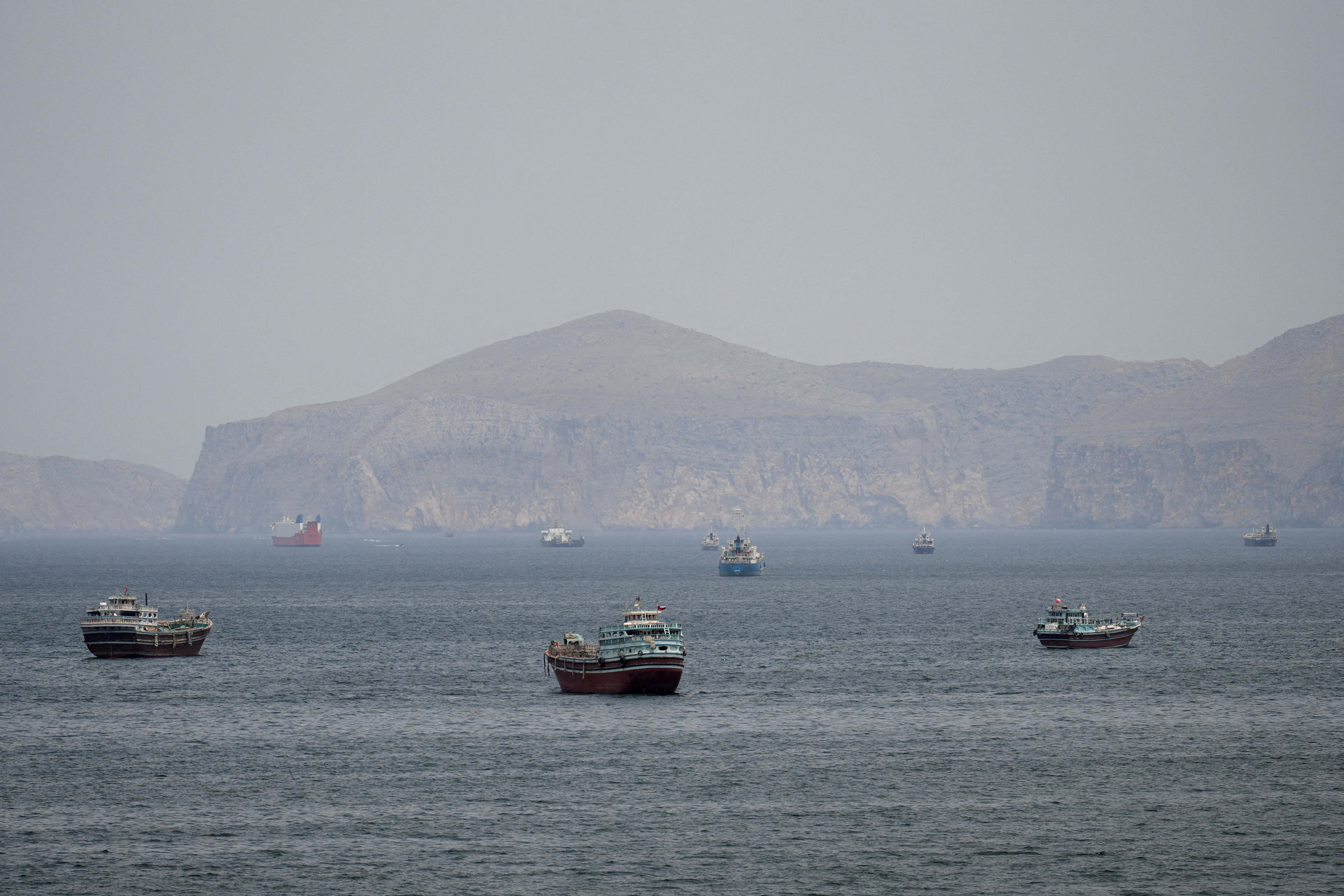
Iran meanwhile said no final arrangement had yet been reached concerning management of the Strait of Hormuz, through which around one fifth of global oil and liquefied natural gas supplies normally pass.
Iranian state television reported that 32 vessels and five oil tankers crossed the strait in the past 24 hours under authorisation from Revolutionary Guards naval forces.
Oil prices fell more than four per cent on Monday amid growing optimism that negotiations could eventually produce an agreement.
Two sources also told Reuters that Israeli Prime Minister Benjamin Netanyahu had privately acknowledged that Israel now had limited ability to influence Trump’s decision-making on the conflict.





Click here to change your cookie preferences