
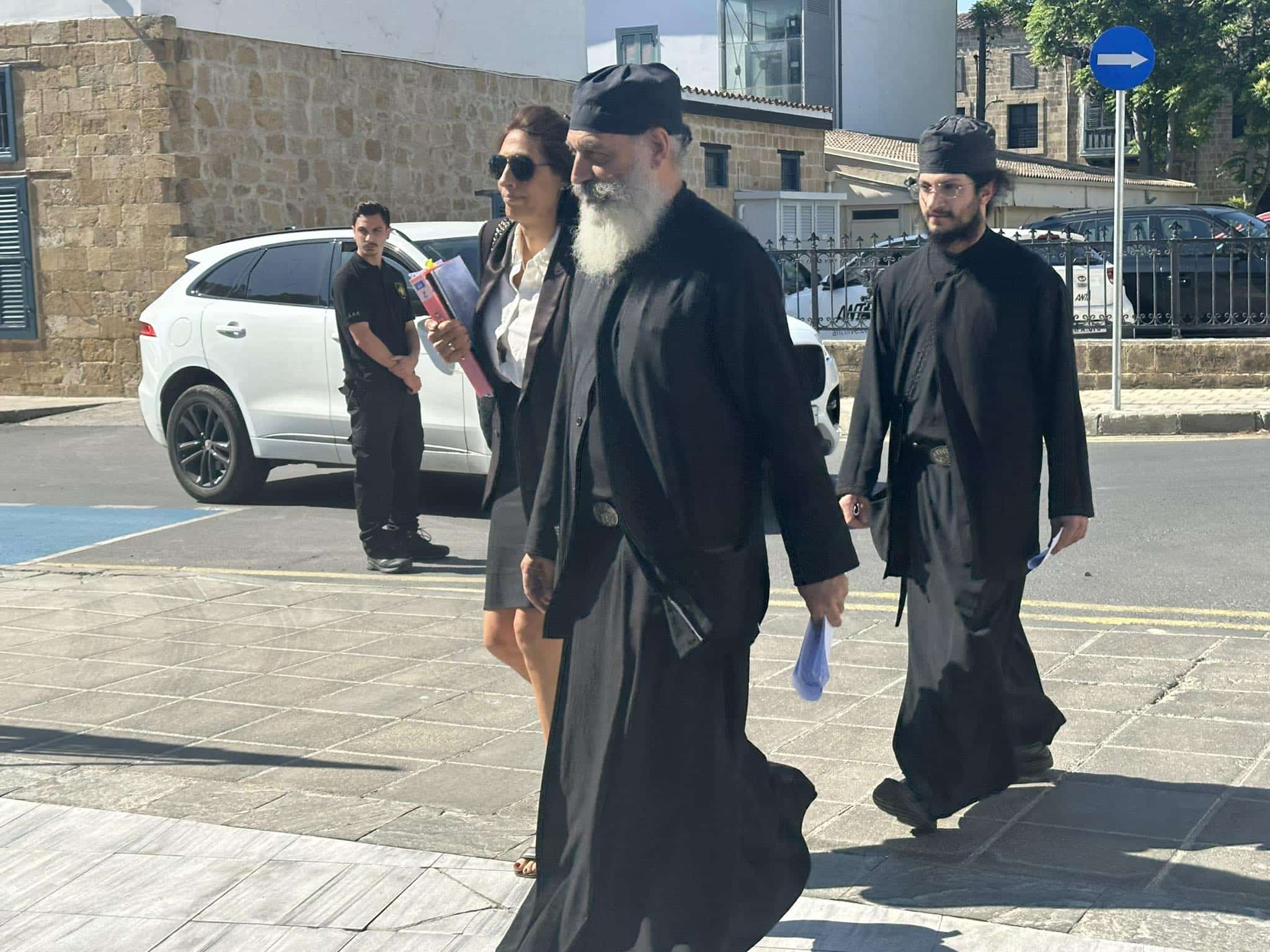
The defence attorneys of the two Avakoum monastery clerics raised serious objections in court on Monday, challenging whether a number of pieces of evidence presented by prosecutors are in fact admissible.
On trial are monks Nektarios and Porfyrios. They face charges including conspiracy to defraud, forgery and the use of false documents, theft by proxy, handling stolen goods, money laundering, interfering with judicial proceedings and submitting fraudulent tax returns.
Both have pleaded not guilty.
The case came to light after authorities discovered €800,000 in cash and uncovered alleged fake miracles and CCTV footage of prohibited sexual acts.
Earlier during the trial, the defendants’ attorneys said that on the night of March 5, 2024, after the monastery had shut its gates, a number of individuals wearing hoods trespassed into the premises and removed various objects – which ended up at the Tamasos bishopric.
The lawyers said these items subsequently came into the possession of the police. They called for a trial within a trial, seeking a court ruling that would rule if the items were obtained unlawfully.
Though the court subsequently rejected the motion for a trial within a trial, it also said objections to the admissibility of certain evidence could be raised by the defendants.
On Monday, the defendants’ lawyers revisited the matter of admissibility.
Testifying on the stand was a witness for the prosecution – a constable who was entrusted with the safekeeping of evidence gathered by the police.
During her testimony, prosecutors presented a number of evidentiary items.
This gave Costis Efstathiou, a defence attorney, the opportunity to challenge not only the admissibility of the evidence, but also to suggest that the chain of custody had been broken.
The purpose of having an unbroken chain of custody is to ensure that the evidence collected is the same evidence that’s being used to prosecute someone.
Efstathiou said that whereas the witness can affirm to having been given the evidence for safekeeping, she cannot testify as to what had transpired before that.
“To date, under no circumstances has the legitimacy of [authorities] holding the evidence been proved,” the attorney told the court.
“Even if this position of ours is not accepted, there remains the issue of the chain of custody up until the handing over of the evidence to the police.”
The lawyer claimed that it has not been proved who located the items, who received them, where they were stored, or which persons had access to them and what was their route until the police took custody of them.
These questions are crucial to the case, in order to determine whether any of the evidence was tampered with.
And according to the lawyer, all this poses the issue of whether the Law of Evidence – how authorities can secure and present evidence – has been violated.
Responding to the objection, the lead prosecutor dismissed the notion that the defendants’ right to a fair trial might be trampled on if the disputed evidence is shown in court.
He said questions about the chain of custody can be assessed during the course of the trial. Moreover, all persons involved with keeping or handling the evidence would be summoned to testify.
Hearing both sides, the court said it would rule on the defence’s objection on July 20.
The court also set the next hearing for July 22.




Click here to change your cookie preferences