
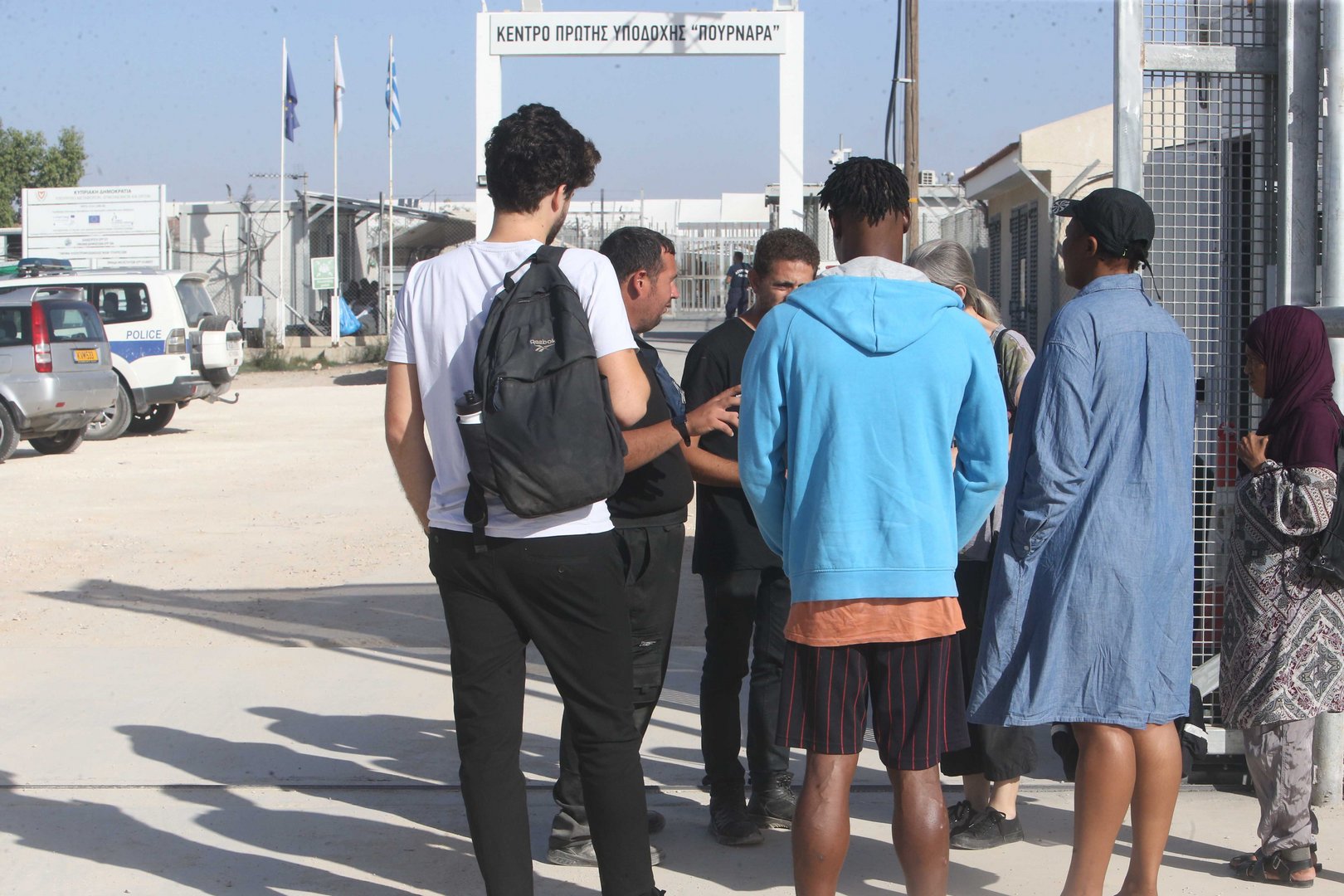
Authorities have revoked asylum status for nearly 100 people due to their involvement in criminal activity, as part of a new get-tough policy, media reported on Monday.
On the instructions of Deputy Migration Minister Nicolas Ioannides, the Asylum Service removed asylum status for 95 individuals – 80 of whom are Syrian nationals. They are to be deported.
At the same time, the government has ordered the revocation of the residency permits for Indian nationals who took part in violent scuffles in Limassol in May.
In addition, the government will revoke international protection status for Syrian nationals involved in the recent street brawl in Xylofagou.
These actions are intended to send the message that the state will not tolerate individuals breaking the law, and will initiate procedures to immediately deport them.
Meanwhile, Phileleftheros reported, authorities will soon make the first forced returns of a number of Syrian nationals no longer entitled to stay in Cyprus due to the change in the political situation in their home country.
Also, the deputy migration ministry continues to implement a repatriation programme with financial incentives for Syrian families.
Known as the Assisted Voluntary Repatriation Scheme, and largely funded by the EU, it concerns families of Syrian nationals, including couples without children, where at least one of the two spouses submitted an application for international protection or obtained international protection status before December 31, 2024.
Under the scheme, one adult member of the family may remain in Cyprus for employment purposes, with a special two-year residence permit and unrestricted access to the labour market until end of August 2028. The rest of the family may return to Syria, benefiting from increased financial incentives.
Specifically, €2,000 will be provided to the spouse who returns, while €1,500 will be provided for each child who returns. Families that already hold international protection status, rather than merely having a pending asylum application, will receive an additional amount of €1,000 per family.
In recent remarks, Ioannides noted that following the change of government in Syria in December 2024, approximately 5,000 Syrians have either withdrawn their asylum applications or renounced their subsidiary protection status and have voluntarily returned to Syria.
At the same time, instructions have been issued for the examination of asylum applications by Syrian nationals to resume, taking into account the new circumstances.
To date, more than 1,500 asylum applications submitted by Syrian nationals have been rejected, while the process is continuing at an intensive pace.
The European Union Agency for Asylum recently published two Country of Origin Information (COI) reports on Syria.
The reports said that since December 2024, since the toppling of the Assad government, more than 1.6 million Syrian refugees and 1.9 million internally displaced persons returned to their areas of origin. However, damaged infrastructure, a deteriorating economy, limited access to essential services, and a lack of livelihood opportunities continue to pose significant challenges to sustainable return.




Click here to change your cookie preferences