
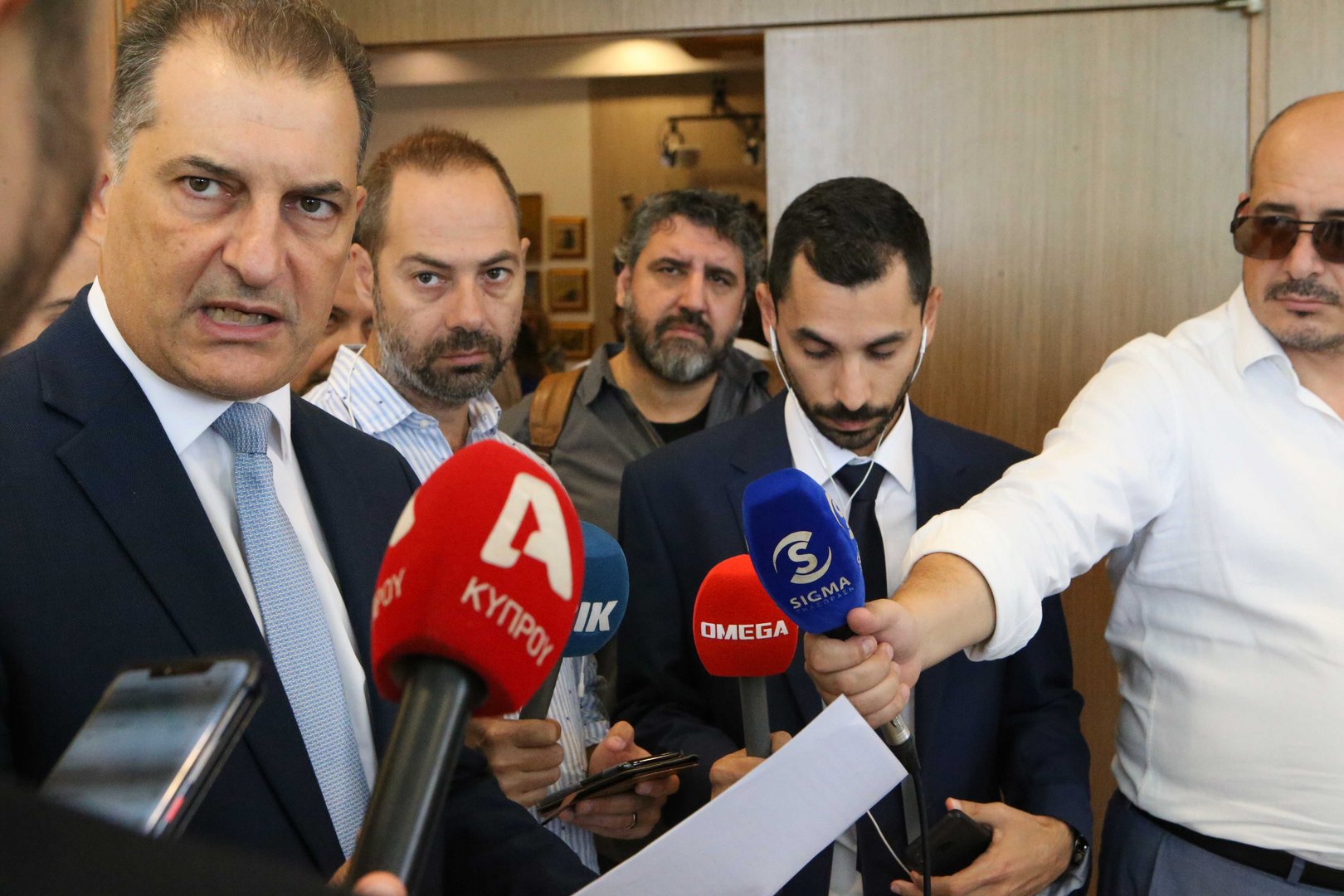
Attorney-general Giorgos Savvides put his foot down on Tuesday, letting MPs know that neither the special investigator for the Videogate affair nor police officers may answer questions during an upcoming discussion in parliament.
In a letter addressed to parliament, the AG advised MPs to tread carefully when they come together this Friday to discuss the findings of investigator Andreas Paschalides.
The previous week, Paschalides released a statement summarising his findings regarding the Videogate affair – a probe into a video published online in January and appearing to show influence peddling on the part of associates of President Nikos Christodoulides.
The House ethics committee is convening in an extraordinary session, where MPs plan to pose a series of questions they feel were left unanswered by Paschalides.
Summoned to appear before the committee are Paschalides, officials from the attorney-general’s office, senior police officials, a representative of the justice minister, the head of the anti-corruption authority, under-secretary to the President Irini Piki, and an attorney for Black Cube – the private intelligence outfit that produced the video.
But in his missive, Savvides set out some firm boundaries.
First, he let MPs know that the investigative dossier – now in the possession of the attorney-general’s office – will not be handed over to parliament.
“There are reasons which do not permit the dossier’s presentation and/or disclosure of its contents, as such reasons are laid out in case-law and the applicable legislation…” the AG said.
The reason is that the dossier is currently being assessed by the AG to determine whether any criminal offences were committed.
“The criminal investigation is still ongoing. For part of it, the investigative work has not been completed, while for another part of it an assessment is pending as well as a decision by the attorney-general’s office.”
The part still not completed is understood to refer to continuing investigations as to who commissioned Black Cube to produce the video. Paschalides has been given until the end of the year to identify the person or persons who bankrolled the company for this project.
The AG said that “any discussion about the investigative work or any attempt to have any information divulged, in a space other than the competent court, assuming the case goes to court, carries the risk of interfering with the investigative process and affecting the fundamental rights of the implicated persons.”
As such, he went on, persons summoned to the committee and who have knowledge of the case “may not answer any question posed to them nor present any document pertaining to the case, as this may affect the administration of justice”.
Concluding, Savvides advised MPs and anyone else attending the committee session to take his views “seriously under consideration”.
Asked for a comment, chair of the House ethics committee Demetris Demetriou told the Cyprus Mail that in his opinion parliamentarians are not bound by restrictions imposed by the AG.
“Parliament is an autonomous body,” he said. “On our part, we will ask the questions we plan to ask.”
MPs could decide on the day whether to hold the session behind closed doors, he added.




Click here to change your cookie preferences