
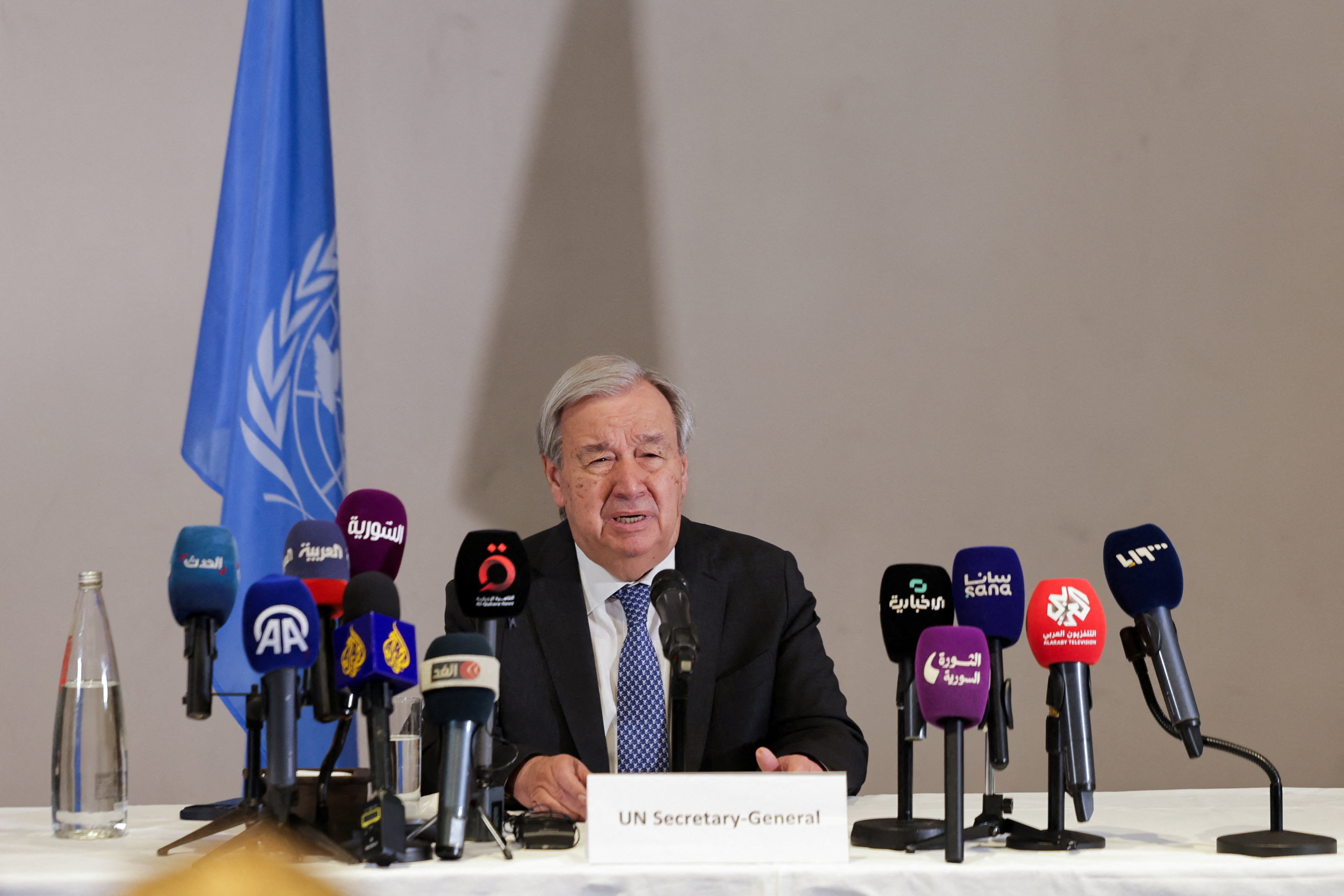
United Nations Secretary-General Antonio Guterres meets the leaders of Cyprus’ two communities on Tuesday, becoming the first sitting UN secretary-general in 16 and a half years years to visit the island.
He arrived in Cyprus on Monday evening, with his spokesman Stephane Dujarric saying that he will discuss “efforts to advance the peace process and support stability on the island, including through the work of the United Nations peacekeeping force in Cyprus”.
To do this, he will hold separate meetings, first with President Nikos Christodoulides and then with Turkish Cypriot leader Tufan Erhurman, at their official residences on Tuesday morning.
Later on Tuesday, he will visit the Committee on Missing Persons, before holding a tripartite meeting with both leaders on Wednesday at the UN’s good offices mission.
In preparation for Guterres’ arrival in Cyprus, his envoy Maria Angela Holguin had met both Christodoulides and Erhurman on Monday, with Holguin saying after her meeting with Christodoulides that Guterres will “encourage” Cyprus’ two leaders to re-enter negotiations to bring about a solution to the Cyprus problem.
“The mission of [Guterres] is to facilitate, encourage the people and the leaders to look forward for a negotiation [process] and this is why he is coming. He is visiting Cyprus after pushing to support the Cyprus issue for almost ten years, so he is coming for that,” she said after meeting Christodoulides.
She added that she hopes for “progress” to be achieved during Guterres’ visit to the island.
“I came from a long trip to Brussels and Ankara, with good meetings, talking on all the necessary points that we need for a push forward, and I am very happy to have the secretary-general here,” she said.
Prior to that, Guterres had held a telephone conversation with Turkish Foreign Minister Hakan Fidan on Sunday, while Christodoulides had himself prepared for Guterres’ visit by visiting Athens and meeting Greek Prime Minister Kyriakos Mitsotakis.
Mitsotakis had said of Guterres’ arrival that that with the secretary-general set to leave office at the end of this year, a sense of urgency has been created.
“Now is the time to explore the possibility of turning this into reality,” he told Christodoulides.
On Friday, Fidan had met Holguin in Ankara, with Holguin having arrived directly from Brussels, where she had met both European Commission President Ursula von der Leyen and the commission’s envoy for the Cyprus problem Raffaele Fitto in separate meetings.
Von der Leyen had said after her meeting with Holguin that “I welcome her active engagement, alongside [Guterres], to resolve the Cyprus issue within the UN framework and in line with European Union principles, values, and legislation”.
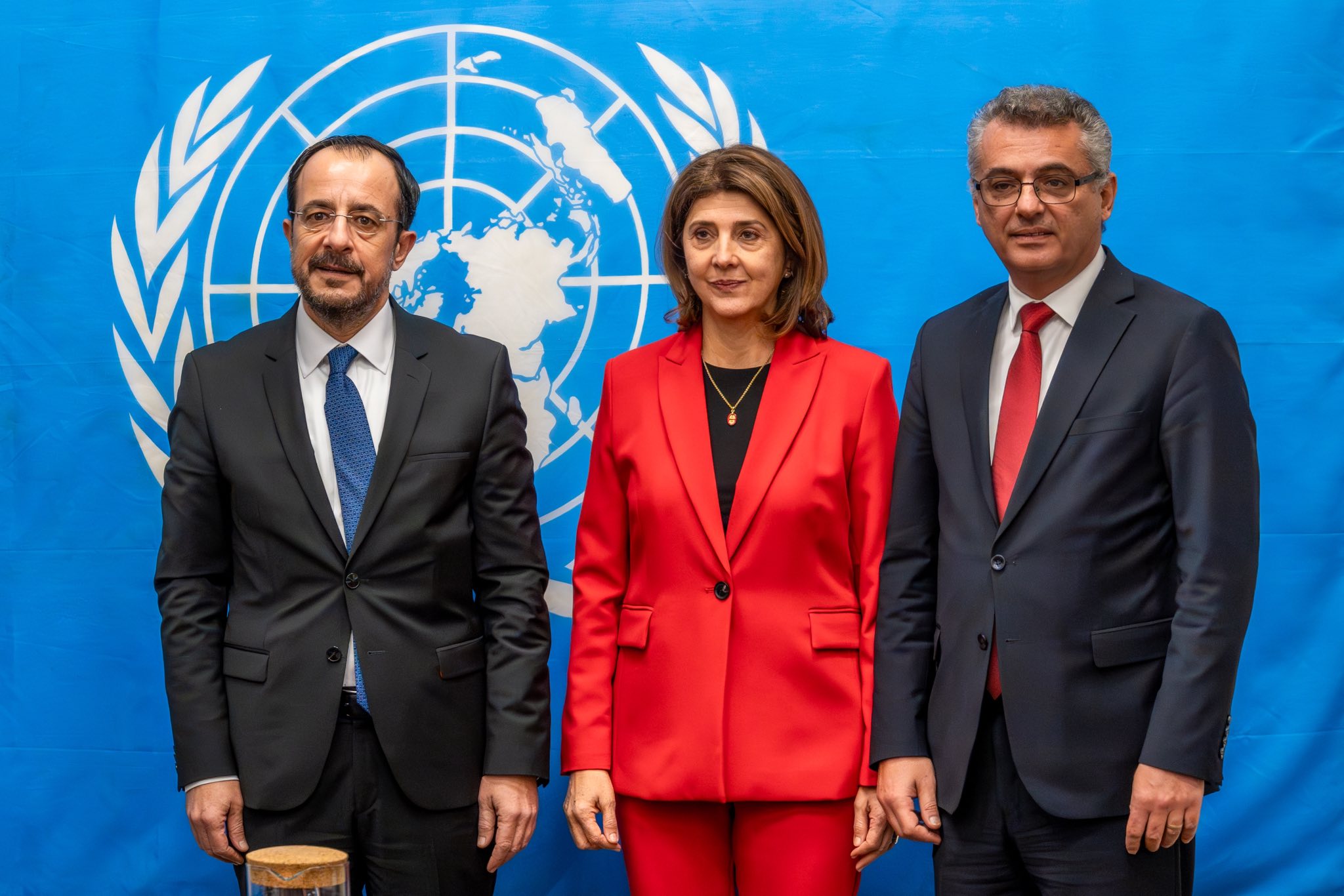
Guterres visit is the culmination of what has been dubbed a “new initiative” being undertaken with the aim of bringing about a resumption of talks geared towards a solution, with the phrase first being employed by government spokesman Konstantinos Letymbiotis and Erhurman in April, and being repeated regularly ever since.
In recent weeks, Christodoulides has said that “we are at a very critical juncture”, while Erhurman has consistently and repeatedly stressed that “this time it must be different” to previous efforts, regularly referring to the failures at Crans-Montana and the 2004 Annan plan referendum.
Holguin herself went further at the beginning of this month, calling on Cypriots to “seize this historic opportunity to negotiate a lasting solution” and saying that Guterres is “evaluating which could be the next phases that will convince both parties to take concrete steps towards a final solution”.
The most recent visit of an incumbent UN secretary-general to the island was at the beginning of 2010, when Ban Ki-moon travelled to the island. He met the leaders of the day, Demetris Christofias and Mehmet Ali Talat, aiming to give impetus to negotiations on the Cyprus problem.
At the time, Ban said that a solution to the Cyprus problem was “within reach”, and that “I am convinced these two leaders can achieve a mutually beneficial solution”. However, Talat was unseated as Turkish Cypriot leader just two and a half months after Ban’s visit, and replaced by Dervish Eroglu, a more nationalist figure.




Click here to change your cookie preferences