
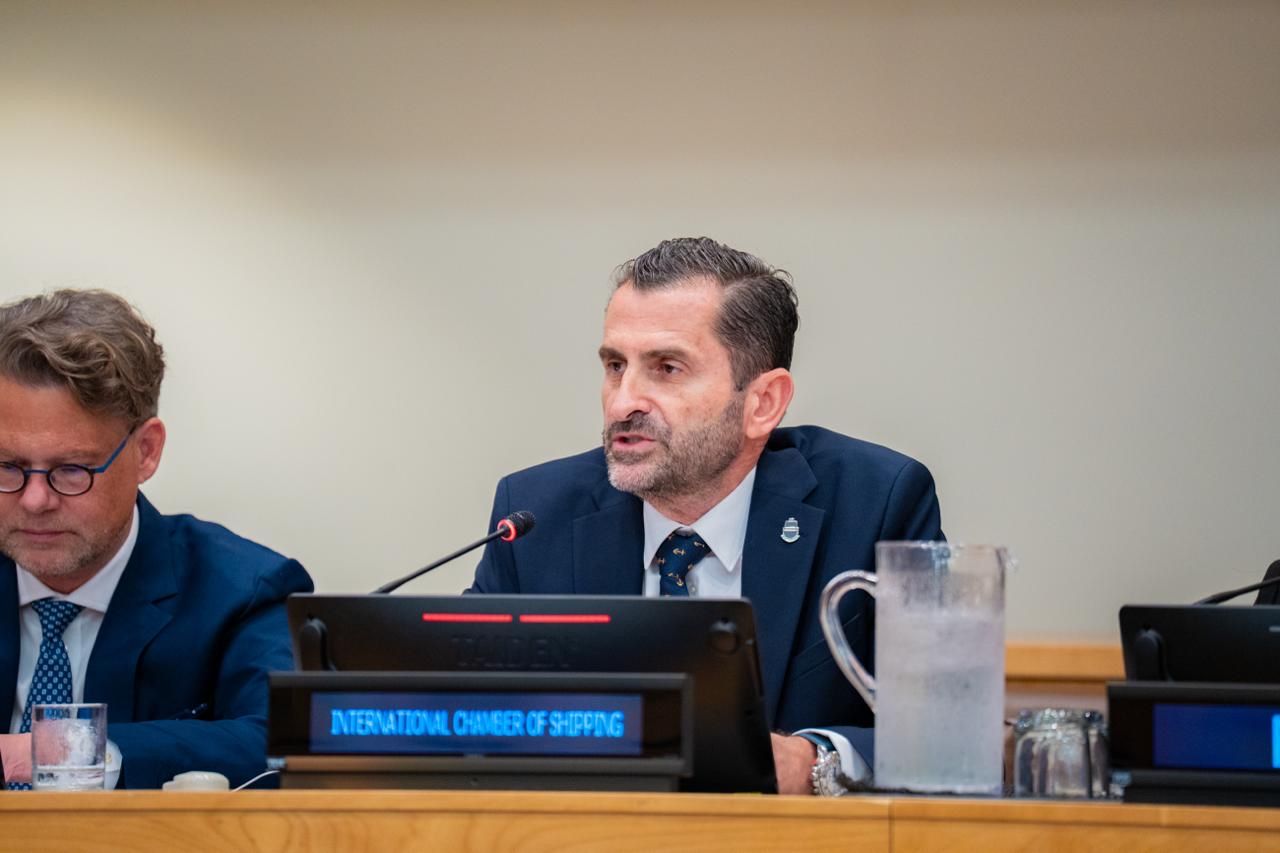
International Chamber of Shipping (ICS) secretary general Thomas Kazakos has taken the industry’s push for free passage through international waterways to the UN Security Council, warning that commercial ships and seafarers must not become collateral in geopolitical disputes.
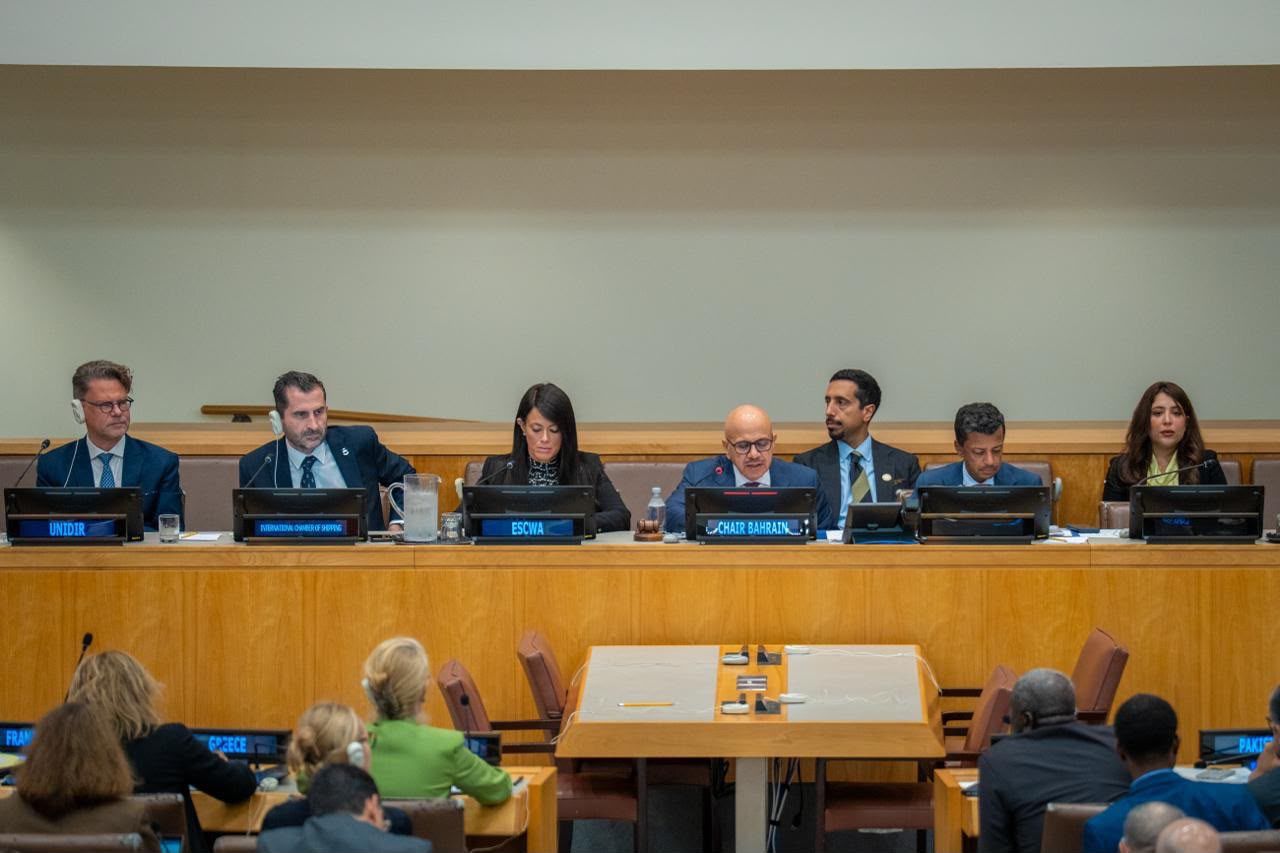
Kazakos was invited to brief an Arria-Formula meeting in New York convened by Bahrain and chaired by the country’s Foreign Minister Abdullatif Al Zayani, with discussions focusing on the worsening maritime security environment and, in particular, the Persian Gulf.
Representing the international shipping industry, Kazakos used the meeting to press the case for freedom of navigation, arguing that the established rules governing international waterways cannot be allowed to change according to political circumstances.
“The ability of commercial ships to navigate international waterways safely, predictably and without unnecessary impediment, is crucial to international maritime law and to the global trade system. Shipping must not be held to ransom,” he said.
His intervention comes as the Strait of Hormuz remains one of the shipping industry’s most pressing security concerns, both because of the danger facing crews and because of its importance to international energy and commodity flows.
Kazakos told the meeting that “the current situation in the Strait of Hormuz and surrounding region demonstrates the importance of this issue”, describing it as “one of the world’s most critical arteries of international commerce, carrying approximately one quarter of global seaborne oil trade, as well as major volumes of LNG and fertilisers”.
“The ongoing disruption has been extraordinary,” he added.
The UN appearance marks a further step in the ICS’ increasingly diplomatic campaign over Hormuz. Kazakos has spent recent months pressing governments and international organisations to defend unrestricted passage through the strait and reject proposals for compulsory tolls, charges or other controls on commercial vessels.
Only last week, he raised the issue with Kuwait’s ambassador to the UK, as part of the ICS campaign against tolls in Hormuz. The organisation has also held talks with governments across the Gulf and has argued that there is no legal basis for charging ships simply for exercising their right of transit through an international strait.
That argument was carried directly into the UN discussion, with Kazakos saying that “straits cannot become a place where commercial shipping is required to obtain permission, negotiate passage, or accept arbitrary restrictions, simply because geopolitical tensions have escalated”.
“This is not a privilege to be granted or withdrawn according to the political circumstances of the day,” he added.
The ICS has repeatedly warned that the consequences would extend far beyond individual ships. Compulsory charges or controls could raise transport and energy costs, disrupt supply chains and, in the chamber’s view, risk establishing a precedent for other international straits.
The security picture has also deteriorated sharply. The International Maritime Organisation (IMO) said this week that it had verified 80 attacks on international shipping in and around the Strait of Hormuz since the Middle East conflict began on February 28, with at least 22 seafarers killed and others injured.
IMO secretary-general Arsenio Dominguez has urged member states to stop actions that endanger merchant vessels, warning that political conflicts are increasingly being used as a pretext for attacks on commercial ships and their crews.
For Kazakos, the legal argument over free navigation is inseparable from the people working aboard those ships.
“Seafarers are transporting food, energy, medicines, raw materials and essential goods to communities around the world,” he told the UN meeting, adding that “they are civilians. They are not parties to geopolitical conflicts, and their welfare is of the utmost importance.”
It is a point he has made repeatedly in recent weeks. Speaking in Hamburg earlier this month, Kazakos warned that seafarers are not combatants and should not be drawn into geopolitical disputes or used as leverage over access to international waterways.
The IMO has taken a similar line on freedom of navigation. Its Council reaffirmed in July that transit through straits used for international navigation must not be threatened, impeded or suspended, while its latest statements have placed growing emphasis on the human cost of the crisis.
Kazakos closed his UN intervention by returning to the ICS position that international straits must not become “toll roads”, and that merchant vessels and seafarers must not be held to ransom.
He said the chamber welcomed the opportunity to brief Security Council members and had reiterated “the shipping industry’s commitment to working with governments and international organisations to strengthen maritime security and protect the principles on which global trade depends”.
Kazakos also thanked Bahrain and Al Zayani for the invitation, bringing the ICS campaign back before the same Gulf state with which he held high-level discussions on Hormuz, maritime security and seafarer protection earlier this summer.




Click here to change your cookie preferences