
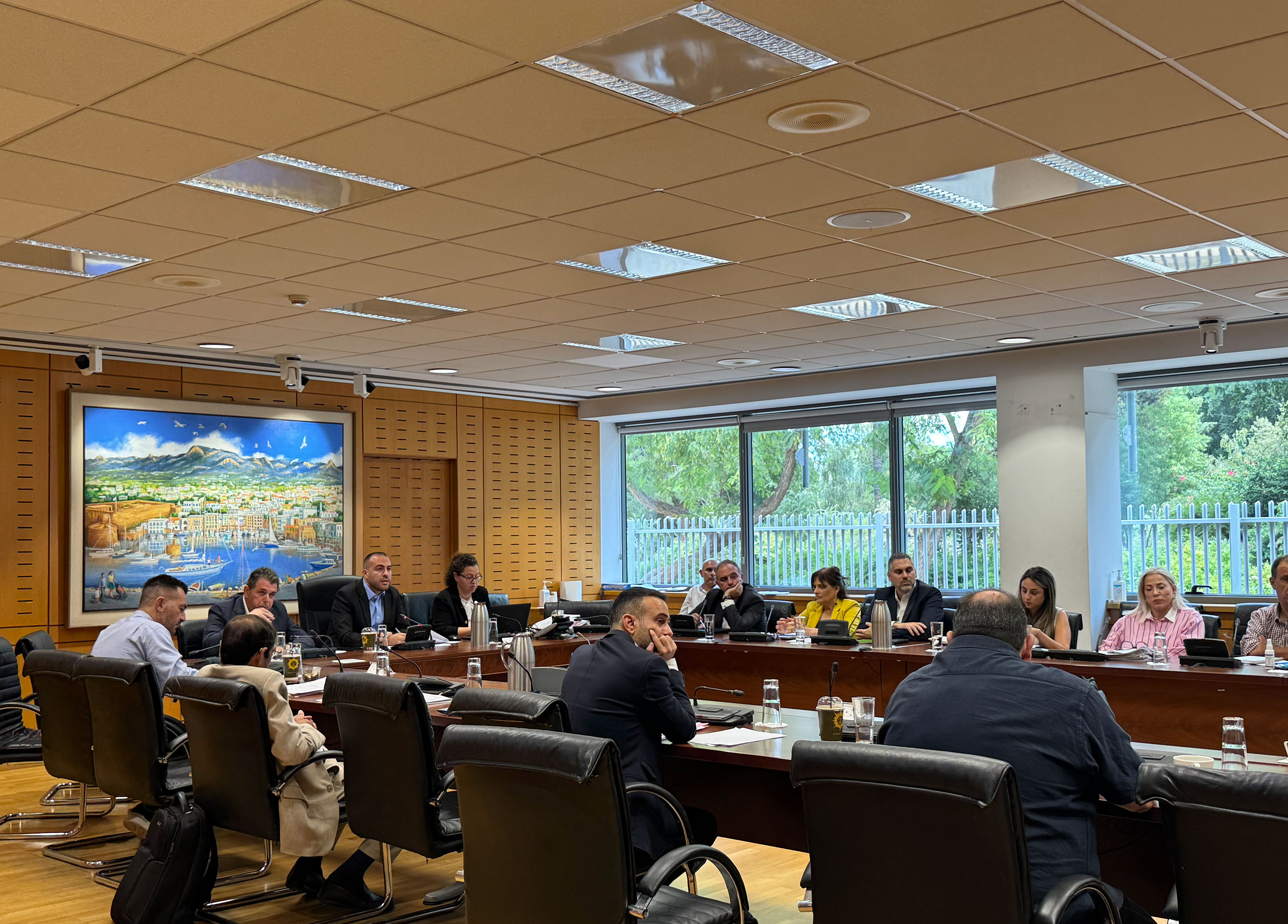
The transport ministry opposes any change to Makarios Avenue in Nicosia that could force the repayment of EU funds, the House transport committee heard on Thursday.
Evi Anagiotou, the ministry’s head of sustainable mobility, told MPs she was relaying the position of Transport Minister Evi Tsolaki, who has ruled out changes that risk any refund.
Anagiotou said the ministry was waiting for the Nicosia municipality to send its studies, after committee chairman and Elam MP Sotiris Ioannou asked whether the ministry agreed to reopen the avenue.
The EU co-financed the redevelopment of the commercial triangle, Makarios Avenue and Stasikratous Street, which cost €24.7 million.
The European Commission has warned that changes breaching the sustainable mobility conditions could lead to the recovery of part of the money.
The Nicosia council voted last year to open the avenue to all vehicles with two-way traffic from 7am to 9pm on weekdays, with only authorised vehicles allowed at other times and at weekends.
Alexios Constantinides, of the finance ministry’s European directorate, said a figure of €21.6 million cited publicly also covered Stasikratous Street, and that Makarios Avenue itself received €11 million.
He said the project had been completed successfully and that the five-year period began in 2025.
Changes judged to affect the nature of the co-financing would prompt an assessment of a refund, though Constantinides acknowledged that “there is no precise criterion”.
Negotiators would face auditors he described as “tough and inflexible”, and studies from the municipality would make their task significantly easier.
Anagiotou said the ministry’s plans were long term and based on strategic studies and the national energy and climate plan, under which Cyprus has committed to cutting pollutants.
“We are completely dependent on the car,” she said, citing that the number of vehicles on the road “rises by 8 per cent every year”.
Anagiotou acknowledged however that the public reliance on the car was also due to “insufficient public transport that offers few alternatives”.
She said commercial activity should not be confused with traffic and pointed to shopping malls and online shopping amid “changing demographics”.
Nicosia Mayor Charalambos Prountzos said the decisions on Makarios Avenue were inherited from the previous municipal authority, a point he said he was not making “to abdicate our responsibility”.
The northern section, up to the old Woolworth’s store, fell under the municipality, and the southern section under the transport ministry.
He said an internal study had assessed the financing, but he would give details only when the proposals reach the council.
Prountzos concluded his remarks with an appeal for “sobriety” instead of division on the matter.
Under the municipality’s proposal, the existing arrangement of one lane in each direction would remain on the northern section, with private vehicles allowed from 7am to 9pm and authorised vehicles, such as buses and those with homes or offices, at other times.
The same rules would apply to Leventis Avenue, and weekends would remain limited to authorised vehicles.
Prountzos said the proposal differed slightly from the original decision but would provide no details.
Shopkeepers told the committee they wanted the avenue opened immediately.
“Our businesses are suffering, closing one after the other,” they said.
A representative of the employers’ federation (OEV) said accessibility must be bolstered and called for incentives for residents and businesses.
A representative of the commerce chamber (Etek) said what had been done so far “has not yielded tangible results”.
A representative of the small shopkeepers’ union (Povek) said the measure had not worked after four years and that he “strongly disagreed with the transport ministry”.
The audit office and the police both recused themselves, stressing that neither party could not intervene in any municipal decision.
Ioannou said Elam favoured opening the avenue, as did Dimitris Souglis of Direct Democracy, who cited Agios Andreou Avenue in Limassol, which he said “once flourished” and “died” once it was pedestrianised.
Disy MP Andreas Constantinou asked where the 13,000 vehicles that previously used the avenue were being diverted, including to Stasinou, Evagorou, Diagorou, Omirou and Kallipoleos streets, and what had happened to cases against drivers who used it illegally.
Diko MP Adamos Aspris described the avenue as a “beautiful but clinically dead road” and asked for an investigation into whether the pedestrianisation or other factors were to blame.
“It is unthinkable that the Cyprus should be asked to return money to the EU, which it received for the revitalisation and remodelling of this specific area”, he stressed.
Akel MP Efraim Christou said his party would wait for the mayor’s proposal.





Click here to change your cookie preferences